"I take all my decisions through the prism of Nation First" - PM Narendra Modi.
Over the last ten years, India, under the leadership of Prime Minister Narendra Modi, has undergone profound transformations across the board. The incredible work that the Prime Minister has done for the country will be remembered for generations to come. Narendra Modi will be remembered for his punctuality, hard work and detailed study. He is an icon of development, and his forceful stand on development has earned him a separate space in the political field. PM Modi's unwavering faith in his ideals, passion for the country, and love for his fellow citizens are unprecedented. Narendra Modi is the strongest PM India has ever had. PM Modi is the best speaker and the most popular leader in the world. He is the only prime minister who has made several bold decisions and succeeded in them, too.
A firm believer in 'Ek Bharat, Shrestha Bharat, PM Modi is committed to national integration. As a result of the abrogation of Article 370 and 35A, the erstwhile State of Jammu-Kashmir, the Union territories of Jammu-Kashmir and Ladakh have been fully integrated into the nation's mainstream. The Modi government's momentous decision of 2019, unanimously upheld by the Constitution Bench headed by the Chief Justice of India, resulted in a considerable decline in separatism, recruitment of locals into militancy, terror activities, and nepotism. Talent is blooming in India's Kashmir valley. The prime minister is fulfilling the dreams of people in Jammu and Kashmir, which have been unfulfilled for the past 70 years. Gulf countries are investing in Jammu & Kashmir. An era of bomb blasts has been replaced by development by the Modi government.
Prime Minister Narendra Modi has secured respect for India's cultural heritage on the world stage with the construction of the Ram Mandir in Ayodhya. Ram Mandir is not merely realizing a long-cherished dream for millions of Hindus but also a symbol of unity and inclusivity. The Mandir is a testament to the revival of India's rich cultural heritage. The intricate architecture and craftsmanship pay homage to the ancient traditions and architectural brilliance of the country's past, showcasing the timeless beauty of Indian artistry ignored and neglected for several decades. The global community has taken notice of the Pran Pratishta, a historic event on Jan 22, 2024, by the Prime Minister, emphasizing the importance of religious freedom, cultural preservation, and the celebration of diversity. The Ram Mandir would remain a beacon of inspiration for those who appreciate the significance of historical and cultural landmarks. The temple's grandeur reflects the shared cultural heritage and values that bind the diverse communities of India.
PM Modi strongly believes India can move forward only by respecting, empowering and making women feel equal. A revolutionary change is being felt in the country's social life as the country is moving with a vision of women-led development. India scripted history with the passage of the Women's Reservation Bill or Nari Shakti Vandan Adhiniyam in Parliament. Achieving a critical mass of 30 per cent representation by women in Parliament is known to yield positive outcomes for women's empowerment across the globe. The bill will ensure that women occupy at least 33 per cent of the seats in state legislative assemblies and the Lok Sabha, the lower house of Parliament. It will enable greater participation of women in policymaking and equitable governance at the state and national levels. Including women will give the vast majority of the population a voice in how their lives should be run.
Prime Minister Shri Narendra Modi has changed people's approach towards border villages. While previous governments ignored the development of border areas as they feared enemies might enter our country. They had a strange logic that if they developed border areas, the enemy would penetrate the country using these routes. Prime Minister Narendra Modi has made the development of border villages as his government's priority. While earlier governments called such areas the last villages, Prime Minister Narendra Modi called them the first villages. Today, the 'Vibrant Villages Programme' is improving the standard of living of the people of the border villages and encouraging them to stay in their places, preventing migration from these villages and also strengthening the security of the border. With this changed vision, people visiting the border area know Kibithoo in Arunachal Pradesh is not the last village but the first village in India.
As he took over as Prime Minister of India, Narendra Modi immediately launched the Digital India Mission. The mission was, in a way, a reaffirmation of his commitment to empowering ordinary Indians with technology. India added more than 50 crore people to banking who did not have bank accounts, and as a result, India has moved far ahead in fintech and digital payments. UPI(Unified Payment Interface) become a huge success, as India clocks 46 % of global digital transactions. Following the mantra of Sabka Saath Sabka Vikas, India emphasized the approach of last-mile delivery and saturation. The saturation approach meant no beneficiary would be left out. It eliminated discrimination and corruption. The digital identity led India to develop the DBT system. With the help of this system, 400 billion dollars has been transferred to beneficiaries in the last ten years, eliminating the scope for corruption and saving more than 33 billion dollars of the country from falling into the wrong hands. As a result, India lifted 250 million people out of poverty.
India has expanded its tax base to more than double ever since the introduction of GST in July 2017. The Goods and Services Tax, enacted by Prime Minister Narendra Modi's government, subsumed 17 local levies, such as excise duty, service tax, and value-added tax, and 13 other charges, making India a hot spot of Foreign Direct Investment, 'Bright Spot' in the global economy and a key contributor to the growth of the world economy. India has outperformed its global peers in economic growth and has become the fifth-largest economy under the leadership of Prime Minister Narendra Modi. It is poised to become the third largest by 2026.
PM gave the slogan 'Start Up India, Stand Up India,' which made India the third largest startup ecosystem in the world. India made history as it became the first nation to successfully land on the Moon's southern pole with the Chandrayaan-3 mission. The success of Moon Mission, Tiranga, and Shiv Shakti Point has been hailed as a new centre of inspiration for the future generation of Indians.
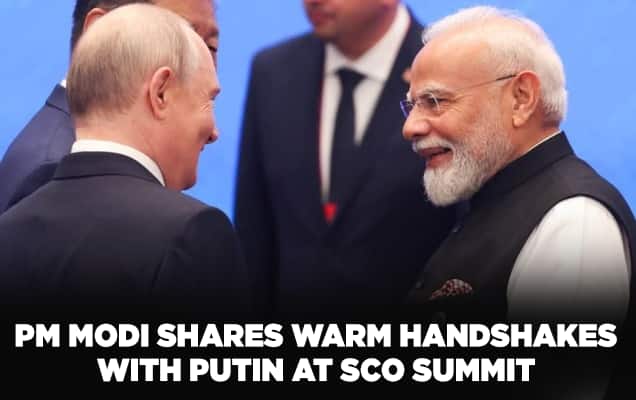
On the foreign policy front, Prime Minister Narendra Modi has transformed the contours of New Delhi's engagements with the world. Today, the world wants to know what India is thinking. India has befriended Gulf Arabs more aggressively than in the past. Within a short span of nine years, India has established visible political engagements with all the countries of the broader Middle East. Today, policymakers and analysts in India have used expressions such as 'civilizational links', 'historic ties', 'ancient connections', 'strategic proximity' and 'extended neighbourhood' to describe the Indo-Gulf relations. These are not catchphrases but reflect centuries-old reality ignored by the previous governments.
Among the many firsts that PM Modi has done for India is the successful isolation of Pakistan in the International arena, which resulted in the near end of militancy in Kashmir. Narendra Modi started taking action to expose Pakistan's involvement in Kashmir immediately after becoming Prime Minister. PM in 2014 did international exposure of Pakistan's link with extremists from the soil of Beijing, a foreign country and a close ally of Pakistan. During his maiden visit to UAE, an Islamic country, in August 2015, both countries, in their joint statement, condemned extremism, including States that use religion to support and sponsor terrorism against other
countries. The placing of Pakistan under the FATF Grey List in 2018 was, to a great extent, due to the exposure of misdeeds in Pakistan to the whole world by PM Modi. In 2019, India announced that it would "completely isolate" Pakistan after a suicide attack killed 46 Indian soldiers in Kashmir.
The actions taken by PM Modi have started showing results now. India's neighbours, leading Islamic countries and all big powers agree to the points made by PM Narendra Modi on Pakistan. Pakistan is politically, socially and economically in dire straits, and other countries also marginalize them.
The Global North dominated the international system, which was also reflected in the composition of the G20 grouping before the Delhi summit in 2023. However, under its G20 presidency, India did something unique. PM Modi made a strong case by including the voices of countries not in the G20 group. The African Union was made a permanent member of the G20 grouping under New Delhi's presidency, making the grouping, in the words of Narendra Modi, "inclusive and human-centric." Leaders worldwide lauded the PM initiative as India became the 'Voice of the Global South.'
The United Nations, World Bank, International Monetary Fund, and other international organizations have all praised Prime Minister Narendra Modi's efforts to combat poverty, development of Digital Public Infrastructure, Covid Vaccination program and VaccineMaitri, women empowerment, and inclusive economic growth.