Kashi-Tamil Sangamam and a tribute to Ek Bharat, Shreshtha Bharat

Published By : Admin | January 15, 2026 | 08:30 IST

A few days ago, I was in the sacred land of Somnath to be part of the Somnath Swabhiman Parv, marking a thousand years since the first attack on Somnath, which took place in 1026. People from all across India had come to be part of this moment of remembrance, united by a shared reverence for history, culture and the enduring spirit of the people of India. During the programme, I met a few people who had previously come to Somnath during the Saurashtra-Tamil Sangamam and had been to Kashi during the Kashi-Tamil Sangamam. Their words of appreciation for such platforms touched me and so, I thought of sharing a few thoughts on this subject.

During one of the Mann Ki Baat programmes, I had said that not learning Tamil is a major regret of my life. Fortunately, over the last few years, our Government has had several opportunities to further popularise Tamil culture across India and to deepen the spirit of ‘Ek Bharat, Shreshtha Bharat.’ A prime example of such an effort is the Kashi-Tamil Sangamam. In our ethos, Sangam or confluence has a special place. Seen in this light, the Kashi-Tamil Sangamam stands out as a truly distinctive initiative, one that celebrates the living unity of India’s many traditions while honouring their unique identities.

And what can be a better place than Kashi to host such a Sangamam. The same Kashi, which has remained a civilisational anchor from time immemorial… where, for thousands of years, people from all over have come in search of knowledge, meaning and Moksha.

Kashi’s connection with Tamil people and culture is very deep. It is in Kashi that Baba Vishwanath resides, while Tamil Nadu has Rameswaram. Tenkasi in Tamil Nadu is known as Kashi of the south or Dakshin Kashi. Saint Kumaraguruparar Swamigal forged a lasting link between Kashi and Tamil Nadu through his spirituality, scholarship and institution-building. Mahakavi Subramania Bharati, one of Tamil Nadu’s greatest sons, found in Kashi a space of intellectual growth and spiritual awakening. It was here that his nationalism deepened, his poetry sharpened and his vision of a free, united India took clearer shape. There are several such instances that highlight this close bond.

The first edition of Kashi-Tamil Sangamam took place in 2022. I recall attending the inauguration programme. Scholars, artisans, students, farmers, writers, professionals and many others from Tamil Nadu travelled to Kashi, Prayagraj and Ayodhya.
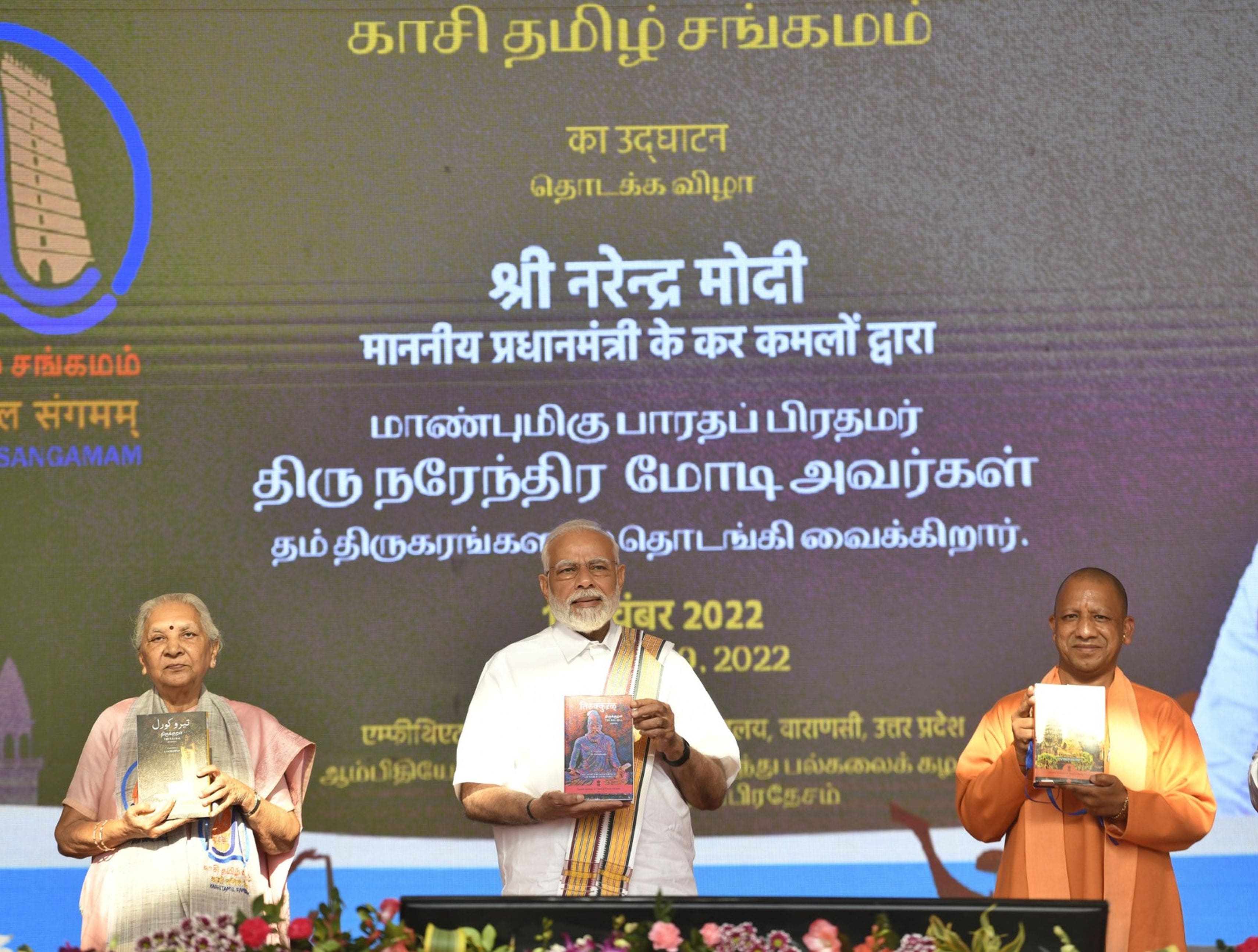
Subsequent editions expanded the scale and depth of this effort. The aim was to keep introducing fresh themes, innovative formats and deeper engagement, thus ensuring that the Sangamam continued to evolve while remaining rooted in its core spirit. In the second edition in 2023, technology was used on a larger scale to ensure that language does not become a barrier for people. In the third edition, the focus was on Indian knowledge systems. At the same time, academic discussions, cultural performances, exhibitions and interactions witnessed greater participation. Thousands of people have taken part in these events.
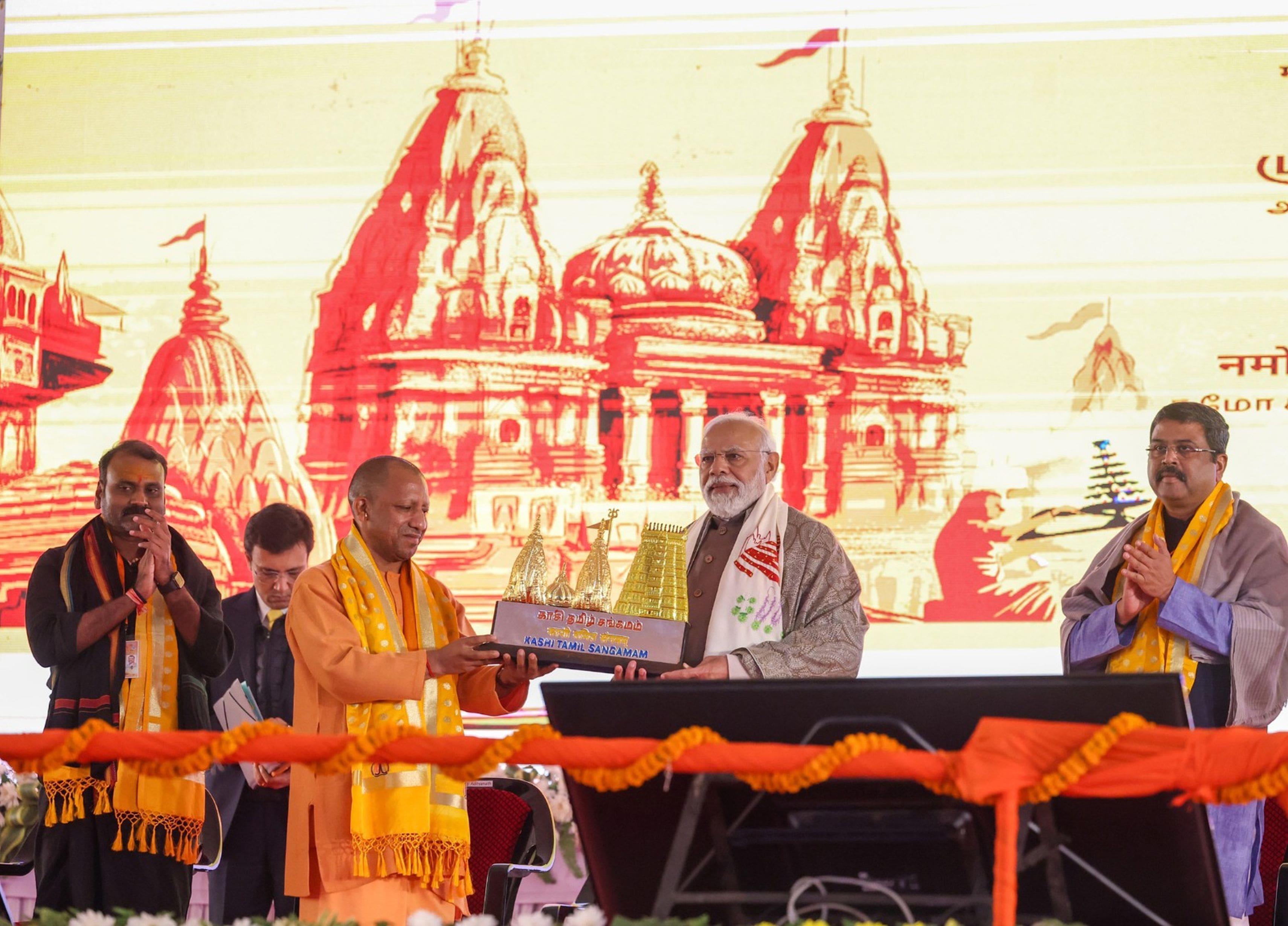
The fourth edition of the Kashi Tamil Sangamam commenced on 2nd December 2025. The theme picked was very interesting- Tamil Karkalam - Learn Tamil. It presented a unique opportunity for people in Kashi and other parts to learn the beautiful Tamil language. Teachers came from Tamil Nadu and the students of Kashi had a very memorable experience!

There were many other special events this time.

Tholkappiyam, the ancient Tamil literary classic, was translated into 4 Indian languages and 6 foreign languages.

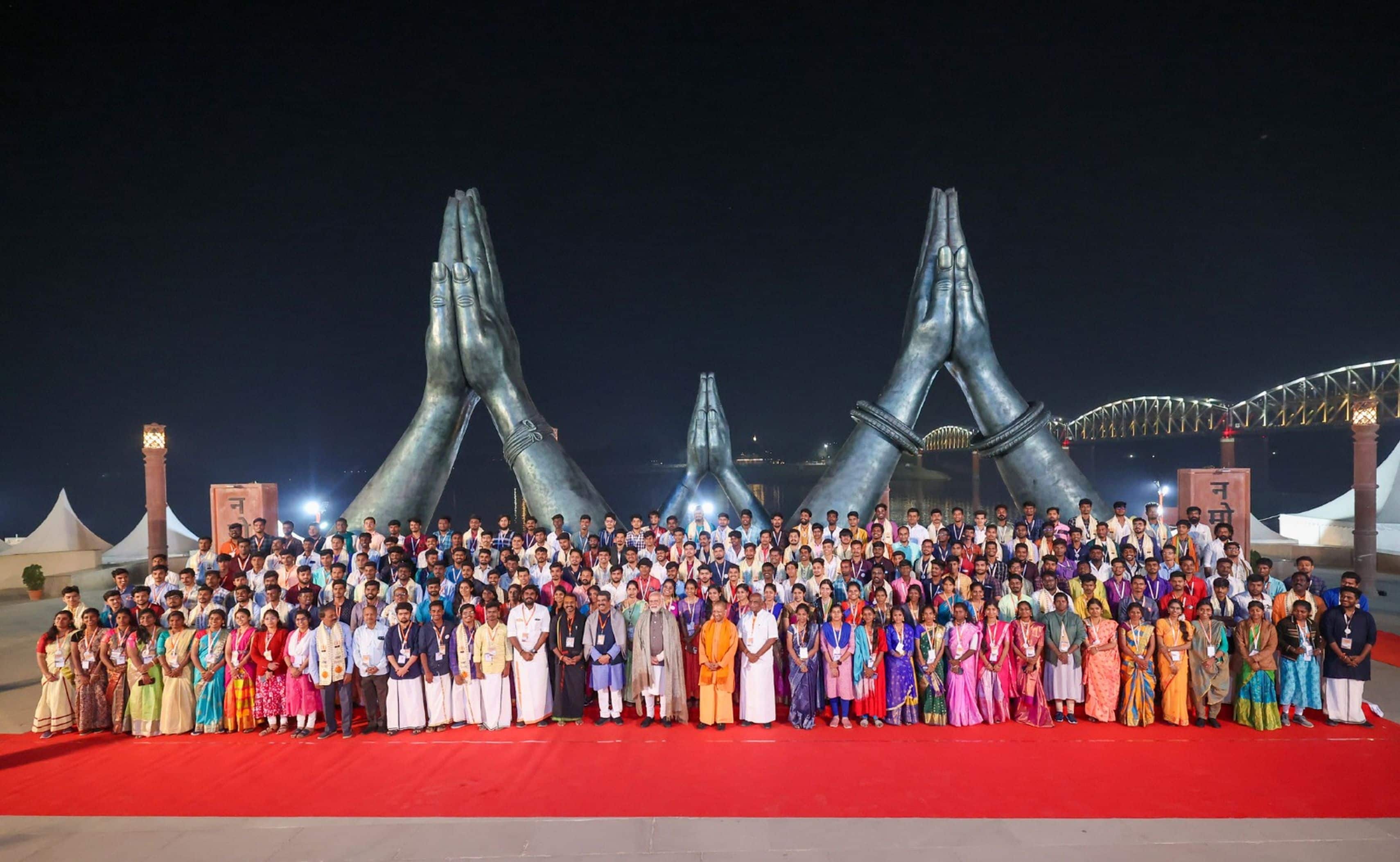
A unique event, Sage Agasthya Vehicle Expedition (SAVE), was undertaken from Tenkasi to Kashi. On the way, various initiatives such as eye camps, health awareness camps, digital literacy camps, among other things, were held. The expedition paid homage to King Adi Veera Parakrama Pandiyan, the great Pandya ruler who spread the message of cultural oneness. There were exhibitions at Namo Ghat, academic sessions at Banaras Hindu University, as well as cultural programmes.

One of the things that makes me most happy about the Kashi-Tamil Sangamam is the participation of thousands of youngsters. It illustrates the passion among our Yuva Shakti to deepen their connect with our roots. It is a brilliant platform for them to showcase their talent and creativity during the various cultural programmes.
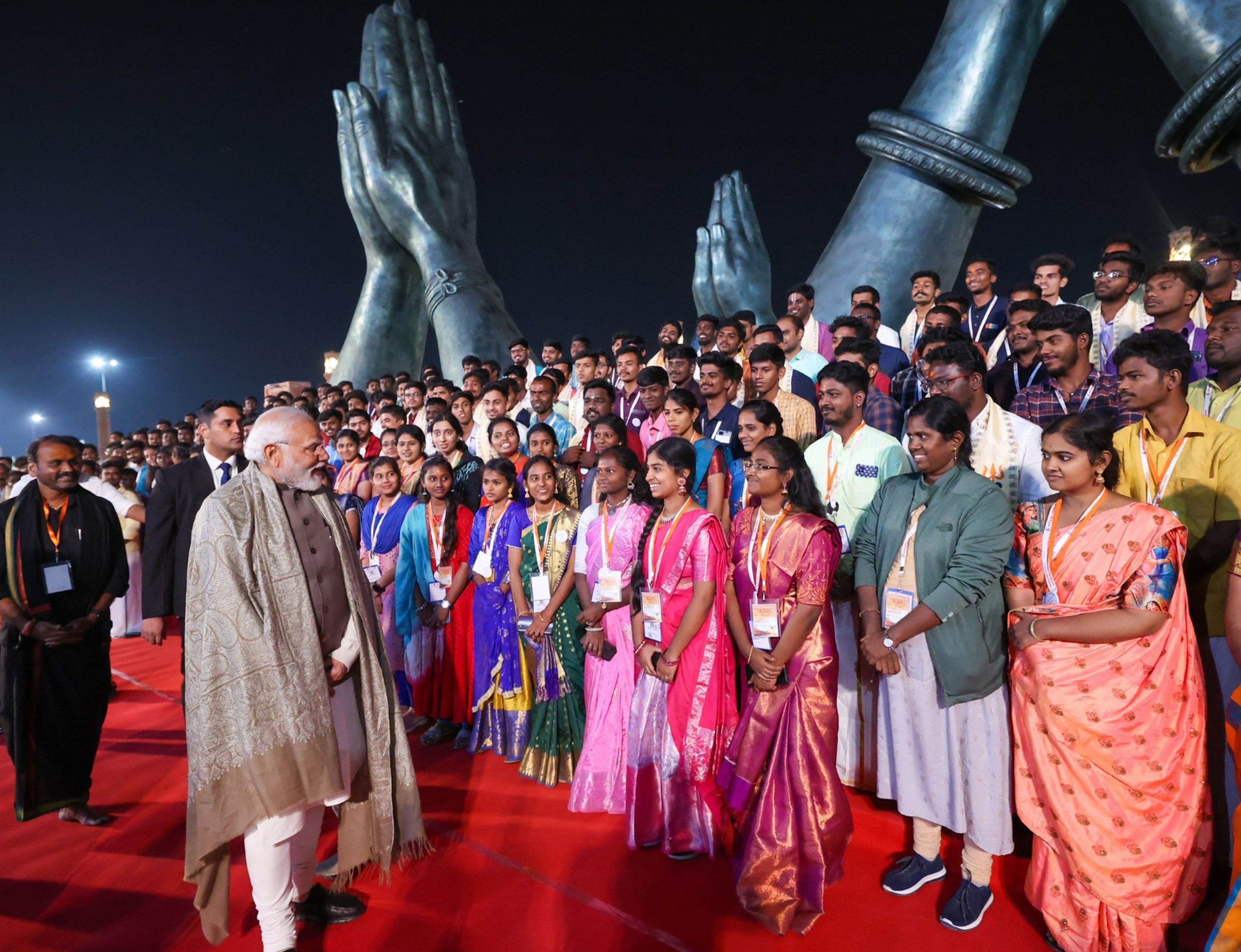
In addition to the Sangamam, efforts have been made to make the journey to Kashi memorable for the participants. The Indian Railways operated special trains to take people from Tamil Nadu to Uttar Pradesh. In many railway stations, particularly in Tamil Nadu, they were cheered, and the train journey was marked by melodious songs and conversations.

Here, I would also like to appreciate my sisters and brothers of Kashi and Uttar Pradesh for their warmth and hospitality shown to the delegates of the various Kashi-Tamil Sangamams. Several people opened the doors of their homes for the guests from Tamil Nadu. The local administration worked round the clock to ensure the guests had a seamless experience. As the MP from Varanasi, I could not be prouder!
This time, the valedictory function of the Kashi-Tamil Sangamam was held in Rameswaram and it was graced by the Vice President of India, Thiru CP Radhakrishnan Ji, who is himself a proud son of Tamil Nadu. He delivered a very inspiring address, emphasising India’s spiritual greatness and how such platforms deepen national integration.

The Kashi Tamil Sangamam has delivered meaningful outcomes like strengthening cultural understanding, fostering academic and people-to-people exchanges and creating lasting bonds between parts of the country that share a civilisational ethos. In the coming times, we want to make this platform even more vibrant. Most importantly, it has furthered the spirit of ‘Ek Bharat, Shreshtha Bharat.’ This spirit has flourished for centuries through our festivals, literature, music, art, cuisine, architecture, systems of knowledge and more.

This time of the year is very auspicious for people across the length and breadth of India. People are enthusiastically marking various festivals like Sankranti, Uttarayan, Pongal, Magh Bihu, which are, among other things, associated with the Sun, nature and farming. These festivals bring people together and deepen the spirit of harmony in our society. I convey my best wishes for these festivals and hope they continue to inspire us to deepen national unity through our shared heritage and collective participation.

Explore More
Today, the entire country and entire world is filled with the spirit of Bhagwan Shri Ram: PM Modi at Dhwajarohan Utsav in Ayodhya

Popular Speeches

Today, the entire country and entire world is filled with the spirit of Bhagwan Shri Ram: PM Modi at Dhwajarohan Utsav in Ayodhya
Parliament on verge of history, says PM Modi, as it readies to take up women's bills

Media Coverage

Parliament on verge of history, says PM Modi, as it readies to take up women's bills
NM on the go

Nm on the go

Always be the first to hear from the PM. Get the App Now!
...
Mahatma Jyotirao Phule: A Light That Still Shows India the Way
April 11, 2026

Today, 11th April, is a deeply special day for all of us. It is the birth anniversary of Mahatma Jyotirao Phule, one of India’s greatest social reformers and a guiding light for generations. This year, the occasion carries even greater significance, as it marks the beginning of his 200th birth anniversary celebrations.

Mahatma Phule was a great reformer. In addition to that, his was a life of moral courage, restless enquiry and unshakable commitment to social good. Mahatma Phule is remembered for the institutions he built and the movements he led. At the same time, his contribution to our civilisational journey lies in the hope he aroused, the confidence he instilled and the strength his thoughts continue to give to millions of people across the nation.

Born in the great state of Maharashtra in 1827, Mahatma Phule emerged from modest beginnings. But his initial hardships never stood in the way of his learning, his courage or his commitment to society. This is a trait that remained with him forever: whatever the challenges may be, one must work hard, acquire knowledge and mitigate those challenges instead of doing nothing about it. From his school days, young Jyotirao was deeply curious and became a voracious reader, often reading books far beyond what children his age were expected to engage with. Years later, he said, “The more questions we generate, the more knowledge emerges from them.” Clearly, the spirit of enquiry he was blessed with since his childhood remained constant in his journey.

Throughout his life, learning and education became central to Mahatma Phule’s mission. He recognised with rare clarity that knowledge is not a privilege to be guarded, but a force to be shared. At a time when the joys of learning were denied to many, he opened pioneering schools for girls and for those kept out of formal education. He used to say, “Any improvement that comes in children through mothers is deeply valuable. Therefore, if schools are to be opened, they should first be opened for girls.” He worked to create a new social imagination in which the classroom became an instrument of justice and equality..

His vision for education inspires us greatly. Over the last decade, we have worked to make research and innovation a cornerstone for the youth of India. Efforts are being made to create an ecosystem where young minds are encouraged to question, explore and innovate. By investing in knowledge, skills and opportunity, India is empowering its youth to become problem-solvers and drivers of national progress.

Due to his knowledge and wisdom, Mahatma Phule developed a strong understanding of areas such as agriculture, healthcare and rural development. He often said that injustice towards our farmers and workers weakens our society. He saw how social inequalities manifested themselves in daily life, be it in the farms or in villages. Hence, he immersed himself in ensuring dignity for the poor, the downtrodden and the marginalised. At the same time, he made every possible effort to ensure social harmony was maintained.

Mahatma Phule opined, “जोपर्यंत समाजातील सर्वांना समान अधिकार मिळत नाहीत, तोपर्यंत खरे स्वातंत्र्य मिळत नाही” (True freedom cannot be achieved until everyone in society is granted equal rights). And for that, he built institutions that translated this vision into action, contributing to a just society. The Satyashodhak Samaj, founded by him, was one of the most important social reform movements in modern India. It was at the forefront of social reform, community service and furthering human dignity. It became an effective voice for women, youngsters and those living in villages. This movement reflected Mahatma Phule’s intrinsic belief that society could be strengthened by placing at its core justice, respect for every person and a spirit of collective progress.

His personal life, too, carried lessons in courage. Always working and being among the people took a toll on his health. But even the most serious health challenges did not dim his resolve. After suffering a debilitating stroke, he continued to work and fulfil his vision. Yes, his body had been tested, but his commitment to society had not yielded. For millions today, especially those who draw courage from struggle, this remains one of the most powerful dimensions of his life.

No remembrance of Mahatma Phule can be complete without a respectful mention of Savitribai Phule, who was herself one of the tallest reformers of our nation. As one of India’s pioneering women teachers, she played a defining role in advancing education for girls, thus giving them the opportunity to pursue their dreams. After Mahatma Phule’s passing, Savitribai carried forward that torch and, in 1897, during a plague outbreak, she served victims with such devotion that she herself contracted the disease and lost her own life.

Our land has been blessed, time and again, by great men and women who have strengthened society through thought, sacrifice and action. They did not wait for change to arrive from somewhere else. They became its source. For hundreds of years in our land, the clarion call for social betterment has often risen from within society itself, from those who could see suffering clearly and refused to accept it as fate. Mahatma Jyotirao Phule was one such voice.

I fondly recall my visit to Pune in 2022, when I had offered tributes to Mahatma Phule at his grand statue in the city. As we mark the beginning of his bicentenary year, the most fitting tribute to Mahatma Jyotirao Phule is about renewal. Renewal of our commitment to subjects close to his heart, such as education. Renewal of our sensitivity to injustice. Renewal of our faith that society can improve itself from within. His life tells us that the power of community can achieve miracles in India when joined with moral clarity and public purpose. That is why he still gives strength to millions. That is why his words and work still carry hope. And that is why, nearly two hundred years after his birth, Mahatma Jyotirao Phule remains not a figure of the past, but a guide for India’s future.