"When I look at the development journey of Karnataka during the regime of the BJP government, I feel: "कर्नाटक, अभिवृद्धिया रथादा, मेले! इ रथावू, प्रगतिया पथादा मेले!"
-PM Narendra Modi, At foundation stone laying ceremony and inauguration of various projects in Shivamogga, Karnataka
The southern Indian state of Karnataka has witnessed significant developmental strides under the leadership of Prime Minister Narendra Modi. Since assuming office in 2014, the PM Modi-led government has implemented various policies and initiatives to foster the state's economic growth, infrastructural development, and social welfare. This is evident from the increasing allocation of funds and development in the state. From 2004 to 2014, the UPA government gave Rs 81,000 crore to Karnataka in tax devolution and provided Rs 60,000 crore grant-in-aid. In comparison, under the PM Modi-led government since 2014, tax devolution increased to Rs 2.82 lakh crore, and grant-in-aid rose to Rs 2.36 lakh crore.
One focus of the Modi government is infrastructure development, and Karnataka has benefited immensely. The state has seen significant investments in the modernization and extension of its airports, railroads, and highways. The Sagarmala project has improved Karnataka's connectivity and promoted trade in the state as it has become a key pillar of Prime Minister Narendra Modi's vision of port-led development. Under Sagarmala, 31 projects amounting to Rs. 628 crore have been sanctioned for Karnataka. The Bangalore Metro Rail project has received more finance and attention. The project is important because it has the potential to relieve traffic congestion in the city of Bengaluru. By making more city areas accessible, extending metro services would stimulate economic growth and increase urban mobility.
Every visit of PM Modi to Karnataka has given a gift to Karnatka. During his visit in 2022, PM Modi initiated the groundwork for numerous infrastructure ventures totalling over Rs 27,000 crore. Among these projects is the STRR (Satellite Town Ring Road) Bengaluru Ring Road initiative, also aimed at alleviating congestion in the city, with an investment of Rs 15,000 crore under the Bharatmala Pariyojana scheme.
Economic reform initiatives by the Modi government have enhanced the business environment in Karnataka. Goods and Services Tax (GST) have streamlined taxation and curbed corruption. As a result, economic conditions have improved, and Karnataka's status as an attractive investment spot has risen many-fold. Initiatives like "Digital India" and "Make in India have played a significant role in Karnataka's economic growth. The city of Bengaluru in the state, globally known as a hub for the IT industry, wholeheartedly welcomed digitization, which bolstered its digital infrastructure and fuelled entrepreneurship and innovation.
With a significant rural population, Karnataka has witnessed several agricultural reforms initiated by the Modi government. The Pradhan Mantri Fasal Bima Yojana (PMFBY), PM-KISAN, aims to provide financial support to farmers in crop failure and has greatly benefitted the farmers in the state. The Direct Benefit Transfer (DBT) system has streamlined subsidies, ensuring they promptly reach the intended beneficiaries in the state. Additionally, the government's focus on irrigation projects and water conservation has made Karnataka's agricultural sector resilient to climate change, helping farmers enhance productivity and mitigate the impact of droughts. Approximately 50 lakh farmers in Karnataka today receive direct benefits from the central government through PM KISAN. In the fiscal year 2022-23 alone, over 49 lakh farmers in the state were beneficiaries of the PM-KISAN scheme.
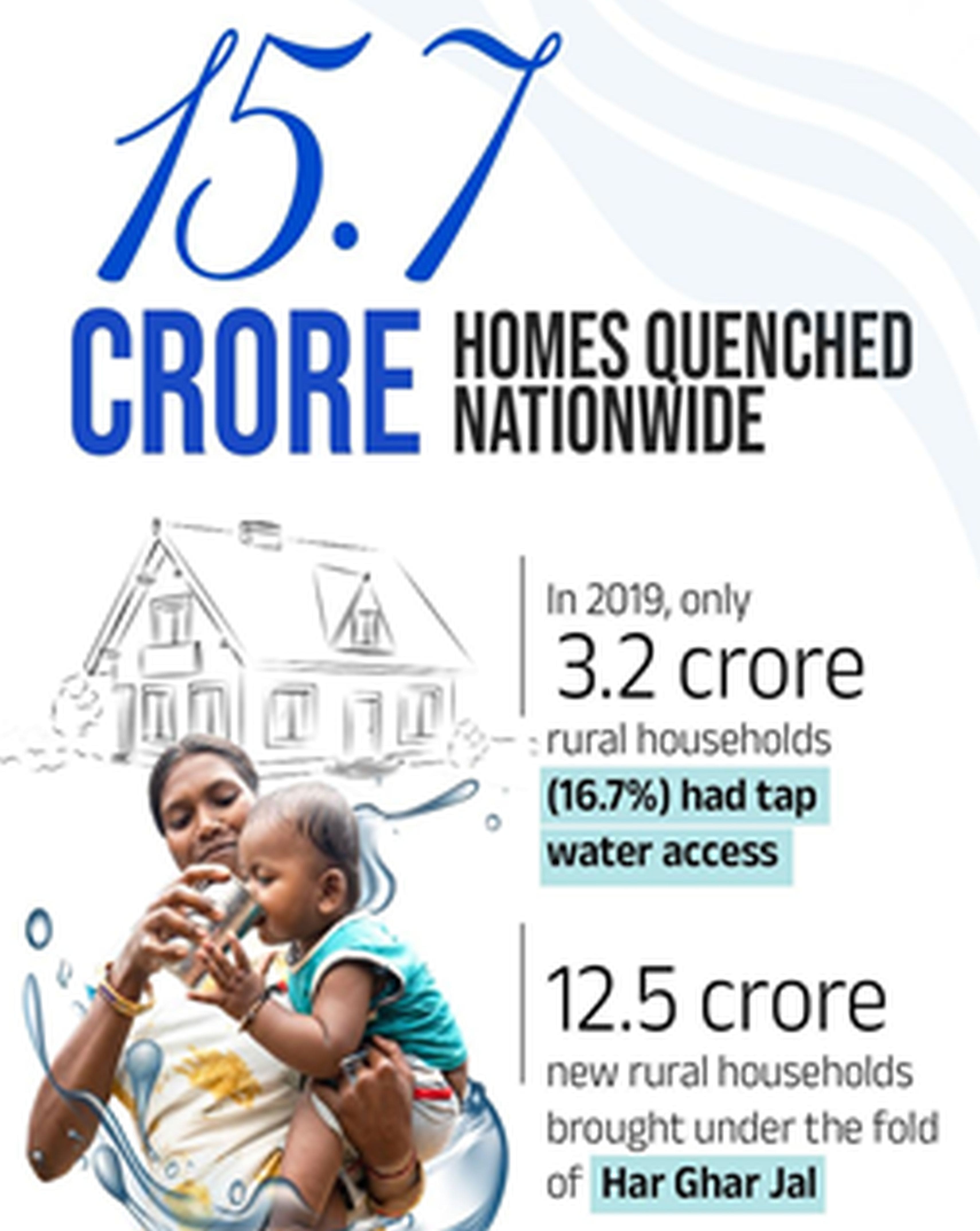
The Modi government has introduced various social welfare schemes that have positively impacted the lives of the people of Karnataka. The Pradhan Mantri Awas Yojana (PMAY) has made significant strides in providing affordable housing to the urban and rural poor. The Swachh Bharat Abhiyan has improved sanitation and hygiene, especially in rural areas. Nearly 66 lakh households had tap water connections in Karnataka under Jal Jeevan Mission. Till January 2024, PMAY (Urban) has seen almost 3.35 lakh houses completed at Rs. 6800 crore assistance. Under PMAY-G, over 2 lakh houses are sanctioned till February 2024. In addition, over 50,000 households have been provided with tap water connections for the first time in Karnataka since the launch of the Jal Jeevan Mission in 2019.
Under the visionary leadership of PM Modi, the government is committed to promoting the distinctive cultural legacy of the Indian states and has not wavered since 2014. The government, led by Prime Minister Modi, has launched several projects in Karnataka with this goal in mind. With a budget of Rs. 45.71 crore, the building of pilgrimage amenities at Sri Chamundeshwari Devi Temple in Mysuru is being developed as part of the PRASHAD scheme. Furthermore, the Heritage City Development and Augmentation Yojana (HRIDAY) programme identified and developed Badami as a heritage city in Karnataka. In addition, Hampi has been developed under the Swadesh Darshan 2.0 project as a popular tourist destination.
The developmental journey of Karnataka under the Modi government reflects a comprehensive approach aimed at fostering economic growth, improving infrastructure, enhancing the overall quality of life for its citizens and recognizing its rich and diverse culture. Prime Minister Narendra Modi's commitment to the development of Karnataka has made the state a focal point in India's journey towards becoming a global economic powerhouse.