Gujarat CM’s vision in water management yields outstanding results

Published By : Admin | April 21, 2012 | 08:51 IST
"Harnessing water, bringing back smiles"
"Over 5.5 lakh water management structures created in last 10 years"
"Initiatives taken by State Government recognized for PM’s award"

Under the visionary leadership of Chief Minister Shri Narendra Modi, Gujarat has been spinning the wheel to be a success model in water management Programme.  Gujarat is the only State where ground water level has considerably increased in the last 8 years as data from the Central Ground Water Board shows.  Over 5.5 lakh water management structures have been created in last 10 years which include check dams, boribandhs and khet talavadis.  Besides this, 4.5 lakh hectares land covered under micro-irrigation has resulted in highest decadal agricultural growth rate of 10.97% in the period 2000-01 to 2009-10.

Gujarat is among the front runners in the country in taking up new projects employing techniques like water harvesting, water harnessing and water management. One of the remotest villages of Gujarat named Eval in Patan district has reported wonderful results in mere one year’s time to become a model village for rest of the Indian states. Once a parched village where farmers could only dream of a lowly pearl millet, now every farmer in Eval is cultivating castor in an area of 2.4 ha and 10 farmers are cultivating cumin in the remaining 15.6 ha. The average productivity of cumin varies from 6 to 8 quintal/ha and castor is 25-30 quintal/ha.

Overcoming a challenging situation where State’s 20% area had 71% water resource and State’s 80% areas had 29% water resource, Gujarat speeded up rainwater harvesting replenishing the rapidly depleting ground water levels which led to water security and sustainability. Shri Narendra Modi has taken the water resources to people’s doorsteps down to village level through WASMO’s participatory distribution system- the UNO award winning  initiative of Gujarat.

Gujarat State Watershed Management Agency (GSWMA) is the nodal agency to implement Integrated Watershed Management Programme (IWMP) across Gujarat state. The main aims of the IWMP are to restore the ecological balance by harnessing, conserving and developing degraded natural resources such as soil, vegetative cover and water.  The outcomes proposed are prevention of soil run-off, regeneration of natural vegetation, rain water harvesting and recharging of the ground water table.  This is expected to enable multi-cropping and the introduction of diverse agro-based activities, which help to provide sustainable livelihoods to the people residing in the watershed area.

Shri Narendra Modi’s vision of Jal Shakti to Jal Kranti has lead to watershed development, construction of check dams, farm ponds and methods to obstruct flow of water through cement filled bags -- spearheading a people’s movement and showing a futuristic approach for water harvesting, conserving water for tomorrow.

Right from the planning phase of the project, scientific tools have been used to ensure accuracy and efficiency. The approach followed for planning involves: i) creation, development and management of geo-spatial data base depicting present conditions of land, water and vegetation with respect to watershed under different ownerships at village level, ii) compatible socio-economic aspects and their analysis, iii) historical perspective land-water treatment of the area. The working module developed by the Gujarat State Watershed Management Agency has been widely appreciated at National level in multiple fora.

Total 21.34 Lac Ha. Area with an outlay of 2769.72 crores has been covered under IWMP for the implementation that includes 3 batches sanctioned in the year 2009-10, 2010-11 and 2011-12 respectively. For monitoring purpose too, GIS has is being utilized.

Processes have been Standardized and accordingly Technical Manual, Capacity Building Manual, Human Resource Manual, Livelihood Manual & Operational Guidelines have been framed and operationalized. It has been made mandatory to converge with other schemes and programmes to bridge the fund gap and remove the duplication of works. Convergence worth 283.02 crore have been taken up for the projects sanctioned in year 2009-10.

In Gujarat, first time in watershed programme, livelihood activities have been included to extend benefits to landless and asset-less people of the project area. Livelihood action plan has been prepared and being implemented across state.  Batch-wise budgetary allocation for livelihood is 215 crores, 180 crores and 185 crores for the projects sanctioned in the year 2009-10, 2010-11 and 2011-12 respectively

Outcome of Watershed Programme has been impressive. A study conducted by Gujarat Institute of Development Research (GIDR) for National Institute for Rural development (NIRD) recently has provided the following impacts of WDP:

    • Around 90% of watersheds report increase in ground water (more than 1 meter)
      • 88% of watersheds have reported reduction in soil loss (more than 25%)
      • 85% of watersheds reported more than 100% increase in cropping intensity
      • 60% watersheds reported increase in cereal yield (more than 50%) and 62% reported increase in yield (more than 25%) of cash crops
      • 93% watersheds reported increase in employment as labour days

The initiatives being taken by Gujarat Government in watershed management programme is recognized by Government of India and Prime Minister’s award for excellence in Public Administration will be conferred on Civil Service Day 2012 on 21st April 2012.

Explore More
ಶ್ರೀರಾಮ ಜನ್ಮಭೂಮಿ ಮಂದಿರದ ಧ್ವಜಾರೋಹಣ ಉತ್ಸವ ಉದ್ದೇಶಿಸಿ ಪ್ರಧಾನಮಂತ್ರಿ ಅವರ ಭಾಷಣ

ಜನಪ್ರಿಯ ಭಾಷಣಗಳು

ಶ್ರೀರಾಮ ಜನ್ಮಭೂಮಿ ಮಂದಿರದ ಧ್ವಜಾರೋಹಣ ಉತ್ಸವ ಉದ್ದೇಶಿಸಿ ಪ್ರಧಾನಮಂತ್ರಿ ಅವರ ಭಾಷಣ
'Children's future won't be compromised': PM Modi hails anti-paper leak Bill in new late-night video

Media Coverage

'Children's future won't be compromised': PM Modi hails anti-paper leak Bill in new late-night video
NM on the go

Nm on the go

Always be the first to hear from the PM. Get the App Now!
...
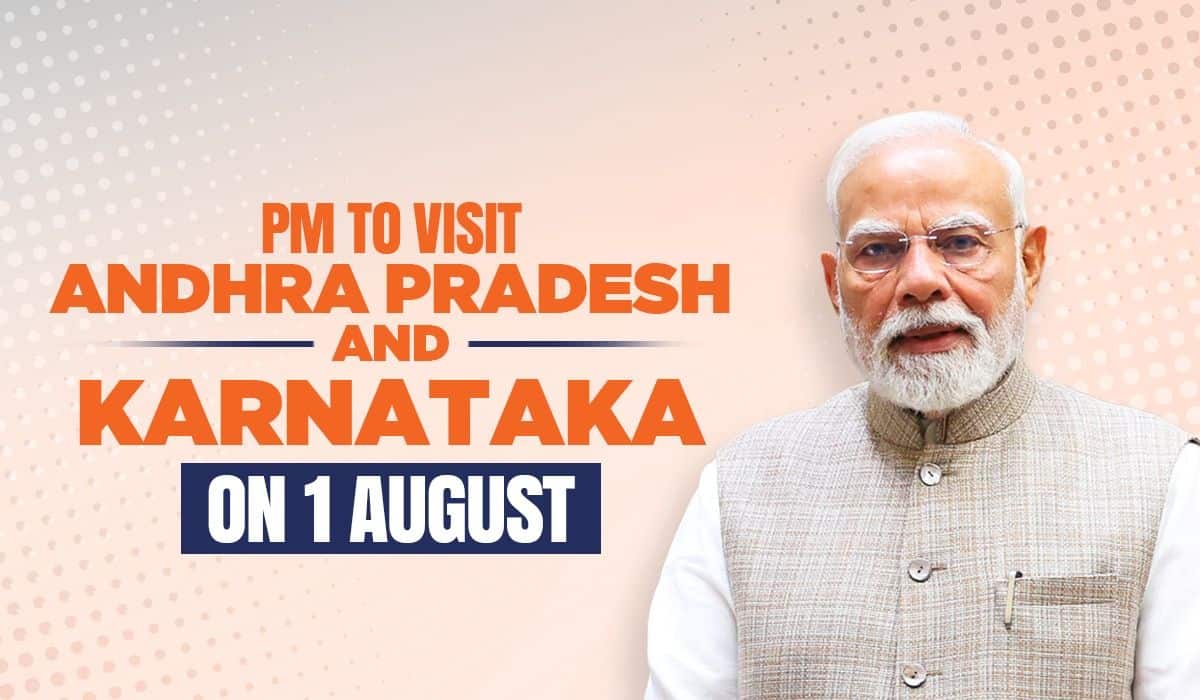
PM to visit Andhra Pradesh and Karnataka on 1 August
July 31, 2026
PM to lay the foundation stone, inaugurate and dedicate to the nation multiple development projects worth over ₹17,900 crore in Bhogapuram in Vizianagaram, Andhra Pradesh
PM to inaugurate the Alluri Sitarama Raju International Airport at Bhogapuram
State-of-the-Art Greenfield Airport developed at cost of ₹5,640 crore, to strengthen Air Connectivity and drive Regional Growth
Airport Terminal Design Inspired by Andhra Pradesh's Chuttilu Cottages, Araku Valley and the Flying Fish
PM to lay Foundation Stone of Andhra Pradesh's First Semiconductor Manufacturing Facility
PM to inaugurate the Swami Vivekananda Cultural Youth Centre - Viveka Smaraka at Sri Ramakrishna Ashrama in Mysuru
Viveka Smaraka commemorates Swami Vivekananda's historic visit to Mysuru in November 1892
Viveka Smaraka to Inspire Youth Through Value-Based Education, Leadership and Personality Development

Prime Minister Shri Narendra Modi will visit Andhra Pradesh and Karnataka on 1 August 2026. At around 11 AM, the Prime Minister will undertake a walk-through of the passenger terminal building of Alluri Sitarama Raju International Airport at Bhogapuram in Vizianagaram district, Andhra Pradesh. At around 11:30 AM, he will inaugurate the airport and lay the foundation stone, inaugurate and dedicate to the nation multiple development projects worth over ₹17,900 crore in Bhogapuram. He will address the gathering on the occasion. Thereafter, at around 3:30 PM, the Prime Minister will inaugurate the Swami Vivekananda Cultural Youth Centre - Viveka Smaraka at Sri Ramakrishna Ashrama in Mysuru. He will also address the gathering on the occasion

PM in Andhra Pradesh

Prime Minister Shri Narendra Modi will inaugurate the Alluri Sitarama Raju International Airport at Bhogapuram, Andhra Pradesh. Developed under the Public-Private Partnership (PPP) mode at a cost of over ₹5,640 crore, the Greenfield airport has been designed to handle 6 million passengers annually.

The passenger terminal building has been designed to provide a modern, seamless and efficient travel experience. The airport incorporates advanced infrastructure, cutting-edge technologies and sustainable features to enhance operational efficiency and meet future aviation requirements.

The airport has been equipped with advanced technologies such as Artificial Intelligence (AI), Building Information Modelling (BIM), Airside 4.0 technologies, Airport Predictive Operations Centre (APOC), biometric passenger processing, automated baggage handling systems and intelligent operational monitoring solutions. These systems are expected to enhance operational efficiency, improve passenger convenience and safety, and optimise resource utilisation.

The project incorporates several sustainability features, including energy-efficient heating, ventilation and air conditioning (HVAC) systems, energy-efficient lighting, a 5 MW solar power plant, rainwater harvesting, smart building management systems, waste management initiatives, electric vehicle charging infrastructure, and environmental monitoring measures. The terminal has been designed in accordance with Green Building Standards and is registered with the U.S. Green Building Council (USGBC).

The airport's architectural design draws inspiration from the cultural heritage of Andhra Pradesh. The terminal's roof profile reflects the traditional Chuttilu cottages and the landscapes of the Araku Valley, while its flowing form symbolises the graceful movement of a flying fish, blending regional architectural elements with contemporary airport design. The airport is expected to provide a significant boost to tourism, trade, investment and employment generation in Andhra Pradesh while strengthening air connectivity in the region.

Prime Minister will lay the foundation stone of the ASIP Semiconductor Project at Visakhapatnam, being developed with an investment of over ₹460 crore. The facility is being developed by ASIP Technologies Pvt Ltd in partnership with APACT, Republic of Korea. It is Andhra Pradesh's first semiconductor manufacturing facility approved under the India Semiconductor Mission. The facility will manufacture around 96 million semiconductor chips annually and create high-skilled employment opportunities, while also fostering a robust ancillary ecosystem to support semiconductor manufacturing.

Prime Minister will lay the foundation stone for the Transmission System for Integration of Kurnool-IV Renewable Energy Zone (REZ) - Phase-I (4.5 GW), being implemented by POWERGRID through a Special Purpose Vehicle (SPV), with an investment of about ₹5,550 crore.

Prime Minister will also inaugurate the Transmission System for Kurnool Wind Energy Zone / Solar Energy Zone (Andhra Pradesh) – Part A & Part B, implemented at a cost of around ₹3,550 crore, and the Transmission Scheme for Solar Energy Zone in Ananthapuram (2,500 MW) and Kurnool (1,000 MW), implemented by POWERGRID at a cost of over ₹820 crore.

These transmission projects will enable the evacuation of power generated from the renewable energy zones in Kurnool and Ananthapuram and the transmission of power to beneficiaries across the country through the National Grid. They will facilitate the integration of a large quantum of renewable energy into the grid, improve the availability of clean power for demand centres, and contribute to India's energy transition and decarbonisation efforts by reducing dependence on fossil fuel-based power generation.

Prime Minister will dedicate to the nation and lay the foundation stone of National Highway projects worth over ₹1,880 crore. The projects to be dedicated include the four-lane access-controlled Greenfield highway from Recherla to Guruvaygudem section of NH-365BG, the four-lane access-controlled Greenfield highway from Guruvaygudem to Devarapalle section of NH-365BG, and the four-lane Tadipatri Bypass on NH-67. Prime Minister will also lay the foundation stone of the high-level bridge at Lingasamudram on the Penchalakona–Yerpedu section of NH-565. These projects will ease congestion in Vijayawada and several other cities, improve road safety, reduce travel distance and travel time between Visakhapatnam and Hyderabad, and promote regional connectivity.

PM in Karnataka

Prime Minister Shri Narendra Modi will inaugurate the Swami Vivekananda Cultural Youth Centre - Viveka Smaraka at Mysuru, Karnataka.

The Viveka Smaraka commemorates Swami Vivekananda's historic visit to Mysuru in November 1892 during his journey across India. During his stay, he delivered discourses, interacted with scholars and devotees, and received the patronage of Maharaja Sri Chamarajendra Wadiyar X, whose support enabled his journey to the Parliament of Religions in Chicago in 1893.

Established at the historic Niranjana Math, the Viveka Smaraka is spread across a built-up area of over 81,000 square feet and comprises a main building and an annex block. It houses a 4-D Experience Centre, an exhibition hall, an amphitheatre with a seating capacity of around 700, classrooms, conference rooms, a library, a reading room, a meditation and yoga hall, and a book stall. The centre also includes dedicated facilities for students preparing for competitive examinations.

Dedicated to the life, message and ideals of Swami Vivekananda, the Cultural Youth Centre aims to serve as a vibrant hub for value-based education, leadership development and personality building. It is expected to benefit more than 10,000 students from nearby educational institutions, as well as urban and rural youth, through lectures, workshops, short-term courses and capacity-building programmes inspired by Swami Vivekananda's philosophy of nation-building and character development.