Prime Minister Narendra Modi has been spearheading actionable social and policy changes that have been successfully deployed and experimented with across the length and breadth of the nation. By fostering a conducive environment, these are aimed to facilitate all-round development and bring peace and prosperity to people's lives. The PM has advocated the principle of "Sabka Saath, Sabka Vikas, Sabka Vishwas" to ensure that every citizen of India, regardless of their background, religion, or socioeconomic status, gets included in the nation's progress.
As per PM Modi, development is rooted in the idea of 'leaving no one behind'. Basic amenities such as access to a home, banking facilities, maternity care, food requirements of children, health needs/cost of children, access to tap water connections, clean drinking water, skill training, availability of bank loans, and institutional credit have been brought within reach of the common man. The impact created by key flagship schemes under the social security umbrella is unprecedented, and their direct and indirect benefits are now transferred to the masses.
Nationwide campaigns, including the stellar one Viksit Bharat Sankalp Yatra, have been launched to raise awareness through outreach activities to achieve saturation of all such pro-poor schemes of Government of India across the country covering all Gram Panchayats, Nagar Panchayats and Urban Local Bodies with the objectives of reaching the unreached, disseminating information and generating awareness about schemes, learning from the citizens and enrolment of potential beneficiaries through details ascertained during the Yatra. Continuously rising enrolments and beneficiaries from the various schemes over the decade testify to the success. Contrary to false claims by the opposition parties, the number of welfare programmes and beneficiaries across the spectrum of minorities in India has also increased. Be it amendments to the Waqf Act 1955 or the welfare initiatives launched for the empowerment of Minorities – it has been the PM's vision to provide impartial, just and equitable opportunities for all.
Over the past decade, the 'Sabka Saath, Sabka Vikas' approach has liberated 25 crore Indians from multi-dimensional poverty. Direct Benefit Transfer of Rs. 34 lakh crore through PM-Jan Dhan accounts had resulted in Rs. 2.7 lakh crore savings, allowing more funds to be redirected towards the welfare of the poor and the marginalised.
Schemes like PM Garib Kalyan Anna Yojana provide free food to 80 crore people, PM Awas Yojana with three crore houses, PM Ujjwala Yojana offers more than 11 crore free LPG connections, and Ayushman Bharat Cards now covering 30 crore+ beneficiaries have not only enhanced the lives of people experiencing poverty but have also empowered them to become Aatmanirbhar and contribute to the nation's development.
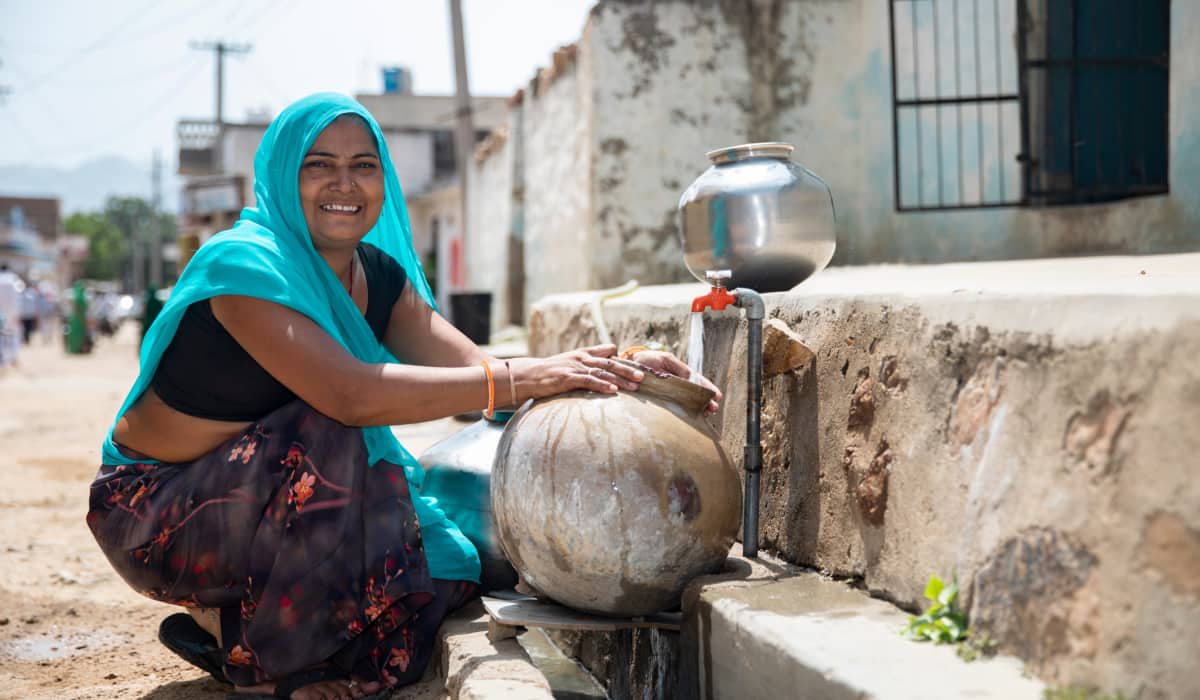
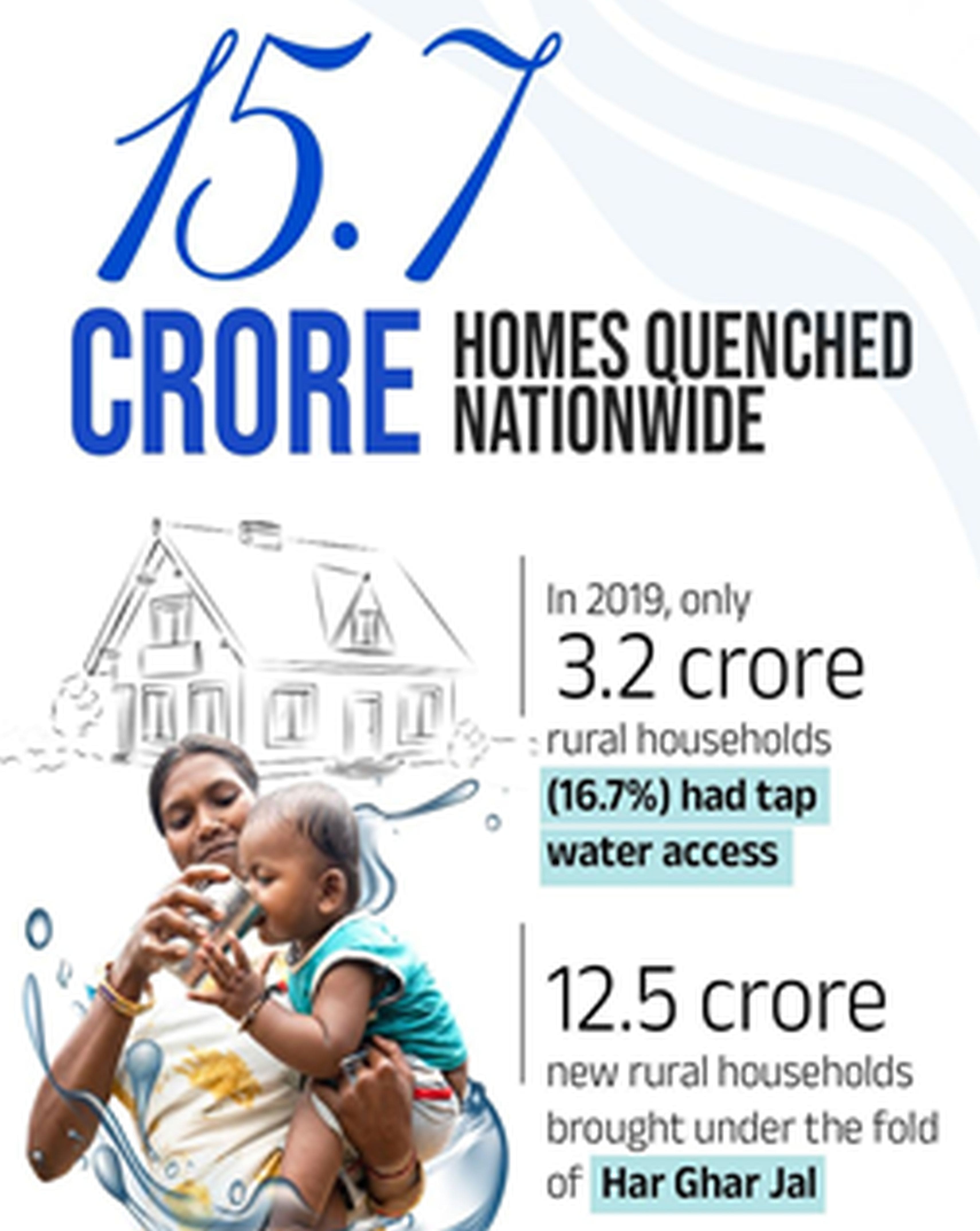
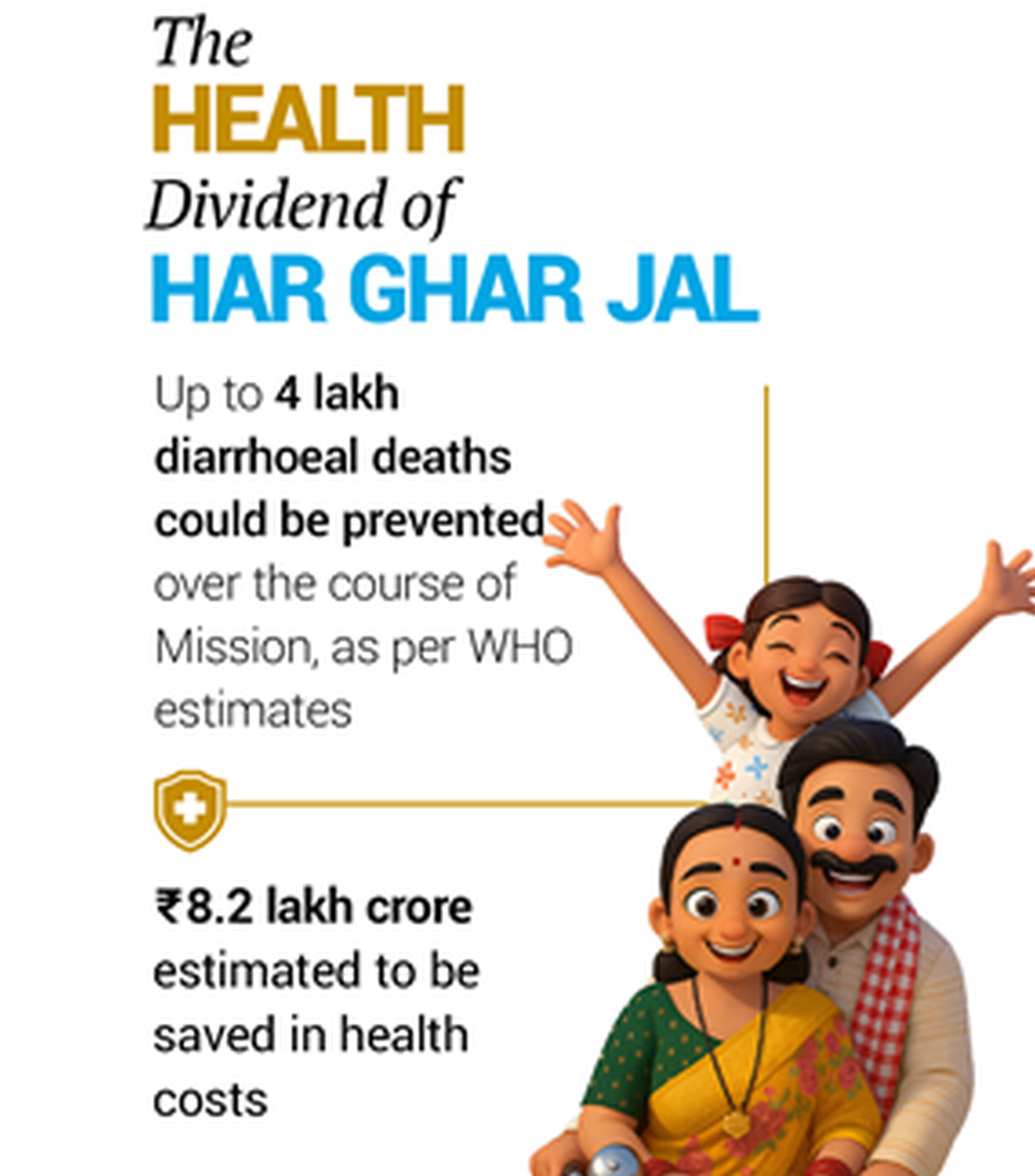
40 crore+ people benefitted under the Jal Jeevan Mission by 2023. Since January 1, 2023, on an average, 87,500 tap connections have been delivered daily. According to a WHO study, India will save $101 billion or Rs. 8.3 lakh crore+ through the Jal Jeevan Mission, which aspires to provide clean water to all. More than 6.5 crore hours spent on collecting water will be saved. India now has over 13 crore tap water connections, with over 10 crore connections added since August 2019.
PM-SVANidhi supports 78 lakh street vendors, while PM-JANMAN Yojana targets vulnerable tribal groups, and PM-Vishwakarma Yojana aids artisans and craftsmen, all of which reflects the government's commitment to inclusivity and leaving no one behind. The announcement of the rooftop Solar scheme by the Prime Minister on Jan 2023 will ensure that one crore households will get at least 300 units of free electricity per month.
Over 11.72 crore toilets have been built for the poor, 51.6 crore Jan Dhan accounts have been opened, and 6.27 crore hospital admissions have been done under the Ayushman Bharat Scheme. Fifty-six per cent of Jan Dhan account holders are women, and two-thirds of these accounts are in rural and semi-urban areas. As of December 2023, around 1.3 crore candidates have received training under PMKVY, out of which around 24 lakh individuals have been placed.
These schemes' outlays and outcomes exemplify a leap-frog jump in India's welfare and development sector. With such significant outcomes, Prime Minister Narendra Modi has been able to instil a deep belief in the minds of citizens that the true success of the nation lies in igniting a collective dream and realising it – a dream of an India where progress reaches every doorstep, where prosperity is shared by all, and where development translates into empowered lives. With him at the helm of affairs, the world now perceives and celebrates New India, the Mother of Democracy in the real sense. Narendra Modi's government has shown that India today practices only one religion –a united and inclusive India First.