Under Prime Minister Modi's leadership, the government has strongly emphasised creating a framework to help the impoverished escape poverty and ensure their advancement is long-lasting since 2014. At the same time, initiatives have been taken to build a growth-friendly environment that enables those in poverty to rise to the middle class while accommodating their evolving goals. Consequently, the middle class in India has grown into a driving force behind the country's progress.
There is no specific definition for the middle class. However, in the Indian scenario, the middle class is considered to have the most hard-working and consistent attitude. The rage of the Indian middle class was visible on various platforms before 2014. Their aspiration to live a better life is realised with multiple efforts by the current government. Before 2014, due importance was not given to the betterment of the middle class. The issues that affect the middle class, such as health, education, public transport, housing, etc., were missing from the priority list of the earlier governments. The PM Modi-led government's initiatives are gradually filling this gap in middle-class-centric governance. In the last decade, a host of initiatives and structural changes have immensely improved the living standard of Madhyam Varg.
The lower personal income tax rates have been one of the government's most significant initiatives under PM Modi. Recent Union Budgets have implemented several tax reforms to assist middle-class taxpayers. Individuals can now pay less taxes and retain more of their hard-earned money due to the adoption of lower tax slabs and a simplified tax structure, and they can use it for education and skill enhancement. Measures such as introducing GST in 2017 have eliminated the cascading impact of taxes. Moreover, the rebate limit for Personal Income Tax was raised to Rs. 7 lakh from Rs. 5 lakh in the new tax regime, leading to more savings for middle-class individuals. In fact, during the pandemic time, loans approved under the COVID-affected Sectors Loan Guarantee Scheme benefitted the Madhyam Varg.
Furthermore, the government has taken action to support job growth and entrepreneurship, which are crucial for the middle class to grow. Launching programmes like Make in India and Startup India intends to promote innovation, entrepreneurship, and the expansion of small and medium-sized businesses (SMEs). These programmes have encouraged middle-class members to pursue their dreams of becoming entrepreneurs and generating job opportunities. In addition, a reduction in compliance boosts the entrepreneurial spirit among them.
The middle class has traditionally believed they can rise to a more prosperous position through better education and government employment. Creating IITs, IIMs, and other higher education institutions has given them optimism. Over the past nine years, India has seen a rise in the number of prestigious universities. In the nine years prior, 353 new universities, seven new IITs, and seven new IIMs were founded. India has completely revolutionised its medical education system. Between 2014 and 2023, the number of medical colleges and AIIMS increased from 387 to 706 and 7 to 22, respectively. There has been a 112% surge in MBBS seats, rising from 51,348 in 2014 to 1,08,940 in 2023 and a 127% increase in PG seats, climbing from 31,185 in 2014 to 70,674 in 2023.
In addition, investments in digital infrastructure, connectivity, and transportation have all been given the utmost importance by the Modi government. Besides raising middle-class people's standard of living, these investments have opened up new opportunities for economic expansion and upward mobility. In addition, schemes like UDAN have benefited all middle-class sections. More than 2.50 lakh UDAN flights have helped more than 1.37 crore people by providing hassle-free travel. In addition, the expansion of the metro network, Vande Bharat trains, and Namo Bharat trains have ensured world-class travel for the Indian middle class.
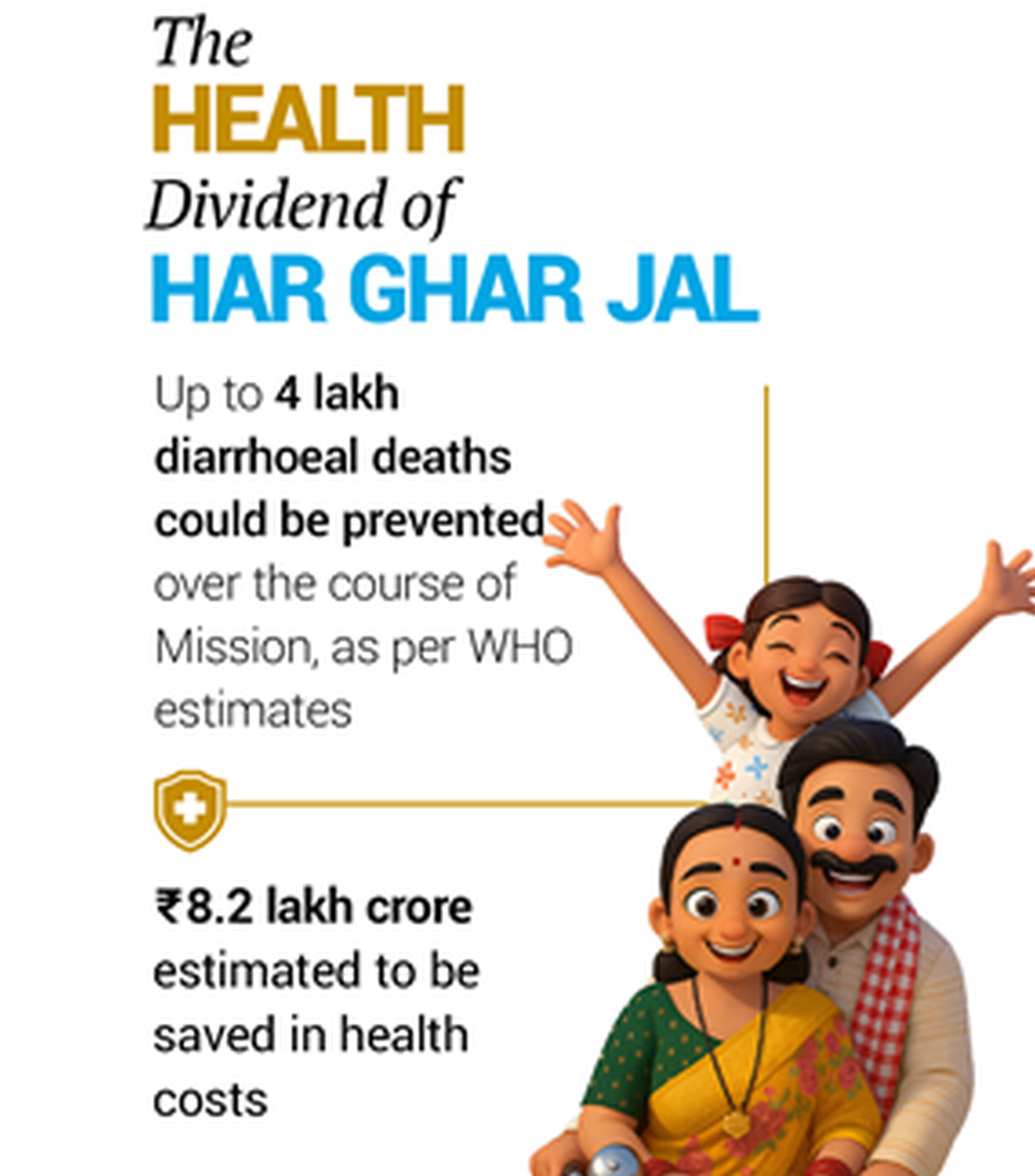
Health plays a significant role in ensuring quality of life. PM Modi-led government has made medicines affordable through Janaushadhi Kendras, saving over Rs. 25,000 crore in the last ten years. In addition, the government has created a robust healthcare infrastructure that has ensured quality medical services for the middle class.
The middle class in India has played a significant role in the nation's advancement. Despite being overlooked in past government initiatives, their honest contribution to the economy as committed taxpayers is now gaining recognition. The much-anticipated interim budget of 2024 has been set to fulfil the dream of owning a house for every middle-class family. An exclusive housing scheme for the middle class will bring respite to 43 crore Indians who fall within this demographic. Moreover, reforms such as the Real Estate (Regulation and Development) Act, 2016 [RERA] have ensured security in the delivery of homes, ensuring and creating confidence in the housing sector.
The middle class has profited through the Modi government's policies regarding economic growth, social mobility, and overall well-being over the past decade. The government's commitment to bolstering the middle class and ensuring their sustained growth and prosperity in the years to come can be seen in its measures, ranging from tax reforms and affordable housing to healthcare, education, and entrepreneurship. The middle class's prosperity is essential to realising India's dream of becoming a global economic powerhouse, and the Modi government's initiatives in this area are vital to building a more resilient and inclusive society.