“Bihar is famous for its rich history and lively culture. People of Bihar, who are contributing in all walks of National life, have created a special identity with their hard work and determination”. Prime Minister Narendra Modi on Bihar Diwas.
For decades, politics in Bihar revolved around caste identity, however in recent years, Bihar has emerged as a focal point for developmental initiatives under the leadership of Prime Minister Narendra Modi. With a steadfast commitment to progress and prosperity, the Modi government has implemented a slew of transformative measures aimed at bolstering infrastructure, enhancing social welfare, and fostering economic growth across the state.
One of the cornerstone initiatives driving Bihar's transformation is the Prime Minister's Special Package, a monumental commitment of Rs. 1.25 lakh crore announced in 2015. This comprehensive package spans crucial sectors, including transportation, education, healthcare, and rural development. With a strategic focus on infrastructure, the package allocates significant funds for the expansion and modernization of railways, highways, and airports, laying the groundwork for seamless connectivity and logistical efficiency across Bihar.
Railway development has been a priority, with over 1,300 km of rail tracks commissioned since 2014 and 95% of the broad-gauge route electrified. Additionally, 86 railway stations in Bihar, including Gaya, Hajipur, Bapudham, and Motihari, have been identified for development with multi-story station buildings, roof plazas, and enhanced passenger amenities under the Amrit Bharat Station Scheme.
The expansion of national highways in Bihar under the Bharatmala project has been instrumental in facilitating trade and commerce, with over 2,300 kilometers of highways built in the past 5 years alone. Moreover, Pradhan Mantri Gram Sadak Yojana (PMGSY) has led to the construction of over 6,000 km of rural roads in the last 3 years, enhancing connectivity and accessibility in remote areas.
The approval for the construction of key bridges across major rivers like the 6-lane bridge across the Ganga connecting Digha and Sonepur in Bihar and a bridge on the Son River between Bihar and Jharkhand, both of which have been pending for decades, also exemplifies the government's strategic infrastructure investments.
The BJP government's commitment to smart urbanization in Bihar is evident through the development of smart cities like Bhagalpur, Biharsharif, Muzaffarpur, and Patna. The impending introduction of metro rail services in Patna further underscores the government's vision for modern, efficient urban transportation systems in Bihar. Another key milestone in this journey towards progress is the inauguration of the 660 MW Unit of the Barh Super Thermal Power Project, marking a pivotal moment in the state's quest for energy sufficiency and economic advancement.
In tandem with infrastructural advancements, Bihar is also witnessing a surge in tourism development. Under the Swadesh Darshan Scheme, several projects have been completed, encompassing diverse circuits such as the Tirthankar Circuit, Spiritual Circuit, Buddhist Circuit, Rural Circuit, and Spiritual Circuit. These projects not only enhance tourism infrastructure but also showcase Bihar's rich cultural heritage and religious significance to the world. Additionally, the identification of Gaya and Nalanda for development under the Swadesh Darshan 2.0 and the completion of basic facilities at Vishnupad temple in Gaya and Patna Sahib highlight the government's commitment to promoting tourism and pilgrimage in the state.
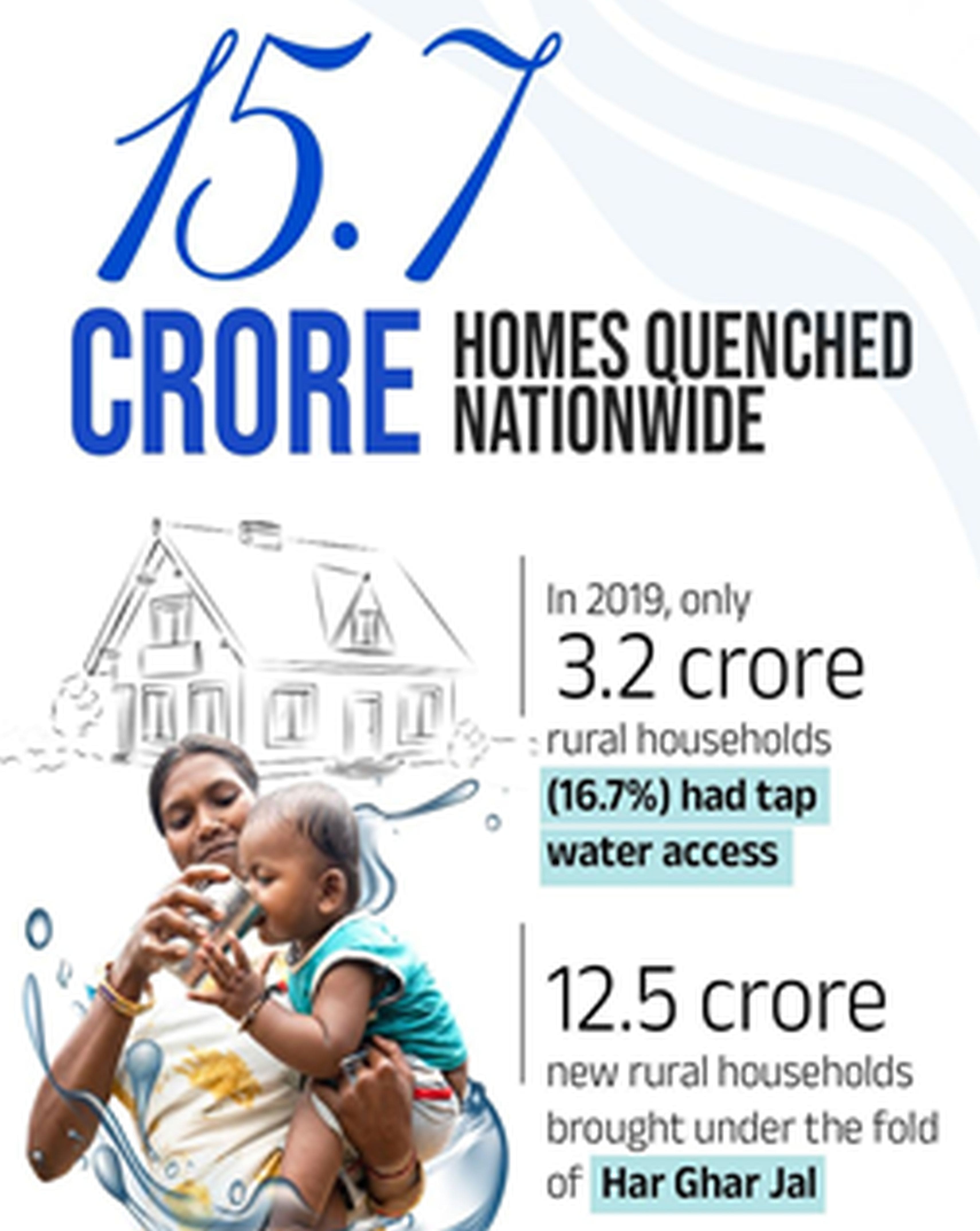
Furthermore, significant strides have been made across various social welfare initiatives in Bihar. Through the PM Garib Kalyan Anna Yojana, a staggering 8.7 crore individuals have benefited from free foodgrains, ensuring food security for the populace. The state has prioritized housing, completing the construction of an impressive 36 lakh houses under the Pradhan Mantri Awas Yojana. Moreover, 1.57 crore households in Bihar have been connected to tap water since the initiation of the Jal Jeevan Mission.
The empowerment of the poor and marginalized is a key focus area. Thanks to the Pradhan Mantri Shram Yogi Maan-Dhan scheme, more than 2 lakh unorganized sector workers now benefit from a monthly pension of Rs 3,000. Additionally, over 1 lakh street vendors have accessed loans under the PM SVANidhi Yojana, further amplifying efforts towards economic empowerment. These initiatives have played a significant role in improving the financial stability and social welfare of these vulnerable sections of society.
Empowering women has also been a central priority, with more than 1.22 crore women from rural households in Bihar organized into 10.54 lakh Self Help Groups (SHGs) under the Deendayal Antyodaya Yojana-National Rural Livelihood Mission (DAY-NRLM). In addition, over 5 crore Mudra Yojana loans have been given to entrepreneurs from Bihar, out of which around 70 percent were to women entrepreneurs.
In the realm of healthcare, Bihar is witnessing a significant expansion of medical infrastructure and access to healthcare services. Over 88 lakh Ayushman cards have been issued, enabling widespread access to healthcare services for its residents. With the establishment of district NCD clinics, cardiac care units, and community health centers, the state is also enhancing healthcare delivery at the grassroots level.
On the educational front, substantial investments have been made in Bihar, with the establishment of 5,478 smart classrooms in 2,739 elementary government schools. Additionally, under the Samagra Shiksha scheme, the approval of 4,021 additional classrooms, 6,763 toilets, 578 ramps, 160 computer rooms, 113 library rooms, and 64 science labs further underscores the commitment to enhancing educational opportunities for the youth of Bihar. Top of Form
In conclusion, through strategic investments and grass-roots initiatives, the Modi government has laid the foundation for a brighter, more inclusive future for the people of Bihar. As the state continues on its journey of growth, the government’s unwavering commitment to development remains steadfast, driving Bihar towards new heights of success and prosperity.