Every young person is a potential and opportunity—for creation, innovation, and change. The world becomes their playground as they enjoy freedom and choice to carve out a unique journey, and create their own learning curves. However, the youth in Jammu and Kashmir has felt otherwise for 70 odd years.
The valley of Kashmir, known for its pristine charm, has been under a pall of militancy for over three decades now. A name familiar with snow-capped mountains, lush green meadows, and an unmistakable warmth in the eyes of its people, Jammu and Kashmir is a beauty, unparalleled, but not without its flaws.
In honouring the profound legacies of Syama Prasad Mookerjee and realising the aspirations of Sardar Patel and Babasaheb Ambedkar, Prime Minister Narendra Modi showed peerless courage in abrogating Article 370. This historic move, affirmed by the Supreme Court of India, stands as an irreversible transformation, heralding the reinstatement of an era of peace and progress.
Post 2019, Jammu and Kashmir has made significant strides towards freedom, fraternity, and development. With the spirit of Sabka Saath, Sabka Vikas, PM Modi’s government has introduced remarkable initiatives, addressing the diverse needs of every segment within the J&K society. A particular emphasis has been placed on empowering the youth through targeted programs and policies.
With a past riddled with shutdowns and incidents of stone pelting, the youth in J&K today looks towards a future beaded with brighter prospects. Afshan Ashiq exemplifies this leap like no other. Till December 2014, Ashiq was a stone pelter in Srinagar, yet today she is doing wonders as a leading football player in Jammu and Kashmir. With the right kind of encouragement and support from the government, Ashiq today has transcended her tumultuous past, embracing a future filled with promise. Seeing this overwhelming transformation, PM Modi had said that it was time we replace ‘Bend it like Beckham’ with ‘Ace it like Afshan’.
The Modi government took a multisectoral approach to restore normalcy to the state. Sports was one realm where the government actively encouraged the youth to explore athletic pursuits, fostering unique opportunities for personal growth and advancement. The government has undertaken 30 sports infrastructure projects (with a budget of Rs. 273.85 crore) along with setting up of football clubs, upgradation of sporting venues, and making available expert training and sports equipment. A remarkable surge in sports engagement has been witnessed, with over 62 lakh participations in various activities, signifying a substantial increase from the less than 2 lakhs recorded in 2018-19. Today we see youngsters in Jammu and Kashmir excelling in various sports, including kickboxing and karate.
Education is another key area of focus that has seen substantial investment from the government. While free textbooks are being provided to over 5.50 lakh students every year, more than 8 lakh students receive assistance for their uniforms annually. In the last 70 years, there were only 4 medical colleges, but 7 new medical colleges have been built by the Modi government along with 28 nursing colleges, and 19 paramedic colleges. 800 more medical seats have been added taking the total to 1300 today. Remarkably, under PM Modi, J&K has become the 1st state to have IIT, IIM and 2 AIIMS.
Giving special attention to the needs and aspirations of the tribals in the state, the government has built 8 new hostels, 200 smart schools, and 6 Eklavya Model Residential Schools. 2,000 tribals have been skilled so far, and scholarships to 46,000 students have been provided. Notably, a 210% increase in the Pre, Post, and Merit cum Means Scholarship schemes has been witnessed—from 1.43 lakh in 2018-19 to over 3 lakh in 2022-23. Moreover, Scheduled Caste scholarships now cover 63,550 students from only 8,250 in 2018-19.
In terms of employment, the Self-employment Scheme has created 7.4 lakh self-employment and livelihood opportunities since 2021-22. Under Mission Youth, initiatives like Mumkin, Tejaswini, and Spurring Entrepreneurship support over 5 lakh youth with sustainable livelihood opportunities and direct financial assistance with a special focus on women.
In order to bridge the skill gap, the government has also organised various skill development programs. Nearly 31,798 youth have been trained under HIMAYAT—a placement-linked, market-driven skill training program. To further support the youth, the government also actively conducts job fairs and placement drives at divisional and district levels, creating a fruitful link between unemployed youth and potential employers. 151 job fairs have taken place in the last two years, seeing participation of a total 1,631 companies. In addition, a total of 4,74,464 candidates have participated in career counselling sessions in the last three years along with 2,12,109 candidates getting career advice in awareness camps.
The government has also brought in much-needed transparency when it comes to government vacancies. Large-scale recruitment drives have been undertaken, and a total of 31,830 vacancies in government sector have been filled since August 2019. An Accelerated Recruitment Committee was set up to supervise public sector recruitment in 2020.
With attractive industrial and investment policies for the state, PM Modi’s government strongly promotes local handicrafts via a standalone policy and schemes like Karkhandar. Financial assistance is also provided to cooperatives and self-help groups to further empower people at the grass-roots level.
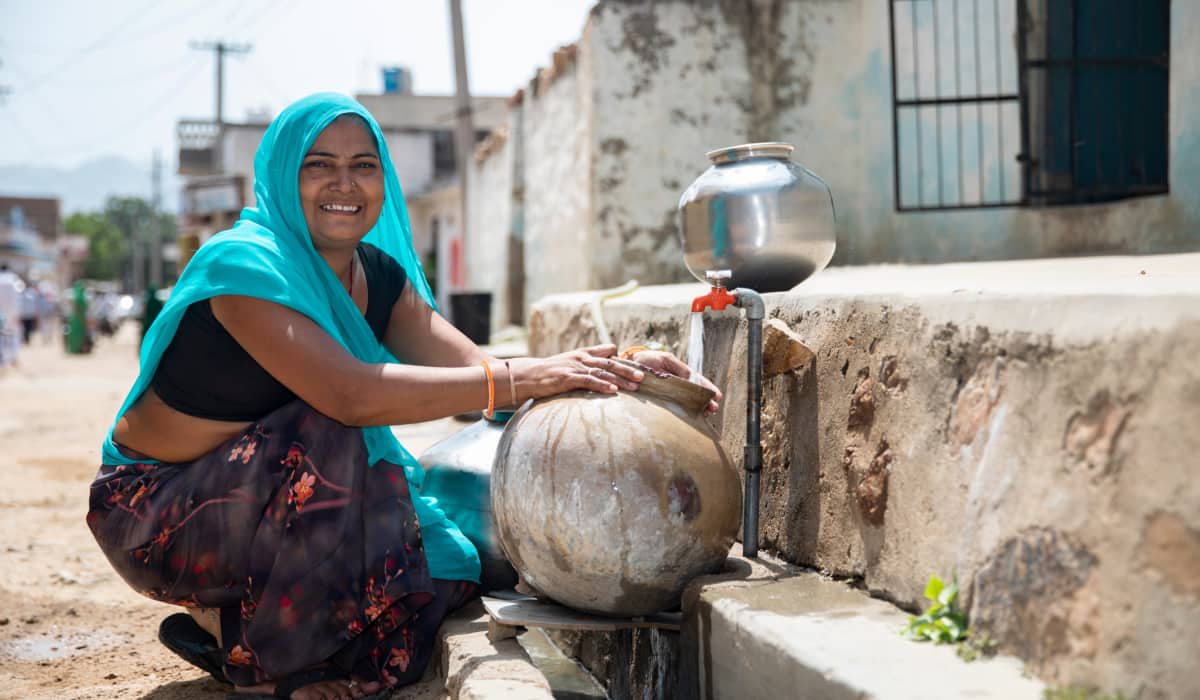
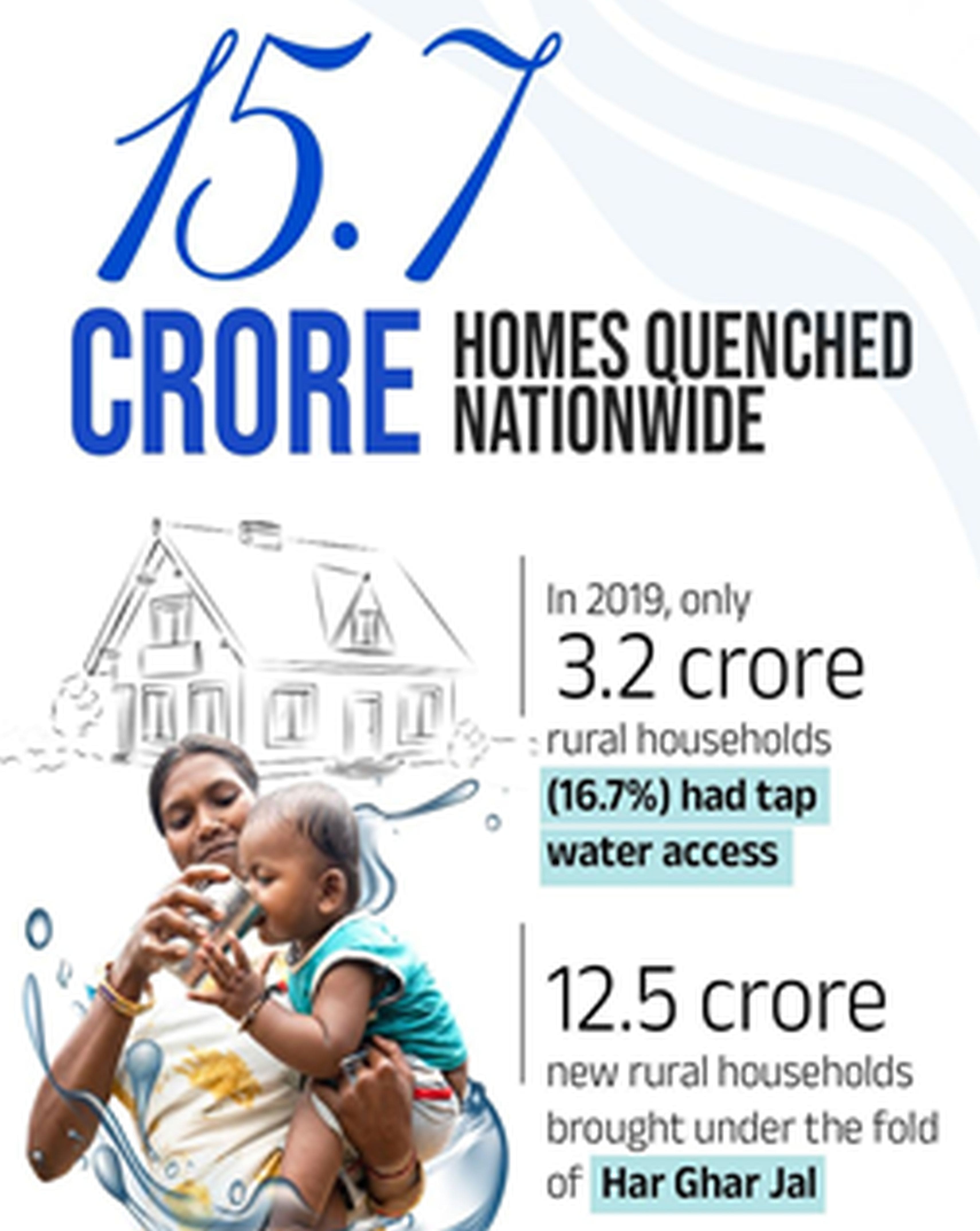
PM Modi has guaranteed that the youth of Jammu and Kashmir will not suffer like their parents and grandparents. This approach is further given a strong boost with nearly 63 development projects (totaling Rs. 80,000 crore) initiated by his government since 2019 across sectors like infrastructure, education, health, irrigation, and electricity. There is special focus on saturating Jammu and Kashmir with basic amenities. While only 24,000 houses were built in 70 long years, PM Modi has given houses to 1,45,000 people in just 5 years. Drinking water is now available to 13 lakh families. Also, the government has been successful in creating a terror-free atmosphere, paving way for creative energies to take root.
All these initiatives combined have led to emergence of myriad opportunities and prospects for youth in Jammu and Kashmir today—something we could not have imagined a few years ago. Development of infrastructure, increasing connectivity, rising investments, and good governance have transformed the socio-economic landscape of the state. This shall empower the common man in Jammu and Kashmir to make positive contributions towards peace and prosperity in the state, giving way for sustainability and inclusiveness, and a Viksit Bharat by 2047.
Going by the spirit of the Vajpayee doctrine of ‘insaniyat, jamhooriyat, Kashmiriyat', PM Modi has indeed shown courage and ushered in an era of only one symbol, one Constitution, and one Bharat.