2025 – The year of reforms

Published By : Admin | December 30, 2025 | 16:25 IST

India has emerged as the centre of global attention. This is due to the innovative zeal of our people. Today, the world sees India with hope and confidence. They appreciate the manner in which the pace of progress has been accelerated with next-generation reforms, which are cross-sectoral and amplify the nation’s growth potential.

I have been telling many people that India has boarded the Reform Express.

The primary engine of this Reform Express is India’s demography, our young generation and the indomitable spirit of our people.

2025 will be remembered as a year for India when it focused on reforms as a continuous national mission, building on the ground covered over the past 11 years. We modernised institutions, simplified governance, and strengthened the foundations for long-term, inclusive growth.

We moved ahead decisively…with higher ambition, faster execution and deeper transformation. The reforms have been about enabling citizens to live with dignity, entrepreneurs to innovate with confidence and institutions to function with clarity and trust.

Let me cite a few examples of the reforms undertaken.

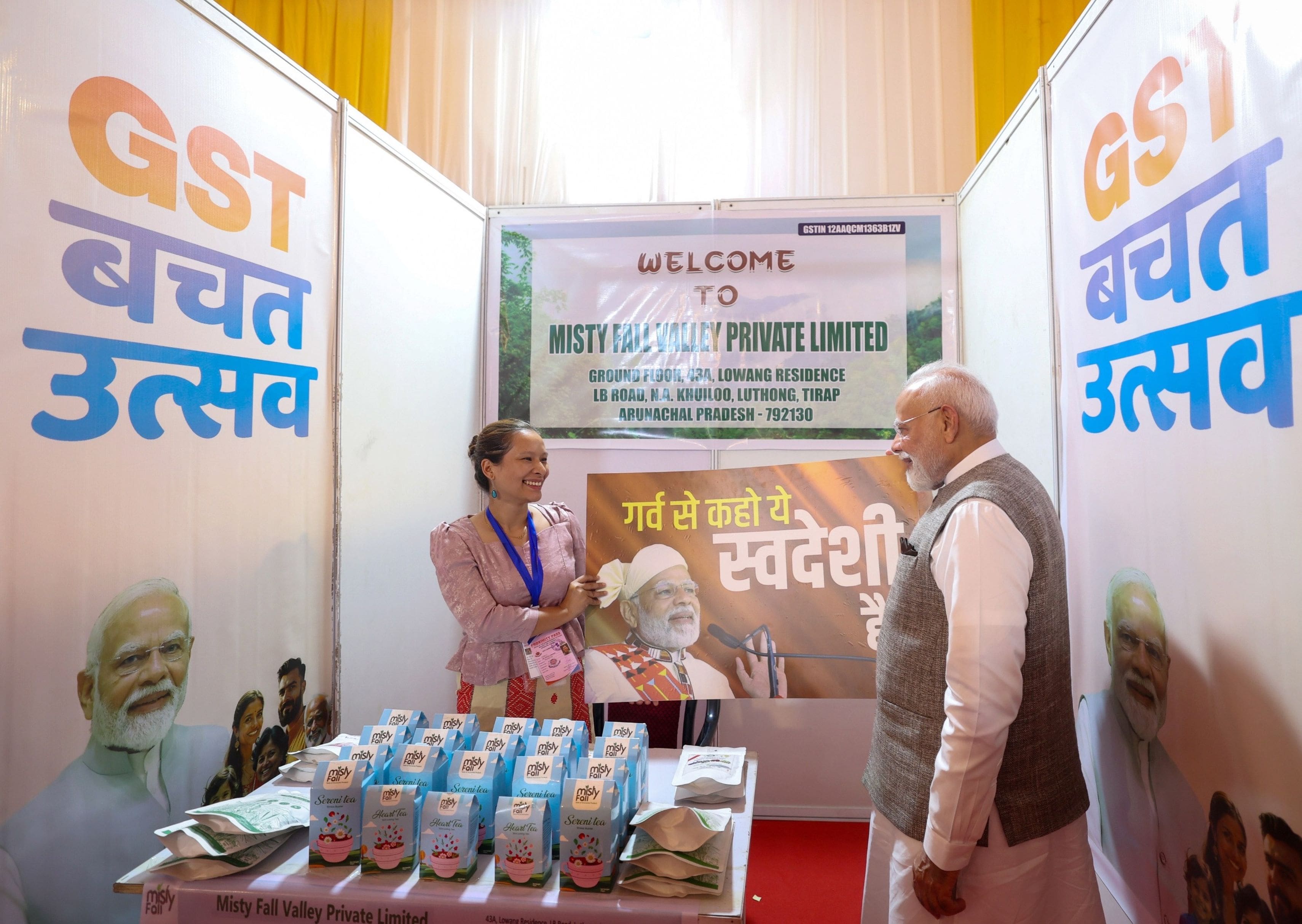
GST reform:

• A clean two-slab structure of 5% and 18% has been implemented.

• The burden has been eased on households, MSMEs, farmers and labour-intensive sectors.

• The purpose is to ensure dispute reduction and better compliance.

• This reform has boosted consumer sentiment and demand. Sales have grown in the festive season.
Unparalleled relief for the middle class:

• In a first, individuals earning up to Rs. 12 lakh a year faced no income tax at all.

• Obsolete Income-tax Act of 1961 has been replaced with the modern and simple Income Tax Act, 2025.

• Together, these reforms mark India’s move towards a transparent, technology-driven tax administration.

Boost to small and medium businesses:

• Definition of “small companies” has been expanded to include firms with turnovers up to Rs. 100 crore.

• Compliance burdens and associated costs for thousands of companies will get reduced.

100% FDI Insurance reform:

• 100% FDI permitted in Indian insurance companies.

• This will give a fillip to insurance penetration and security for the people.

• Apart from enhanced competition, it would offer better insurance choices and improved service delivery for the people.

Securities Market Reform:

• Securities Market Code Bill has been introduced in Parliament. It will enhance governance norms in SEBI, also enhance investor protection, reduce compliance burden and enable a technology-driven securities market for a Viksit Bharat.

• Reforms will ensure savings thanks to reduced compliances and other overheads.

Maritime and Blue Economy Reforms:

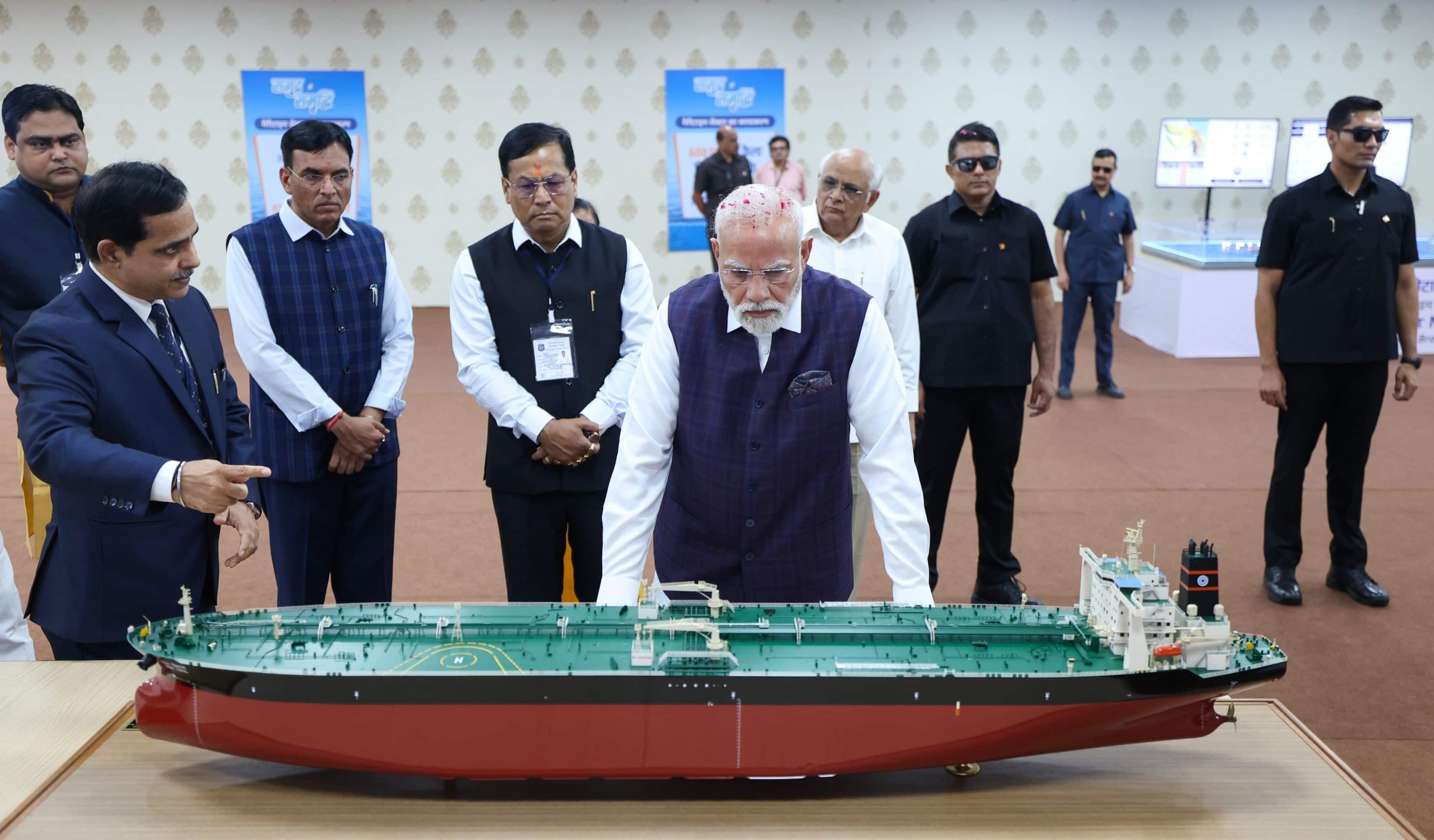
• In a single Parliament session, the Monsoon Session, five landmark maritime legislations were passed: the Bills of Lading Act, 2025; the Carriage of Goods by Sea Bill, 2025; the Coastal Shipping Bill, 2025; the Merchant Shipping Bill, 2025; and the Indian Ports Bill, 2025.

• These reforms simplify documentation, make dispute resolution easier and reduce logistics costs.

• Outdated Acts dating back to 1908, 1925 and 1958 have also been replaced.
Jan Vishwas…Ending the Era of Criminalisation:

• Hundreds of outdated laws have been scrapped.

• 71 Acts have been repealed through the Repealing and Amendment Bill, 2025.

Boosting Ease of Doing Business:

• A total of 22 QCOs were revoked across synthetic fibres, yarns, plastics, polymers, and base metals, while 53 QCOs were suspended in various steel, engineered, electrical, alloy, and consumer end product categories, covering a broad spectrum of industrial and consumer materials.

• This will increase India’s share of apparel exports; lower production costs in diverse industries like footwear, automobiles; ensure lower prices for domestic consumers for electronics, bicycles and automotive products.

Historic labour reforms:

• Labour laws have been reshaped, merging 29 fragmented laws into four modern codes.

• India has created a labour framework that secures the interests of workers while boosting the business ecosystem.

• The reforms focus on fair wages, timely payment of wages, smoother industrial relations, social security and safer workplaces.

• They ensure greater female participation in the workforce.

• Unorganised workers including contract workers are brought under the ESIC and EPFO expanding the coverage of formal workforce.
Diversified and expanded markets for Indian products:

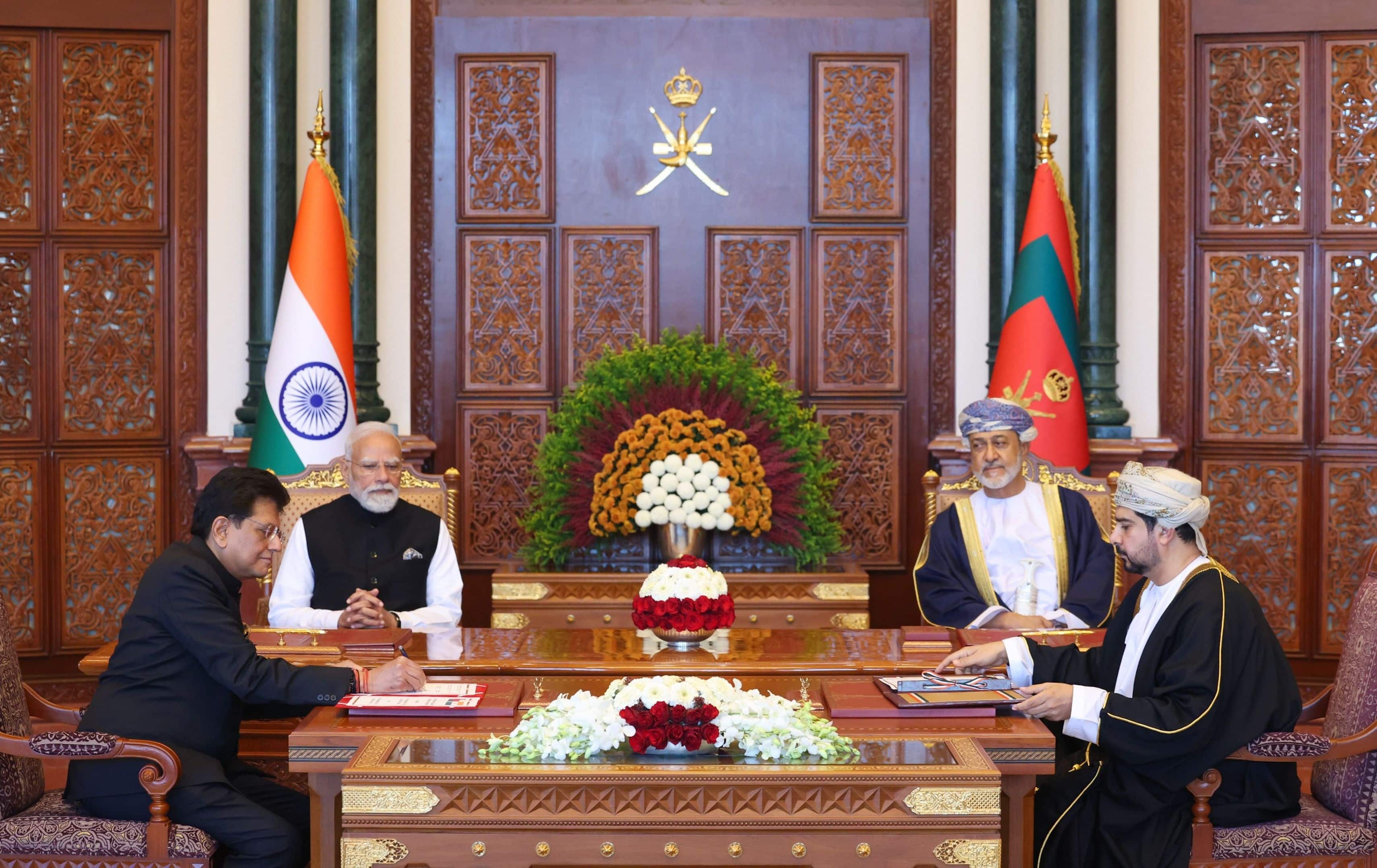
Trade deals inked with New Zealand, Oman and Britain. These will add to investments, boost job creation and also encourage local entrepreneurs. They reinforce India’s position as a trusted and competitive partner in the global economy.

The FTA with the European Free Trade Association, comprising Switzerland, Norway, Iceland and Liechtenstein, has been operationalised. This marks India’s first FTA with developed European economies.
Nuclear Energy Reforms:

The SHANTI Act is a transformational step in India’s clean-energy and technology journey.

• Ensures a strong framework for the safe, secure and responsible expansion of nuclear science and technology.

• Enables India to meet the rising energy demands of the AI era, like powering data centres, advanced manufacturing, green hydrogen and high-technology industries.

• Promotes the peaceful application of nuclear technologies in healthcare, agriculture, food security, water management, industry, research and environmental sustainability, supporting inclusive growth and improved quality of life.

• Opens new pathways for private sector participation, innovation and skill development. Creates opportunities for India’s youth to lead in frontier technologies and next-generation energy solutions.

This is an opportune moment for investors, innovators and institutions to partner with India, to invest, innovate and build a clean, resilient and future-ready energy ecosystem.

A Landmark reform in Rural Employment guarantee:

• Viksit Bharat- G RAM G Act, 2025 Rozgar Guarantee framework raises employment guarantee from 100 to 125 days.

• This will result in increased spending towards strengthening village infrastructure and livelihoods.

• The aim is to turn rural work into a means to ensure higher incomes and better assets.

Education Reforms:

Bill has been introduced in Parliament. 

• Single, unified higher education regulator will be established.

• Multiple overlapping bodies like the UGC, AICTE, NCTE will be replaced with the Viksit Bharat Shiksha Adhishthan.

• Institutional autonomy will be strengthened, with innovation and research boosted.

What makes the reforms of 2025 significant is not only their dimension but also their underlying philosophy. Our Government has prioritised collaboration over control and facilitation over regulation in the true spirit of a modern democracy.

These reforms were designed with empathy, recognising the realities of small businesses, young professionals, farmers, workers and the middle class. They were shaped by consultation, guided by data and anchored in India’s constitutional values. They add momentum to our decade-long efforts to move away from a control-based economy to one that operates within a framework of trust, keeping the citizen at its core.

These reforms are aimed towards building a prosperous and self-reliant India. Building a Viksit Bharat is the polestar of our development trajectory. We will continue pursuing the reform agenda in the coming years.

I urge everyone in India and abroad to deepen their bond with the India growth story.

Keep trusting India and investing in our people!

Explore More
Today, the entire country and entire world is filled with the spirit of Bhagwan Shri Ram: PM Modi at Dhwajarohan Utsav in Ayodhya

Popular Speeches

Today, the entire country and entire world is filled with the spirit of Bhagwan Shri Ram: PM Modi at Dhwajarohan Utsav in Ayodhya
Mutual fund SIP inflows rise by Rs 827 crore to 3-month high of Rs 31,781 crore in June

Media Coverage

Mutual fund SIP inflows rise by Rs 827 crore to 3-month high of Rs 31,781 crore in June
NM on the go

Nm on the go

Always be the first to hear from the PM. Get the App Now!
...
A life devoted to India’s unity and progress
July 06, 2026

Today, 6th July, is a special day for countless people who cherish the ideals of nationalism and selfless service. We commemorate the 125th birth anniversary of Dr. Syama Prasad Mookerjee, whose life remains a timeless example of courage and unwavering commitment to Maa Bharti. Few leaders in modern India embodied the seamless confluence of intellect, public service and moral conviction as profoundly as Dr. Syama Prasad Mookerjee.

The young Syama Prasad was born into circumstances that could easily have assured him a protected and comfortable life. His father, Sir Ashutosh Mookerjee, was among the foremost educationists and intellectuals of his age. Yet, while destiny placed before him a path of privilege, his conscience led him towards one of sacrifice and national service. He was convinced that he could not remain a mute spectator to the turbulence of his times, be it fighting colonialism, communalism, humanitarian challenges and more. Along this journey, he endured profound personal tragedies, including the loss of an infant child and, later, his wife. Yet, these tragedies only deepened his resolve and strengthened his unwavering commitment to serve.

If there was one ideal that defined Dr. Syama Prasad Mookerjee’s public life above all else, it was the indivisibility of India. He stood firm during the upheaval of Partition to ensure that West Bengal remained an integral part of India. A few years later, that very conviction drew him to Jammu and Kashmir. Imprisonment did not deter him and isolation did not diminish him. His life came to an abrupt end in detention, far from the countless people whose cause he had made his own. There are moments in history when an individual’s final sacrifice transcends politics and enters the realm of national memory. Dr. Mookerjee’s last journey remains one such moment. Acharya Vinoba Bhave said that Dr. Mookerjee sacrificed himself for a cause in which he had faith. Years later, the revocation of Articles 370 and 35(A) in 2019 was the most fitting tribute to his martyrdom.

Dr. Mookerjee put India First and Indian values first. And he did it by building institutions and nurturing systems that defied conventional mindsets of those times. He became the youngest Vice Chancellor of the University of Calcutta. In his unique style, he brought positive changes that were patriotic and futuristic. Addressing a conference of educators, Dr. Mookerjee put it wonderfully when he said, “It is incorrect to look upon educational institutions as factories to produce potential clerks and low-paid staff. We have to turn out students who are capable of providing leadership to our self-governing institutions, such as municipal corporations, provincial and central legislatures and also of directing the affairs in various fields of life such as financial, commercial and industrial ones.”

Under his leadership, Calcutta University undertook unique efforts such as improving library infrastructure, boosting research in sciences, encouraging the study of artefacts and establishing courses in agriculture, to name a few. He drew attention to areas such as sports, teacher training and student welfare. To instil a sense of pride among students and alumni, he began a practice of marking 24th January as the foundation day of the University. He requested none other than Gurudev Tagore to compose a song for the University.

Yet another example of this spirit can be seen in the later part of his life, when he decided to form the Bharatiya Jana Sangh. At a time when the Congress Party was omnipresent, he felt that there was all the more reason for an alternative voice to speak up for India’s progress while staying attached to our cultural roots. It was perhaps fitting that the party’s symbol was the Diya, the earthen lamp. A single lamp may appear modest, yet it possesses the power to dispel darkness far beyond itself. It is exactly what the Jana Sangh did both during the years it was active and beyond.

Dr. Syama Prasad Mookerjee’s tenure as India’s first Minister for Industry and Supply reveals a statesman whose conception of development was remarkably comprehensive and humane. He viewed industry as a means of restoring dignity, opportunity and confidence to a newly independent nation. He respected wealth creation and value addition. While laying the foundations of modern industrial India through pioneering initiatives such as the Damodar Valley Corporation, the Sindri Fertiliser Plant and a robust industrial policy, he simultaneously ensured that India’s traditional strengths were not neglected. Handlooms, cottage industries, artisans and textile workers found in him an equally committed champion.

Here, I would like to share a personal experience. The Sindri plant, which Dr. Mookerjee worked to establish with a clear vision of self-reliance, was ignored by those who ran the nation for several decades. I feel honoured that our Government had the opportunity to contribute to its revival. It was indeed among the most special moments to have been there for that programme.

India’s civilisational tradition has long celebrated dialogue and discussions. Dr. Mookerjee embodied this democratic spirit. He joined Pandit Nehru’s Cabinet, believing that the task of nation-building in the early years transcended political differences. He served with sincerity and a constructive spirit. But when he felt that questions of national importance demanded a different course, he relinquished office with dignity and devoted himself wholeheartedly to the political work he believed the nation required.

75 years ago, Pandit Nehru brought the First Amendment, which was a direct assault on free speech. Dr. Mookerjee was among its staunchest critics. He understood fully what the Congress was capable of doing. And he was proven right. Those who brought the First Amendment 75 years ago imposed the Emergency in 1975 and 50 years ago, brought in the 42nd Amendment Act, which again struck at the core of liberal democratic values.

Dr. Mookerjee also stood out for his humanitarian efforts. When the most tragic famine struck Bengal in 1943, Dr. Mookerjee immersed himself in serving those affected. He ensured that several canteens and relief centres were opened to feed people. On one hand, he was deeply shaken by the plight of his people while on the other, he was repulsed by the insensitivity of the colonial rulers. He even wrote a book, Panchasher Manwantar, in which he expressed his angst. When a super cyclone hit Medinipur in 1942, his efforts to restore normalcy were widely lauded.

Speaking at a college in Kolkata, Dr. Mookerjee urged the youth, “Whatever work you undertake, do it seriously, thoroughly and well; never leave it half-done or undone, never feel yourself satisfied unless and until you have given it your very best.” As India advances towards the goal of a Viksit Bharat, the finest tribute we can pay him is to strive every day to build the strong, united, self-confident and compassionate India that he so deeply believed in. And knowing today’s youth, I am certain they will rise to the occasion and do exactly that.