The story of India’s economy under Prime Minister Narendra Modi has been that of recovery, resurgence, recapitalisation, reform, and realisation.
In 2014, when the Government under Prime Minister Narendra Modi, took charge there was inheritance of losses. A fragile economy with lagging state of affairs, increased corruption, policy paralysis, lack of confidence by investors and public at large in the political establishment were the major hurdles before the newly elected government. The Government chose to take things head on and succeed. The India now is the fifth largest Economy in the world.
What can be termed as the biggest achievement of the Modi government is the digital push. While previous UPA government got cold feet on Aadhaar, Narendra Modi led NDA government ushered the action 2016. The success of the Jan Dhan Yojana, which has registered over 51.3 Crore first-time bank account holders since 2014, resulted in the JAM trinity becoming the foundation for zero-leakage welfare delivery for over 116 Crore beneficiaries, across hundreds of programmes.
One of the biggest ticking bomb inherited from the previous Government was the Banking system which was on the verge of explosion. A considerable amount of time was spent on fixing the NPA crisis (non-performing assets) that curtailed lending to medium, small, and micro enterprises (MSMEs. Public sector banks were unable to move bad loans off their balance sheets, thus unable to meet the growing credit demand to move the economy. Unchecked credit flow to corporations with questionable projects but political connections formed the foundation of a crisis that could have derailed India’s entire banking system.
From a combined loss of more than Rs. 85,000 Crore in 2017-18, PSBs are all set to have another year of record profits, exceeding Rs. 1 Lakh Crore. The Insolvency and Bankruptcy Code (IBC), introduced in 2016, has rescued 808 corporate debtors through resolution plans, with realisations of 168.5 per cent against the liquidation value and 32 per cent against the admitted claims of the creditors.
Not only has credit access been fixed for corporations and other aspiring MSMEs, but it has also been democratised through MUDRA and several other programmes.
Under MUDRA, more than Rs. 22 Lakh Crore have been dispersed for over 43 Crore loans, with women being the majority beneficiaries. Under the PM SVANidhi scheme, more than 78 lakh street vendors have been assisted to help them rebuild their lives post-pandemic.
The Emergency Credit Guarantee Line Scheme, instrumental in rescuing MSMEs during the pandemic, especially the micro-enterprises, had over 1.19 crore borrowers and borrowings of more than Rs. 3.61 Lakh Crore.
The ECGLS also served as a nudge after the Goods and Service Tax (GST) in 2017 for MSMEs to enter the formal purview. Interestingly, the NPA rate for Mudra loans was less than 3.4 per cent until November 2022, thus validating the Modi government's confidence in the smaller stakeholders of the Indian economy. The low NPA rate also had many economists eating their word, given they had predicted the programme would usher in a new banking crisis.
The emphasis on "Nation First" by our government has brought about a significant improvement in India's infrastructure and logistics ecosystem. This enhancement is crucial for the country to attract investments and strengthen its position in global value chains. When the government took charge in FY15, the pace of national highway construction languished at 12 km/day but today the pace of construction rose more than 2.3X to 28 km/day in FY23.
In April 2014, addressing a question on minority rights on the campaign trail, Modi stated that he wanted people to have computers in one hand and Quran in another. A decade later, he has successfully walked the talk, as India’s internet users have soared to around 850 million, and the internet cost has come down to Rs. 10 per gigabyte from Rs. 250.
While the UPA government, in January 2014, paused the LPG subsidy, fearing electoral backlash, the Modi government delivered benefits worth Rs. 34 Lakh Crore in ten years and saved Rs. 2.7 Lakh Crore that would have been otherwise lost to monetary leakages. Several welfare programmes have attained saturation in the remotest regions of the Himalayas.
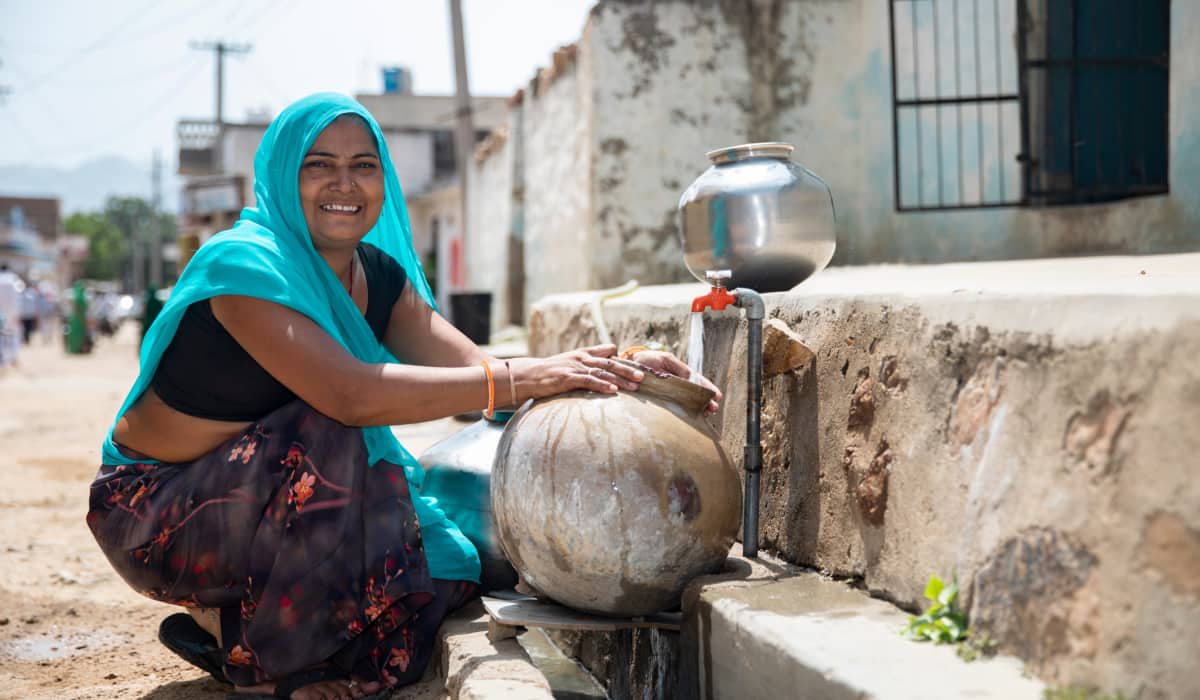
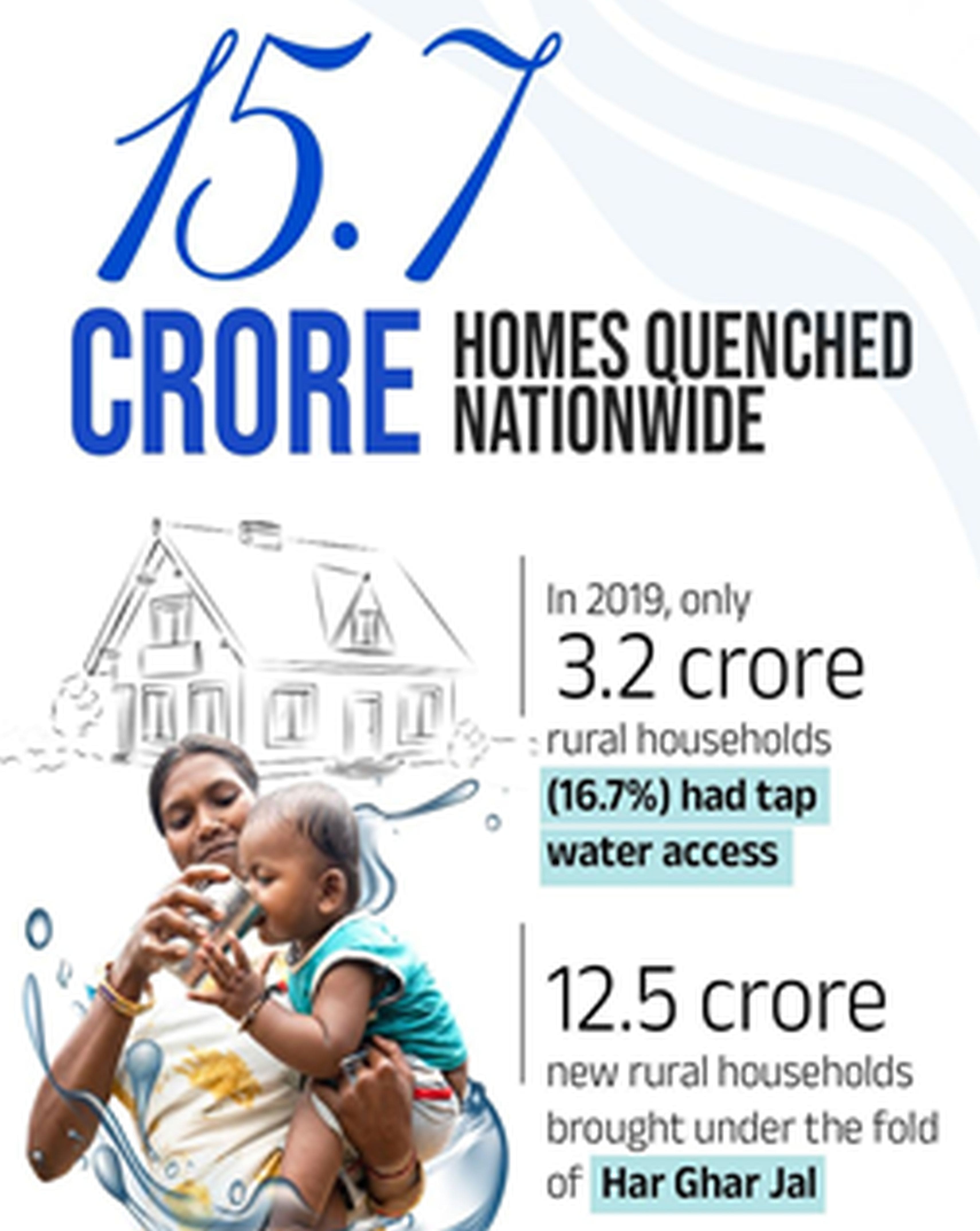
On the banks of the Pangong Tso, in Phobrang, Ladakh, for instance, the government was able to get infrastructure for the Jal Jeevan Mission at an elevation of more than 14,000 feet.
The Primary and secondary share markets have risen tremendously under the Modi Government which
In the late 2000s and early 2010s, under the previous government, the news about rotten food grains in FCI warehouses was a routine phenomenon. Today, under the Garib Kalyan Anna Yojana, extended for another five years until 2028, 800 million people are receiving free food grains each month. This not only immunises them from food inflation, as witnessed during 2022-23 globally but plays a critical part in better nutrition for children and overall comprehensive development of the rural ecosystem, thus leaving no labarthi behind. Secularism in action, truly.
The rural ecosystem has been further strengthened by the SHGs (Self-Help Groups) that are now participants in the formal economy. Through 83 Lakh SHGs, nine crore women have benefitted, and over one crore women have an annual income exceeding Rs. 100,000. Now, the government wants to enable more than three crore Lakhpati Didis.
For the farmers, the government has been encouraging the post-harvest processes, further integrating them with the local, state, national, and global supply chains. A case in point is the northeastern part of the country, which is now a hub for horticulture exports. Meghalaya’s pineapples are already a hit in the Middle East, as an opposition leader recently learned.
For more than 80 crore Indians in the hinterland, the graduation towards urbanisation will be fuelled by the infrastructure-building spree. Already, the government has committed the holy amount of more than Rs. 11 Lakh Crore (Rs. 11,11,11,1 Crore). The rural landscape transformation, enabling Rozgar Datas is all set to create an additional 400 million middle-class Indians in the coming decade.
A decade of Prime Minister Narendra Modi has got India from the ‘fragment five to the ‘top five’. With the fiscal, monetary, tax, and growth fundamentals in place, GDP growth is set to surpass seven per cent in the coming years.