Beti Bachao, Beti Padhao: Caring for the Girl Child

Published By : Admin | January 1, 2016 | 01:04 IST

Our Mantra should be: ‘Beta Beti, Ek Samaan’

Let us celebrate the birth of the girl child. We should be equally proud of our daughters. I urge you to sow five plants when your daughter is born to celebrate the occasion.

PM Narendra Modi to citizens of his adopted village Jayapur.

Beti Bachao Beti Padhao (BBBP) was launched by the Prime Minister on 22nd January, 2015 at Panipat, Haryana. BBBP addresses the declining Child Sex Ratio (CSR) and related issues of women empowerment over a life-cycle continuum. It is a tri-ministerial effort of Ministries of Women and Child Development, Health & Family Welfare and Human Resource Development.

The key elements of the scheme include Enforcement of PC & PNDT Act, nation-wide awareness and advocacy campaign and multi-sectoral action in select 100 districts (low on CSR) in the first phase. There is a strong emphasis on mindset change through training, sensitization, awareness raising and community mobilization on ground.

The NDA Government is trying to bring about a transformational shift in the way our society looks at the girl child. PM Modi in his Mann Ki Baat lauded the Sarpanch from Bibipur in Haryana who started a ‘Selfie With Daughter’ initiative. PM also urged people to share their selfies with daughters and it soon became a world-wide hit. People from across India and the world shared their selfies with daughters and this became a proud occasion for all those who have daughters.

Since the launch of Beti Bachao Beti Padhao, the multi-sectoral District Action Plans have been operationalized in almost all states. Capacity-buiding programmes and Trainings have been imparted to Trainers to further strengthen capacities of district level officials and frontline workers.  Nine set of such trainings have been organized covering all States/UTs the Ministry of Women & Child Development from April-October, 2015.


Some Local Initiatives


Under Beti Bachao Beti Padhao Scheme, Pithoragarh district has taken various steps towards protecting the girl child and enabling her education. The District Task Force and Block Task Force have been constituted. Meetings of these forums have organized & clear road maps have been developed and relating to Child Sex Ratio. To reach out the community at a large, awareness generation activities have been being carried out for wider dissemination of the Scheme. Various Rallies have been organized with core participation from various schools, Army schools, Employees of Government Departments, etc 

In order to increase awareness about Beti Bachao Beti Padhao, street plays are also being organized in Pithoragarh. These street plays are not only organized at the villages, but also in markets to generate awareness among a larger audience. Through story visualization, people are getting sensitized towards the problems of sex-selective abortion. Issues related to the girl child and the series of the difficulties she faces through her lifespan are very well portrayed through these street plays. Through a Signature Campaign, Pledge and Oath Ceremony, message of BBBP has reached out to 700 students from PG colleges and several Army Personnel.

Mansa district in Punjab has launched an initiative to inspire its girls to be educated. Under its ‘Udaan - Sapneya Di Duniya De Rubaru (Udaan- Live your Dream For One Day)’ scheme, the Mansa administration invites proposals from girls belonging to classes VI-XII. These girls have the opportunity to spend one day with a professional they aspire to be — doctor, police official, engineer, IAS and PPS officers, among others.

The initiative has received great response, and more than 70 students have already got a chance to spend one day with a professional, to see them function in a professional environment, helping them make better decisions about their future career choice.

Explore More
Today, the entire country and entire world is filled with the spirit of Bhagwan Shri Ram: PM Modi at Dhwajarohan Utsav in Ayodhya

Popular Speeches

Today, the entire country and entire world is filled with the spirit of Bhagwan Shri Ram: PM Modi at Dhwajarohan Utsav in Ayodhya
India leads globally in renewable energy; records highest-ever 31.25 GW non-fossil addition in FY 25-26: Pralhad Joshi.

Media Coverage

India leads globally in renewable energy; records highest-ever 31.25 GW non-fossil addition in FY 25-26: Pralhad Joshi.
NM on the go

Nm on the go

Always be the first to hear from the PM. Get the App Now!
...
6 Years of Jal Jeevan Mission: Transforming Lives, One Tap at a Time
August 14, 2025
Jal Jeevan Mission has become a major development parameter to provide water to every household.” - PM Narendra Modi

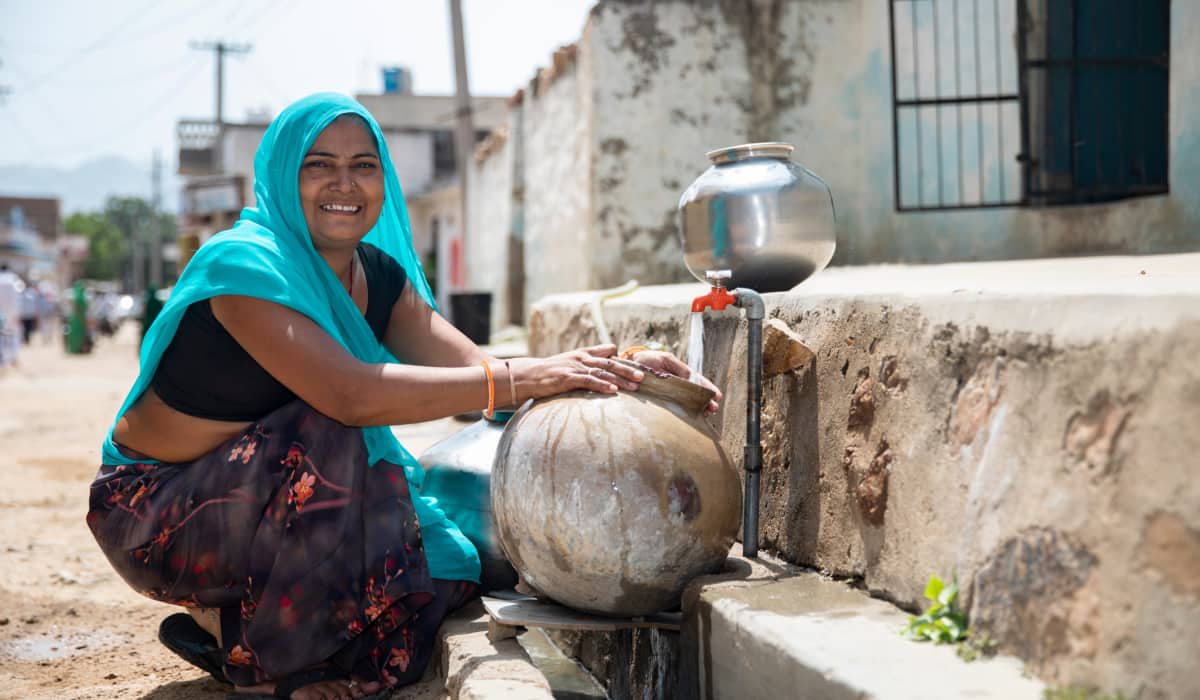
For generations, the sight of women carrying pots of water on their heads was an everyday scene in rural India. It was more than a chore, it was a necessity that was an integral part of their everyday life. The water was brought back, often just one or two pots which had to be stretched for drinking, cooking, cleaning, and washing. It was a routine that left little time for rest, education, or income-generating work, and the burden fell most heavily on women.

Before 2014 water scarcity, one of India’s most pressing problems, was met with little urgency or vision. Access to safe drinking water was fragmented, villages relied on distant sources, and nationwide household tap connections were seen as unrealistic.

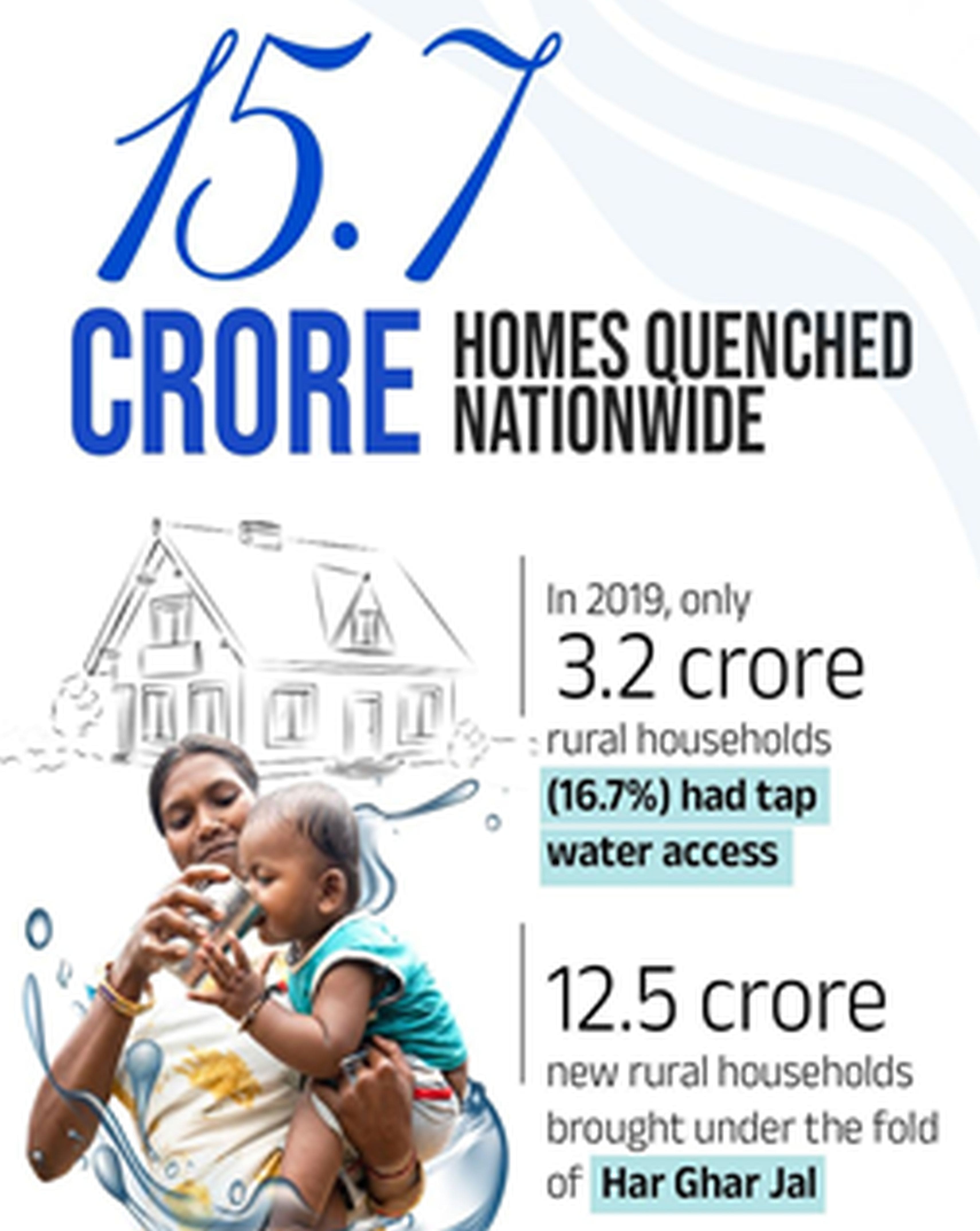
This reality began to shift in 2019, when the Government of India launched the Jal Jeevan Mission (JJM). A centrally sponsored initiative which aims at providing a Functional Household Tap Connection (FHTC) to every rural household. At that time, only 3.2 crore rural households, a modest 16.7% of the total, had tap water. The rest still depended on community sources, often far from home.

As of July 2025, the progress under the Har Ghar Jal program has been exceptional, with 12.5 crore additional rural households connected, bringing the total to over 15.7 crore. The program has achieved 100% tap water coverage in 200 districts and over 2.6 lakh villages, with 8 states and 3 union territories now fully covered. For millions, this means not just access to water at home, but saved time, improved health, and restored dignity. Nearly 80% of tap water coverage has been achieved in 112 aspirational districts, a significant rise from less than 8%. Additionally, 59 lakh households in LWE districts have gained tap water connections, ensuring development reaches every corner. Acknowledging both the significant progress and the road ahead, the Union Budget 2025–26 announced the program’s extension until 2028 with an increased budget.

The Jal Jeevan Mission, launched nationally in 2019, traces its origins to Gujarat, where Narendra Modi, as Chief Minister, tackled water scarcity in the arid state through the Sujalam Sufalam initiative. This effort formed a blueprint for a mission that would one day aim to provide tap water to every rural household in India.

Though drinking water is a State subject, the Government of India has taken on the role of a committed partner, providing technical and financial support while empowering States to plan and implement local solutions. To keep the Mission on track, a strong monitoring system links Aadhaar for targeting, geo-tags assets, conducts third-party inspections, and uses IoT devices to track village water flow.

The Jal Jeevan Mission’s objectives are as much about people as they are about pipes. By prioritizing underserved and water-stressed areas, ensuring that schools, Anganwadi centres, and health facilities have running water, and encouraging local communities to take ownership through contributions or shramdaan, the Mission aims to make safe water everyone’s responsibility..

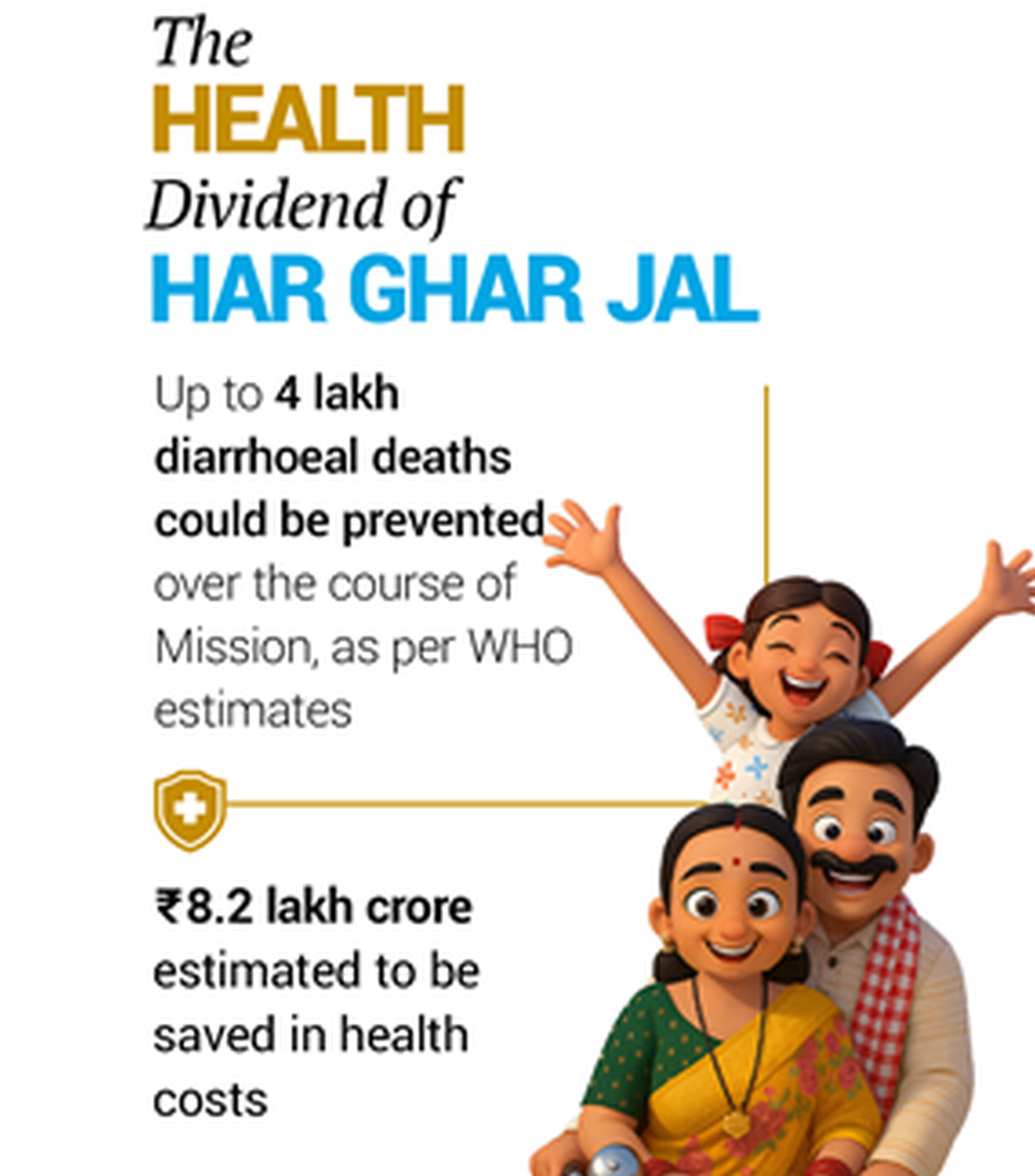
The impact reaches far beyond convenience. The World Health Organization estimates that achieving JJM’s targets could save over 5.5 crore hours each day, time that can now be spent on education, work, or family. 9 crore women no longer need to fetch water from outside. WHO also projects that safe water for all could prevent nearly 4 lakh deaths from diarrhoeal disease and save Rs. 8.2 lakh crores in health costs. Additionally, according to IIM Bangalore and the International Labour Organization, JJM has generated nearly 3 crore person-years of employment during its build-out, with nearly 25 lakh women are trained to use Field testing Kits.

From the quiet relief of a mother filling a glass of clean water in her kitchen, to the confidence of a school where children can drink without worry, the Jal Jeevan Mission is changing what it means to live in rural India.