I take this opportunity to welcome the Big Tent event of Google and the Activate Summit of the Guardian to my country. I am sure the discussions in this forum would give a new direction to the meaningful use of technology for society at large.
Friends, Alvin Tofler said, “The Illiterate of the 21st Century will not be those who cannot read and write, but those who cannot learn, unlearn and relearn.” This applies to everyone and every field, but more so to politics and the political class.
The crux of politics lies in connecting to the people.
If one looks back over the years, politicians readily adopted technology that connected them to the people better. From the simple pen and paper - to microphones and public address systems. From motion pictures – to the era of Television.
All these tools have been extensively used for political purposes since their respective introductions. They have greatly influenced politics, and in turn been greatly shaped by it as well. Overtime, they have become synonymous with politics.
Today’s web-connected world has brought about another paradigm shift with the Internet. This is not just impacting politics, but is in a sense fundamentally redefining it.
Earlier technological evolutions helped the politicians more. They could take advantage of new means and dimensions. Information technology has led to empowerment of people as well – each and every one of us!
This is very important for a large democracy like India. I have been saying IT + IT = IT : Indian Talent + Information technology = India Tomorrow.
Information in the pre-internet era was more one-dimensional. It was limited to politicians bombarding their thoughts and views on citizens.
Now it is a two way process. Citizens are empowered with wide access to information – from multiple channels.
This information moreover, is real time and updated.
Importantly, these informed citizens also have avenues of voicing their opinion and influencing policy. Citizens now have a direct say!
In India earlier, a citizen’s connect to politics was limited to once in every five years - from one election to another.
Now, he engages with, and is a part of the polity every moment! He shares information, raises questions, comments, and connects with others. He voices his opinion and gives his feedback.
The internet has therefore truly empowered the citizen. It has forced the politician to perform, not just promise. In a way, it has become a challenge for the political class.
The time has come for the political class to adapt to this change and reinvent itself! It needs to stop running away. It needs to embrace the internet’s many powerful facets. The political class needs to stop seeing technology as a problem creator, and start harnessing it in the right spirit.
Friends! As a politician, I use technology extensively – from the simple to the cutting edge.
In the 2012 elections I pioneered the using of 3D Holographic technology to reach out to multiple geographies. I addressed voters at 53 places across the state all at once. This unique concept not only helped me reach out to more geographies and voters, but also helped reduce the cost, time and energy required.
At a personal level I interact with lakhs of my fellow countrymen and women through social media.
I share my thoughts with them, as well as listen and learn from them.
I understand their concerns as well as connect with their dreams and aspirations.
Friends, the internet has become the new public sphere. Former President Clinton aptly called it the new town square. In this age of internet democracy, citizens are netizens, who transcend the geographical borders of countries and continents. No wonder it is called the Wired Republic.
Today, technology has merged politics with governance. They cannot be separated as the focus of the public sphere is on accountability, and transparency. Good governance is the key political agenda now, be it in the developed or developing world. Internet, new communication media and digital convergence have been major drivers of this.
The internet has been a game changer in the realm of information-based decision making.
It has transformed the policy making process. It has ushered in an age of direct democracy - where the common citizen directly engages in the policy making process and affects the policy outcomes, rather than being limited to doing so through his elected representative.
I would like to give you a few examples from my Gujarat experience.
Listening to people’s voice is a very important element in democracy. To ensure this we use ICT for redressing grievances. I personally host SWAGAT sessions in my office.
The unique aspect of this project is that the grievance of the common man is addressed in real time. Solutions are provided online to him immediately. It also acts as a feedback mechanism. We modify policies and systems based on repeated grievances.
Our efforts have been applauded by the UN, receiving the UN Public Service Award in 2010 for 'Improving Transparency, Accountability and Responsiveness in Public Service'.
We use this technology extensively - from our most modern, large scale projects like building Special Investment Regions and smart cities … to giving rights of forest land to tribals.
Earlier, when politicians used to lobby for infrastructure like schools and hospitals in their constituencies, we did not have any scientific method of deciding the allocations. Today, we map the demography, the need and the availability using GIS. We thus bring parity among the local communities. This has also given a new direction to local politics.
Gujarat is the first state to apply GIS to fully plan, implement and monitor its watershed management.
Friends! Resurvey of lands is very important for better land management and ensuring less disputes. It is required to be done every 30 years. Unfortunately, this has not happened in the last 100 years in India. Gujarat has undertaken resurvey of lands using state of the art technology - Differential Global Positioning System and Electronic Total Station Machines.
Further, our e-Gram Vishvagram project connects all the district, taluka and village panchayats across the state with broadband. This enables video conferencing facilities at all villages, issuing of documents and certificates and a host of other e-services.
We use simple technology in disaster management services. Merely sending timely SMSs to citizens during the 2006 floods ensured that not a single life was lost in spite of heavy rains and flooding.
Friends! Voting is the bloodline of the political process in a democratic polity.
India’s Electronic Voting Machines (EVMs) have simplified voting and counting - making it easy and fast.
In Gujarat, we have graduated from EVM voting to eVoting - launching on a pilot scale in Municipal elections. Our pioneering efforts have been acknowledged with many awards including the National award for excellence in government process reengineering.
Advanced technology is rapidly transforming the government-citizen relationship. Social media in particular, provides a great platform for the government to engage with citizens.
To give you an example, when we organised the Sabarmati Riverfront Photography Competition on social media, several thousands participated. Amateurs as well as professionals sent entries in large numbers. The competition reached out to more than two hundred thousand (2,00,000) citizens and helped increase the popularity of the riverfront in a manner no paid ad campaign could have.
I find it extremely interesting to see how Netizens have evolved their own language and dictionary of words. Here neither the spelling nor the grammar matters. 140 characters can convey it all.
This dimension also plays a very important role in empowerment. It gives people from different parts of the world the confidence to overcome their limitations in language. It enables them to go ahead to freely express and connect.
In conclusion, let me say that technology in itself is neither good nor bad. That depends on how it is harnessed.
While ‘Technology in Politics’ plays a crucial role … it would do us great good to stay away from letting ‘Politics into Technology’!
Deployed in the right way, technology can be an extremely powerful force, capable of bringing about great change! The challenge is how better we can connect the common man to this WWW world. We need to find solutions by which he can connect in his local language. We must focus our technological policies and innovations on the greater good – empowering people and nurturing a development-based agenda.
In the National Senior Athletics Federation Competition held in Ranchi, Jharkhand, four national records were broken in four different events: PM Modi
My dear countrymen, it is very hot in most parts of the country right now. Strong sun, hot winds, it is very important to take care of yourself in such weather: PM Modi
Sattu sherbet in Bihar, Jharkhand and Eastern Uttar Pradesh is simply amazing – it fills the stomach and provides strength: PM Modi
Service doesn't require vast resources - what's needed is a good intent and consistent effort: PM Modi
In a special ceremony held in the Netherlands, ancient copper plates from the Chola period were returned to India: PM Modi
Astronomy has aroused curiosity in every generation in our country. It has inspired exploration; a lot of enthusiasm is visible in today’s youth: PM Modi
Dolphin rescue ambulance has been designed like a mobile hospital. It has arrangements for keeping the dolphin safe: PM Modi
Friends, when we save the Gangetic dolphin, we don't just save a species; we save the biodiversity of the Ganga: PM Modi
Girija Amma ji’s patriotic spirit inspires every Indian. Inspired by 'Mann Ki Baat', she pledged to contribute to many soldiers in the country: PM Modi
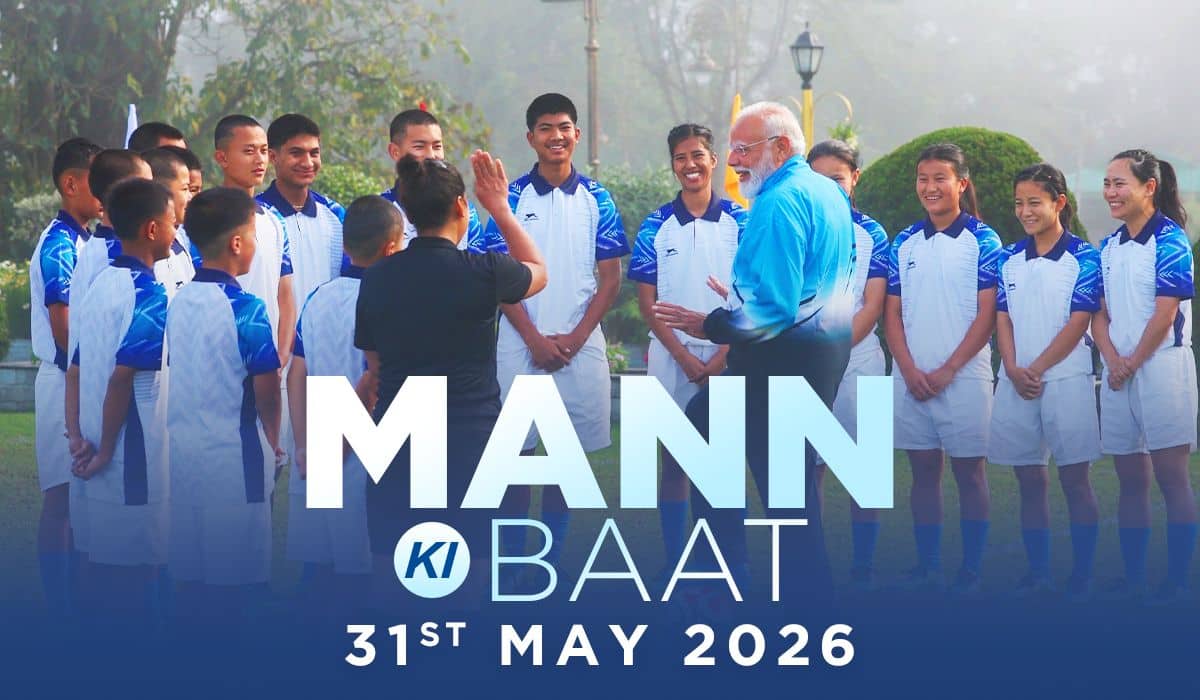
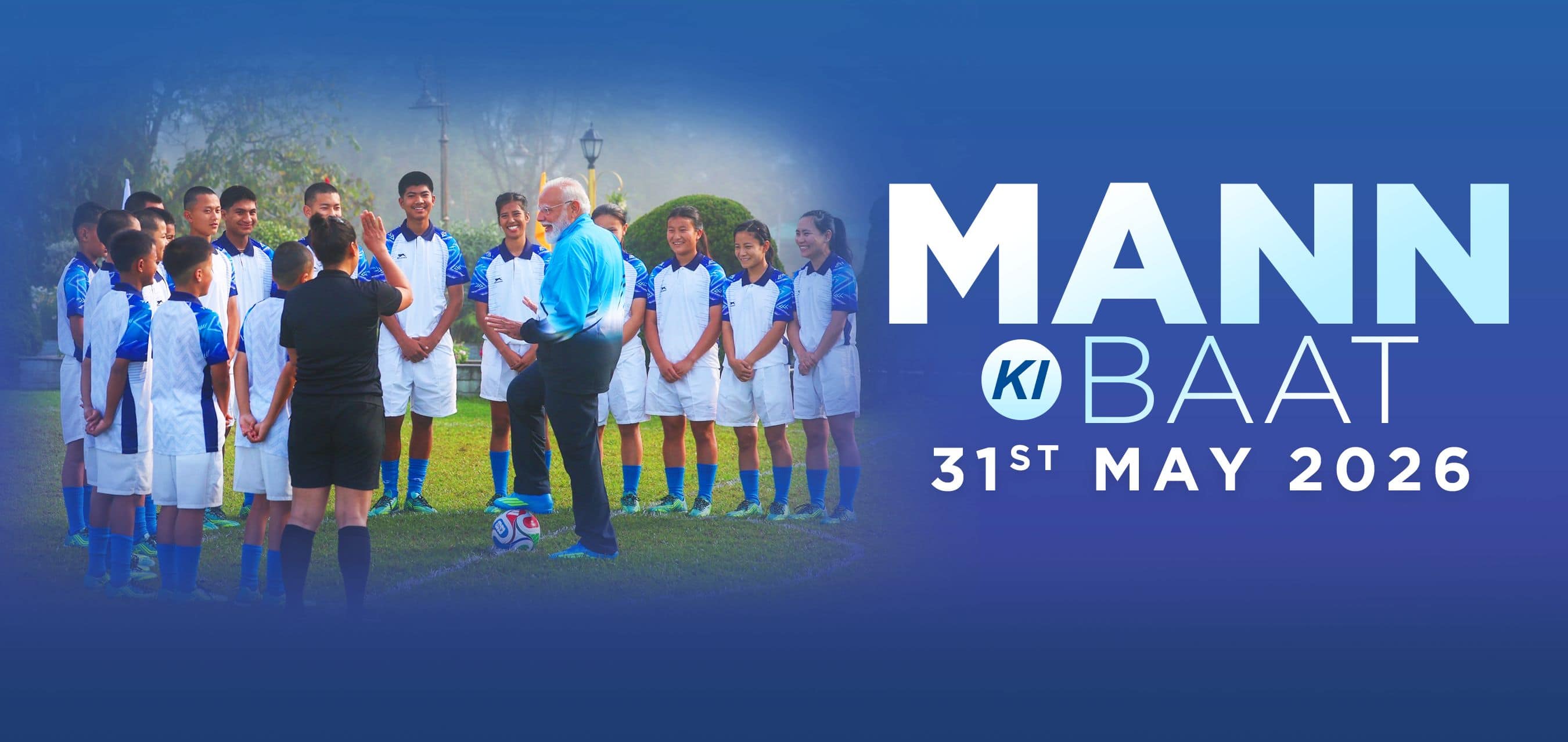
My dear countrymen, Namaskar. I am delighted to connect with you once again on 'Mann Ki Baat'. People from different parts of the country are doing amazing things for the benefit of the nation, the society… and when we hear about them, we find a new inspiration. Today, I will begin the program with one such achievement of the country in athletics. Just a few days ago, the National Senior Athletics Federation Competition was held in Ranchi, Jharkhand. Nearly 800 athletes participated in it – from all over the country. During this, four national records were broken in four different events. Gurindervir Singh, Vishal TK, Tejaswin Shankar, Dev Meena, and Kuldeep Kumar… These friends set new records in different categories. First of all, I congratulate all of them.
Friends, one event that is being widely discussed across the country is the 100-metre race. Within just two days, the national record in the Men's 100-metre Race was broken three times. The two athletes who achieved this feat are Gurindervir Singh and Animesh Kujur. I thought I'd talk to these two athletes this time on 'Mann Ki Baat'.
Prime Minister: Namaskar Animesh ji. Gurinder Veer, Namaskar to you too… Satshri Akal.D
Prime Minister: Well brother, you have made a big achievement. Your pair has also done something amazing. We have seen jugalbandi in music, but now in challenges, there is jugalbandi where one person throws a challenge and then the other takes it up. Then they do it a third time. Yours has been a very interesting subject. I want that the listeners of 'Mann Ki Baat' should know… they should have knowledge about you people. They should know about the feat you have achieved.
Animesh ji: Namaste Sir, my name is Animesh Kujur. I am the National record holder in 200m and 400m and I belong to Chhattisgarh Sir. And currently I play for Odisha. Last year I won Asian Medal and World University Games Medal and I started athletics from 2021 when I passed out from school. I am a pass out from Sainik School Ambikapur, and I used to play football earlier, and during the time of COVID, my parents used to give me some freedom to go out and run or play. So, when COVID started to subside, my football friends told me that there is going to be a State meet… go and participate. I participated and I did not know that there was a selection for the National level from there. I got selected in the National from there and today I am representing India Internationally.
Prime Minister: Well what is it Gurindervir Singh ji?
Gurindervir Singh: Namaste Sir, my name is Gurindervir Singh and I am a Petty Officer in the Indian Navy and I am India's fastest sprinter. I have just now made a national record of 10.09 in 100 meters. And I am the first Indian to run below the 10.1 barrier. And I am trying to serve my country on the track and in uniform as well. Both my father and grandfather used to play sports, so it is our Indian culture that whenever there is a festival like Diwali, New Year, we clean our house. So I used to clean my father's trophies and medals… I used to like it a lot… I used to feel very happy. Then when I used to clean any trophy, I used to ask him where he won this trophy, where he won this medal, when was this photo from… then he used to tell me his story, that well… I went to play here, I won this National Medal, I made my team win in that. Then I also used to tell him that well, I also want to do some sport. He used to go for running in the morning, so I started telling him that well take me along with you. So he started taking me along, and whatever he had learnt in game-sports, he started teaching me. So my interest started developing. I saw Usain Bolt's world record being broken. So there is one such funny story. I was watching TV when my mother switched it off saying, "Son, it's time to study. You should study." I said, "It's okay, you don't let me watch TV. One day, you'll find me on TV and see Gurindervir running." I too feel happy when my mother sees me running on TV.
Prime Minister: Wow, Wonderful! That's a great thing about you.
Gurindervir Singh: Yes, Sir. It’s a middle-class family. My father also used to play volleyball. Due to family problems, he left his sports. His dream remained unfulfilled. So he saw that dream in me… Well, my son will fulfill that dream. I used to talk to him and then I used to hear about Milkha Singh working so hard. I used to tell him that I will also fulfill your dream one day. Then he used to say that dreams are not fulfilled like this, one has to work very hard for it. One has to persevere. Milkha Singh ji used to vomit blood, used to run in the sun. He used to train the whole day, so those things used to inspire me. My father used to inspire me that if I run, I should bring a medal for my country and win. And also when I chose the event 100 meters, everyone used to tell me that brother, don't do 100, 100 is not an event for Indians. The body of Indians is not at all made for 100 meters. So my father and I always used to say that well Gurindervir , we have chosen this, we will not step back from it. Whosoever tells me to tell us that, we cannot do it, we will show them that we can do it. And you will do it, I have faith in you. So when my father placed that trust in me, I turned that trust into my courage and moved ahead, and today I tell every Indian to do the Sprint.
Prime Minister: Look, both of you have done a great job, and within just two days, you both have broken the National Record three times. Running in the 100 metre race, as Gurindervir Singh said, people say that Indians do not have the body for this task. Despite such difficulties, you worked hard, so I would like to know this from both of you, and the listeners of 'Mann Ki Baat' would also like to listen to what was your passion, what was your determination, what were your thoughts, and how you were doing it? How difficult is it?
Gurindervir Singh: Yes Sir, this is Gurindervir… when I started, there was a lot of struggle, many times I doubted whether I was doing the right thing, I made the right choice because you don't win every time, sometimes you learn. When I used to lose, when I didn't perform well, or when I got injured, my family would support me, saying, "It's okay. If one day goes bad; one year goes bad, it doesn't ruin your life. Don't stop dreaming." My coach also taught me that if you don't do it, no one else will. So, when people around us, our community, encourage us, that motivation never breaks.
Prime Minister: Animesh Ji
Animesh: Sir, everyone used to tell me that when I started athletics in 2021, they used to ask me, "Look, this is a new field, will you be able to do it or not?" So, I said, "Now that I've entered this field, I will definitely do it." My father also always used to tell me that if you have entered this field then never look back because everyone thinks that they have to do this, they have to do that but very few show it by doing it. You have just entered this field so stick to it, move ahead in it. You will get all the facilities, we will support you in everything, family support, financial support, we will do everything… just work hard and show India that Indians can also run… because people used to tell me as well that the genes of Indians are not such that they can run in Sub 10 or Sub 10.1 or can someone do that sprint, but now both of us have proved that Indians can also do it. Nothing is so hard for us, we can also do everything. So Sir, all these things motivate me a lot and as we are training, we are breaking our timings and other Indians are also seeing this thing that Indians can also do it… and we will do more Sir, and now both of us have been selected for the Commonwealth Games as well, so we will perform even better in the upcoming competition there.
Prime Minister: Well, look, I too have a curiosity. And people too might have it. I have heard that both of you are good friends, you both had decided that if you broke my record, I should break yours! Animesh, tell me first.
Animesh: Sir ji, the first record was 10.18, which was mine only, and then Gurindervir Bhaiya broke it in the semi-final by doing 10.17, and I broke it again in the second semi-final by doing 10.15. At that time, when my semi-final happened, we both were happy that yes, it's okay, today the record was broken, and we both did it, because at that time there is rivalry in the competition, but we both were already determined, before that we had also gone to Saudi Arabia to compete, we both were roommates there too, so we both used to talk there that we have to take Indian sprinting forward and it is in our hands, whatever we do will motivate others.
Prime Minister: Gurindervir Singh, what would you like to say?
Gurindervir Singh: We both had just decided that we will both run well. So whenever Sir, we need each other, we stand with each other, like just now before setting the record, when I set the record and then Animesh did it. So when we were warming up, I was telling Animesh, Animesh, that block is right, go and sit on it and stride there, we will do the warm-up here, if the warm-up is right here, then we help each other, if we help each other then the other also improves, we also improve. So friendship is also needed, but Sir, when we are outside the ground, outside the competition, so we are friends, when we go on the ground, then we become competitors of each other. So, it's like, I'll run faster than this one, I'll run faster than this one.
Prime Minister: Look, the competition you've participated in is to enhance the nation's prestige, to take the country to this position in the future, and done with a positive spirit. And I believe that this sportsman spirit of yours… - to play, also to challenge each other, also to strive to get ahead, and to help each other to move ahead - this is a wonderful job you've done. My heartfelt congratulations to you, my best wishes, and you'll bring glory to the country… I'm confident. Do continue to work hard just like this and make great progress. My best wishes to you.
My dear countrymen, it is very hot in most parts of the country right now. Strong sun, hot winds, it is very important to take care of yourself in such weather. Keep drinking water. If at all you have to go out in the sun, do so with caution. Don't forget the guidelines issued by various government departments in this regard.
Friends, in our country, the way to fight the heat is many a time found in the kitchen as well. You must have noticed that as the heat increases, the taste of home cooking changes, the type of cooking changes. At some places, water from earthen pots is brought forth; in others, curd starts setting, and in others, raw mangoes start boiling – and then starts the time of Indigenous drinks. You are also familiar with these Desi drinks. If you go to North India, you will find Aam Panna in many places, the taste of raw mango, and relief from the heat. If you go to Punjab or Haryana, you'll find lassi in large glasses. Buttermilk in Rajasthan and Gujarat is like a companion to every meal.
And what's more, Sattu sherbet in Bihar, Jharkhand, and Eastern Uttar Pradesh is simply amazing – it fills the stomach and provides strength. Kokum sherbet and Sol Kadhi in Konkan and Goa. Panakam, Neer Mor, Sambaram in South India, and Bael Pana in Odisha aren't just drinks, they're a part of the traditions of different regions of India. And they also reflect the spirit of "Ek Bharat Shreshtha Bharat." And one thing you must remember: most of these things come from our own kitchens, from our farms and fields. There's no big branding, but they embody the experience of generations. You too enjoy these desi drinks during the summer.
Friends, as soon as summer arrives, another topic of discussion starts in every household: and that is mangoes. Mangoes are a common topic of discussion. There's hardly a home in India where mangoes are not talked about in Summer.
Every region… its own mango, its own flavor, its own aroma. Maharashtra and Konkan's Hapus, Alphonso, Gujarat's Kesar, it's the soul of Aamras, Uttar Pradesh's Dussehri, and my Kashi's Langra. Incidentally, the Langra mango has a special quality: it often remains green even after ripening. Bihar's Zardalu, whose aroma can be recognized from afar. Chausa, Malda - each name has memories associated with it. Go to South India, and there's Banganapalli, Totapuri, Neelam, Malgova, Bengal's Himsagar, Odisha, and Andhra Pradesh's Suvarnarekha. In other words, as the place changes, the mango's appearance, color, and taste also change.
And friends, this journey of the mango is now reaching the global market from the village. Today, through 'Mann Ki Baat', I will praise my farmer brothers and sisters involved in mango cultivation. You are not just ordinary farmers… you are very special for the agricultural economy of the country. May you keep shining like this. Friends, during these summer days, while schools are usually on vacation, I'll talk about a class you'll want to enroll in. Friends, imagine a school where children, both young and old, attend, where there are no fees, no large buildings, no classrooms, and, most interestingly, classes are held in a river.
Friends, this isn't a story. This is a true effort. In Aluva, Keralam, Saji Valasheril runs one such swimming club. More than 15,000 people have learnt to swim here. Saji ji has also taught swimming to Divyang children. Lying behind this effort, there's a hidden pain too.
A few years ago, several students had died in a boat accident. That incident shook Saji ji deeply. He thought, if the children knew how to swim, perhaps many lives could have been saved—and that's where his campaign began.
Friends, Saji Valasherilji's life teaches us a great lesson. Service doesn't require vast resources—what's needed is a good intent and consistent effort. On the strength of these alone, the lives of thousands can be transformed.
My dear countrymen, recently I had the opportunity to visit the Netherlands in Europe. I attended several meetings there. During this time, a moment arrived that filled every Indian with pride. In a special ceremony held in the Netherlands, ancient copper plates from the Chola period were returned to India. The Prime Minister of the Netherlands was also present at the event. I have been receiving continuous messages from India and abroad regarding these copper plates. People are sharing joy and expressing pride. The Tamil community around the world is also particularly enthusiastic about this.
Friends, there is a lot of curiosity among people about these copper plates. Hence, today I would like to share some information related to them. These include 21 large and 3 small copper plates. They primarily relate to King Rajendra Chola the first, fulfilling a vow made by his father, King Rajaraja Chola. They mention the donation of the village of Anaimangalam to a Buddhist monastery. These copper plates also describe the achievements of the Chola dynasty. They reveal how formidable the Chola Empire’s maritime power was. They also provide information about their relations with Southeast Asian countries. All of us are very proud of the Chola Empire's rich history and culture.
Friends, our government is continuously making efforts to preserve such priceless heritage sites of India. In this regard, an important discovery has been made in Malhar, Chhattisgarh, under the Gyan Bharatam Abhiyan. Three rare copper plates have been found here. They are believed to be related to the reign of Maharishi Balarjun of the Panduvanshi dynasty. Experts believe that these inscriptions date back to the sixth-seventh centuries, meaning fourteen hundred to fifteen hundred years old. These copper plates are written in ancient Brahmi script and Pali language. They provide important information about the governance, religion, and culture of that time.
Friends, we Indians have always had a special fascination for astronomy. Centuries-old observatories still exist in our country. Amazing mathematical discoveries have been made here. Be it navigation, the almanac, or our festivals, all of these are related to the sky and the stars.
Astronomy has aroused curiosity in every generation in our country. It has inspired exploration; a lot of enthusiasm is visible in today’s youth. You too must have noticed that astronomy clubs are becoming increasingly popular across the country. Their activities are visible from big cities to small towns, from schools to parks. I learnt about the Bangalore Astronomical Society. Observational sessions are held here. This organization has also launched a mission to popularize astronomy in rural areas. A team called 'Khagol Mandal' has started a very innovative 30-hour course.
Friends, gazing at the stars at night is a entrancing experience in itself. An organization called Astro Keralam organizes Night Observation Camps and workshops. Here, young people learn to make telescopes and use star maps. The Big Bang Astronomy Club of Rajkot has organized numerous astronomy events… from the Gir forests to the Rann of Kutch. 'Jyotirvidya Parisanstha' is also one of the oldest astronomy institutions. It offers observational facilities, as well as a book library, and a telescope library.
I would also like to mention ISAAC. This is a student-led nationwide network that connects astronomy and astrophysics clubs.
Friends, it is very important to take out time for your hobby and constantly learn something new. I would urge the youth to join an astronomy club and visit a planetarium during these holidays.
Friends, to those watching 'Mann Ki Baat' on TV, I would like to say – You must watch this video. This video has been in the news recently. In this, some people are patiently and carefully trying to save a Gangetic dolphin. You will be surprised to know that this entire effort took about 13 hours, and ultimately the dolphin was saved.
Friends, India's first Ganga dolphin rescue ambulance played a huge role in this. This incident took place in Uttar Pradesh. A Gangetic dolphin was trapped in a canal there. At that time, this ambulance, built under the 'Namami Gange Abhiyan', reached there as a ray of hope. It was then carefully pulled out. It was examined, it was treated and then it was safely released into the Rapti River. In a way, a life returned home…
Friends, this dolphin rescue ambulance is very special. It has been designed like a mobile hospital. It has arrangements for keeping the dolphin safe. It has oxygen facilities, special stretchers, and rescue equipment. This means that if a dolphin gets injured, gets stuck in a canal, or gets cut off from the river, it can be helped immediately. Friends, when we save the Gangetic dolphin, we don't just save a species; we save the biodiversity of the Ganga. We save the river's entire life system and preserve a priceless natural heritage for our future generations.
My dear countrymen, many of you must have memories connected with a river, pond, or well water. Some might remember swimming in a pond, some might remember playing with friends on the pond's banks, some might remember the fragrance of the mud. Such childhood memories linger in the heart for a lifetime.
Friends, an inspiring story of saving such memories has emerged from Basti district of Uttar Pradesh. Akash Gupta of Basti was deeply saddened by the sight of his village's Manorama River. The river he had seen as clean and vibrant in his childhood... Over time, plastic had started accumulating in the river, and the filth was increasing. Shriman Akash decided not to complain, but to make a new beginning. "No complaints, a fresh start" became his mantra. He took his friends along.
All they had was a net, a spade, a basket, and their greatest strength: the determination to make a difference. These young people would wade into the river, remove water hyacinth, and bring out plastic and garbage. Sometimes, they removed up to 50-60 kilograms of garbage from the river in a single day. Gradually, that section of the Manorama River began to look clean again. The work also drew the attention of the people in the surroundings… awareness about cleanliness increased.
Friends, a similar inspiring story has emerged from Goa. Balkrishna Aiya, is a retired teacher from Goa. But the zeal for social work is as strong, even today. He was deeply perturbed by the water problem in the Maddi-Tolap area. He, too, began working towards a solution. Balkrishna played a key role in laying pipelines. This brought water to many homes. This was a huge relief for families who had to struggle daily for water.
Friends, last month I had a wonderful experience. It's also related to 'Mann Ki Baat'. That's why I want to discuss it with you today. I met a teacher in Nagercoil, Tamil Nadu. I had met her nearly three decades ago. I'm talking about Girija Amma ji. During this meeting, some young students were also with her.
Friends, Girija Amma ji runs close to 15 schools. Among these, Jaigopal Garodia Hindu Vidyalaya in Chennai is very prominent. Her patriotic spirit inspires every Indian. Inspired by 'Mann Ki Baat', she pledged to contribute to many soldiers in the country. To do this, she inspired the students of all her schools. She asked the children to contribute one rupee every day for the brave soldiers. This means that each student collected 365 rupees in a year. Through these small contributions, approximately 40 lakh rupees were collected. Girija Amma handed me a cheque for this entire amount. During my conversation with her, I felt how deep her dedication to Mother India was.
Just last year, Chennai's first Hindu school completed its 50th anniversary. The role of this school network in advancing the country's education and cultural pride is commendable. I congratulate everyone involved and especially appreciate the students who contributed for our brave soldiers. Friends, in every village and city of India, something or the other is happening that inspires us. Often, these efforts are not widely discussed, but when we become aware of them, our belief grows stronger that the country is moving forward with the power of its people. I urge you to certainly look around for such efforts. Recognize those people who are doing good work for the society, appreciate them, learn from them, and if possible, become part of some good cause yourself. I'll join you again next month in "Mann Ki Baat" with some more inspiring stories. Thank you very much. Namaskar.
Just a few days ago, at the National Senior Athletics Federation Competition in Ranchi, four national records were broken across different events.
One achievement that caught the nation's attention was the Men's 100-metre race, where the national record was broken three times in… pic.twitter.com/TrBsr855U1
The Netherlands has returned ancient Chola-era copper plates that chronicle the achievements, maritime strength and global connections of the Chola empire.#MannKiBaatpic.twitter.com/ehHvuwKpl7
Under the Gyan Bharatam Abhiyan, rare copper plates dating back nearly 1,400 to 1,500 years have been discovered in Chhattisgarh. #MannKiBaatpic.twitter.com/S0wKVWrPbd
Astronomy has fascinated generations of Indians, sparking curiosity and a spirit of exploration. Today, that same enthusiasm is inspiring a new generation.#MannKiBaatpic.twitter.com/CdtHx38Xn7
A remarkable rescue operation in Uttar Pradesh saw a Gangetic dolphin saved after hours of patient effort. The Ganga dolphin rescue ambulance played a crucial role.#MannKiBaatpic.twitter.com/MWjKU2pOP7
Small acts of patriotism and collective effort can inspire a deep sense of service and nation-building among the younger generation. Here is one such example from Tamil Nadu...#MannKiBaatpic.twitter.com/NChjgo0V5W