CM talks about Gujarat’s farm revolution of sorts during Krishi Mahotsav

Published By : Admin | May 29, 2012 | 21:00 IST

“Gujarat’s hat trick in ‘White Revolutions’ in cotton, milk and salt”

“Farmers won’t have to bear losses in insurance policy for cotton”— Narendra Modi 

Timely intervention by CM Shri Narendra Modi saves 4 four district central cooperatives of 4 districts from their licenses being cancelled by Reserve Bank of India (RBI).

Ahmedabad, Tuesday: Chief Minister Narendra Modi today described Gujarat’s record cotton production this season as a hat trick of sorts in ‘White Revolution’ in cotton, after that in milk and common salt.

The production of raw cotton has almost trebled in the state from 22-lakh bales to 1.22-lakh bales during a short span. The area under the crop has increased from 16-lakh hectares to 30-lakh hectares. Thus Gujarat’s share in cotton production in the entire country reached 35 per cent.

Talking to farmers across the state on the occasion of Krishi Mahotsav-2012 through videoconferencing, he said that what Gujarat could not do during the previous century has done during the last ten years. Incidentally, Gujarat’s achievements have helped improve the entire country’s economy.

He said it is the same BT Cotton, which the Central Government had banned, has come in good stead of Gujarat’s cotton growers. About 85 per cent of cotton grown in the state is BT cotton type.

Mr. Modi said a bumper crop helps the nation earn foreign exchange, but the Central Government’s attitude to ban export on such occasions becomes intriguing. He said that farmers incurred a loss of Rs.14,000-crore due to the Central Government’s dilly-dallying in lifting ban on export.

He wished the Centre changed its ant-Gujarat stance the earlier the better and wondered why delaying .

The State Government has decided to introduce insurance scheme for cotton on the same lines as groundnut so that farmers need not bear the losses.

In another crucial development, timely intervention by Gujarat Chief Minister Narendra Modi had saved four district central cooperatives of the four districts from their licences being cancelled by Reserve Bank of India (RBI).

Gujarat Government paid Rs.84-crore dues of the four such banks of Surendranagar, Kutch, Junagadh and Vadodara in nick of time, restoring the credit line open for lakhs of farmers of the districts.

A large number of farmers from Surendranagar, besides the leaders and members of the bank, today felicitated Mr. Modi at Gandhinagar for his timely intervention.

Chief Minister attributed Gujarat’s attaining yet another ‘white revolution’ in cotton with record bumper crop this season to the farmers. He said that Centre’s delay in lifting export ban on raw cotton affected cotton growers.

Explore More
Today, the entire country and entire world is filled with the spirit of Bhagwan Shri Ram: PM Modi at Dhwajarohan Utsav in Ayodhya

Popular Speeches

Today, the entire country and entire world is filled with the spirit of Bhagwan Shri Ram: PM Modi at Dhwajarohan Utsav in Ayodhya
Regional languages take precedence in Lok Sabha addresses

Media Coverage

Regional languages take precedence in Lok Sabha addresses
NM on the go

Nm on the go

Always be the first to hear from the PM. Get the App Now!
...
Cabinet approves three new corridors as part of Delhi Metro’s Phase V (A) Project
December 24, 2025

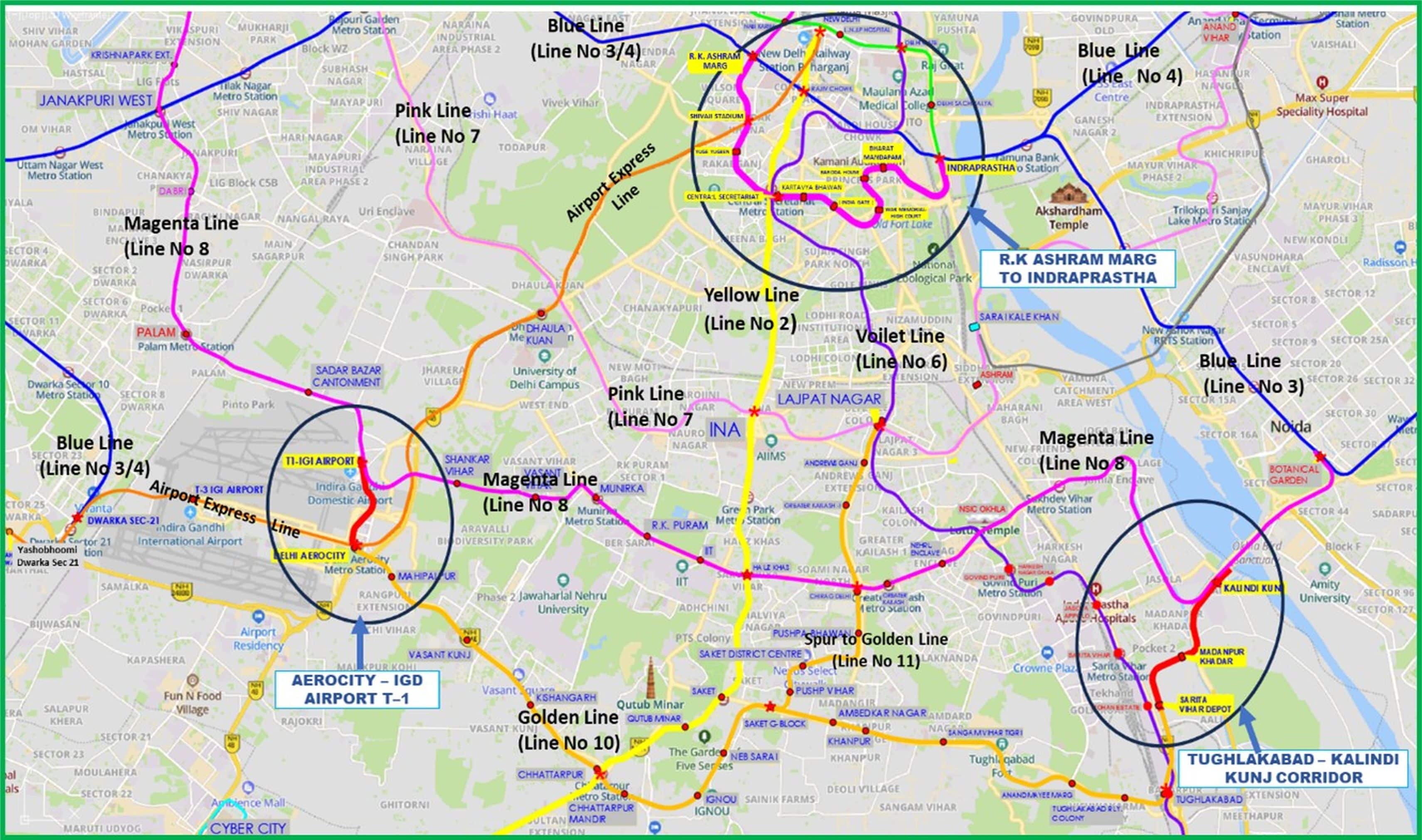
The Union Cabinet chaired by the Prime Minister, Shri Narendra Modi has approved three new corridors - 1. R.K Ashram Marg to Indraprastha (9.913 Kms), 2. Aerocity to IGD Airport T-1 (2.263 kms) 3. Tughlakabad to Kalindi Kunj (3.9 kms) as part of Delhi Metro’s Phase – V(A) project consisting of 16.076 kms which will further enhance connectivity within the national capital. Total project cost of Delhi Metro’s Phase – V(A) project is Rs.12014.91 crore, which will be sourced from Government of India, Government of Delhi, and international funding agencies.

The Central Vista corridor will provide connectivity to all the Kartavya Bhawans thereby providing door step connectivity to the office goers and visitors in this area. With this connectivity around 60,000 office goers and 2 lakh visitors will get benefitted on daily basis. These corridors will further reduce pollution and usage of fossil fuels enhancing ease of living.

Details:

The RK Ashram Marg – Indraprastha section will be an extension of the Botanical Garden-R.K. Ashram Marg corridor. It will provide Metro connectivity to the Central Vista area, which is currently under redevelopment. The Aerocity – IGD Airport Terminal 1 and Tughlakabad – Kalindi Kunj sections will be an extension of the Aerocity-Tughlakabad corridor and will boost connectivity of the airport with the southern parts of the national capital in areas such as Tughlakabad, Saket, Kalindi Kunj etc. These extensions will comprise of 13 stations. Out of these 10 stations will be underground and 03 stations will be elevated.

After completion, the corridor-1 namely R.K Ashram Marg to Indraprastha (9.913 Kms), will improve the connectivity of West, North and old Delhi with Central Delhi and the other two corridors namely Aerocity to IGD Airport T-1 (2.263 kms) and Tughlakabad to Kalindi Kunj (3.9 kms) corridors will connect south Delhi with the domestic Airport Terminal-1 via Saket, Chattarpur etc which will tremendously boost connectivity within National Capital.

These metro extensions of the Phase – V (A) project will expand the reach of Delhi Metro network in Central Delhi and Domestic Airport thereby further boosting the economy. These extensions of the Magenta Line and Golden Line will reduce congestion on the roads; thus, will help in reducing the pollution caused by motor vehicles.

The stations, which shall come up on the RK Ashram Marg - Indraprastha section are: R.K Ashram Marg, Shivaji Stadium, Central Secretariat, Kartavya Bhawan, India Gate, War Memorial - High Court, Baroda House, Bharat Mandapam, and Indraprastha.

The stations on the Tughlakabad – Kalindi Kunj section will be Sarita Vihar Depot, Madanpur Khadar, and Kalindi Kunj, while the Aerocity station will be connected further with the IGD T-1 station.

Construction of Phase-IV consisting of 111 km and 83 stations are underway, and as of today, about 80.43% of civil construction of Phase-IV (3 Priority) corridors has been completed. The Phase-IV (3 Priority) corridors are likely to be completed in stages by December 2026.

Today, the Delhi Metro caters to an average of 65 lakh passenger journeys per day. The maximum passenger journey recorded so far is 81.87 lakh on August 08, 2025. Delhi Metro has become the lifeline of the city by setting the epitome of excellence in the core parameters of MRTS, i.e. punctuality, reliability, and safety.

A total of 12 metro lines of about 395 km with 289 stations are being operated by DMRC in Delhi and NCR at present. Today, Delhi Metro has the largest Metro network in India and is also one of the largest Metros in the world.