His Excellency President Islam Karimov, President of Uzbekistan, Members of the Media,
I am delighted to be in the historic and beautiful city of Tashkent. It carries the warmth of familiarity that comes from sights and stories we grow up with.
I thank President Karimov and the people of Uzbekistan for their very warm welcome and hospitality.
It is a pleasure to meet President Karimov. He has led with great vision and wisdom to steer Uzbekistan’s progress and advance peace and prosperity in the region.
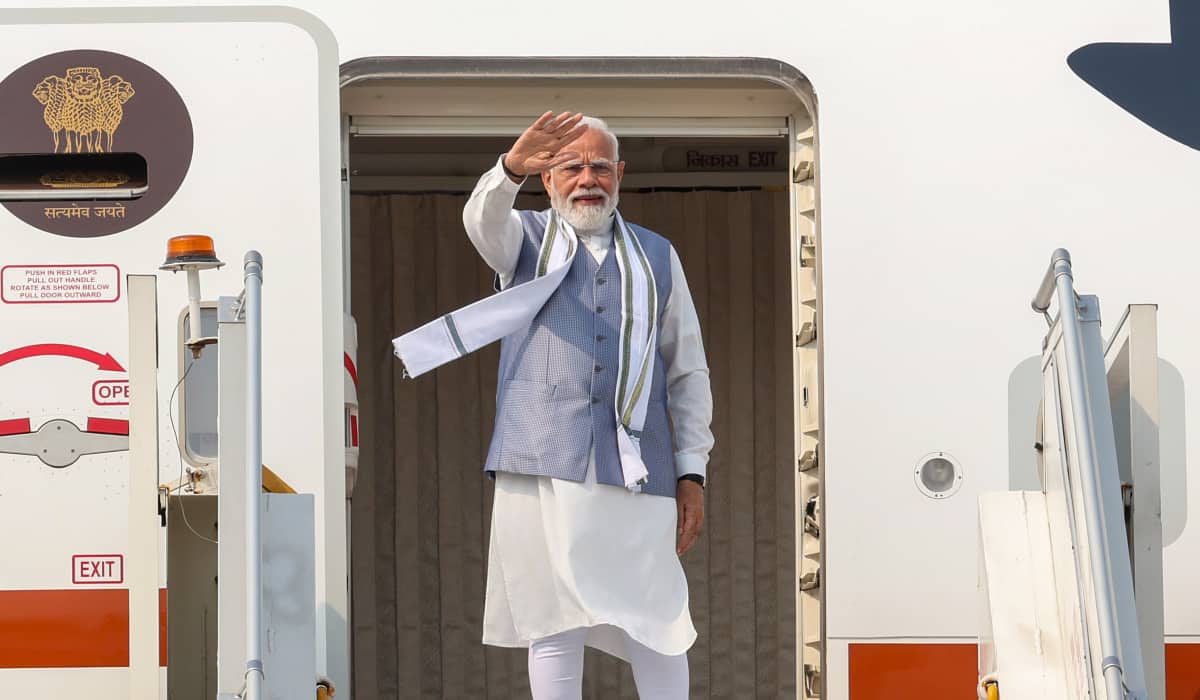
Today, I have embarked on a five-nation tour of Central Asia. It reflects our resolve to start a new era in our relations with Central Asian Republics.
Our relationship with the region has ancient roots and has left a strong imprint on both. It now occupies a significant place in India’s future.
I have begun my journey in Uzbekistan. This underlines this nation’s importance for India, not just in the context of this region, but also more broadly in Asia.
In recent years, India and Uzbekistan have built a strategic partnership on the foundation of mutual respect and shared interests.
This includes expanding economic cooperation, combating terrorism, advancing stability in the region and promoting regional integration.
President Karimov and I had very cordial and productive discussions. His perspectives will be of immense benefit to me in the days ahead.
I share President Karimov’s desire to raise the level of our economic engagement. I conveyed to him that there is a strong interest in Indian business to invest in Uzbekistan. There is immense potential in a broad range of areas in Uzbekistan. I have urged him to make the process and the policies for Indian investments here smoother. President responded positively to my suggestion.
President was also supportive of strengthening our ongoing cooperation in the areas of agriculture, Information Technology and energy.
We also discussed steps needed to implement the contract for supply of uranium from Uzbekistan signed earlier.
President Karimov and I discussed various initiatives to further enhance connectivity between India and Uzbekistan.
I briefed him about the International North South Transport Corridor and proposed that Uzbekistan consider becoming a member. I sought his support for India joining the Ashgabat Agreement.
I am pleased with the agreements in the areas of Culture and Tourism, because they will bring our people closer.
Few countries can match Uzbekistan in nurturing Hindi and Indian culture. Tomorrow, I look forward to meeting a vibrant group of Indologists and Hindi linguists.
India will expand cooperation in capacity building through increase in the number of training offers in India. Consistent with our commitment, the Uzbekistan-India Information Technology Centre has been upgraded this year.
I welcome President Karimov’s assurance to ensure speedy completion of the Entrepreneurship Development Centre being set up in Tashkent.
We also discussed regional and international issues, including the situation in Afghanistan. We also have shared concerns on the rising threat of extremism and terrorism in our extended neighbourhood.
We agreed to intensify security cooperation and exchanges. The bilateral Joint Working Group on Counter Terrorism will meet later this year. We also agreed to strenghen cooperation in defence and cyber security.
We look forward to working together within the framework of the Shanghai Cooperation Organization.
Tomorrow, I will be paying a visit to the Monument of Independence and Humanism and the Memorial of Late Indian Prime Minister Lal Bahadur Shastri. We are thankful to the people of Tashkent and Uzbekistan, for preserving the legacy of our former Prime Minister.
This has been a very rewarding visit. It has sown the seeds of a rich harvest in the years ahead.
I look forward to the opportunity of receiving President Karimov in India.
Thank you again for your hospitality and a wonderful meeting. Thank You.
PM addresses the statement to media during the Joint Press Briefing with President of Uzbekistan at Tashkent
India's relationship with Uzbekistan has ancient roots and has left a strong imprint on both Nations: PM
Few countries can match Uzbekistan in nurturing Hindi & Indian culture: PM Modi
PM Modi, President Karimov discuss various initiatives to further enhance connectivity between India and Uzbekistan
India & Uzbekistan agree to strengthen cooperation in defence and cyber security