Gujarat has lowest unemployment rate among Indian states!

Published By : Admin | July 10, 2012 | 17:27 IST

Latest report by the Labour Bureau states that Gujarat has the lowest unemployment rate among all states across the country

National rate is 3,8% whereas Gujarat it is 1%

Report also notes Gujarat has extremely low unemployment rate among females in urban areas

These results are a part of a determined effort by the Gujarat Government to create jobs and strengthen the people with skill development


In some extremely positive news for Gujarat, the latest report for the year 2011-2012 by the Labour Bureau categorically states that Gujarat has the least unemployment rate among all states across the country. Daman and Diu has the lowest unemployment rate for Union Territories.

According to the report, while India’s jobless rate stood at 3.8% during the last fiscal, Gujarat showed lowest rate of 1%. The Report also noted that Gujarat has an extremely low unemployment rate among females in urban areas.

The Labour Bureau conducted this survey and the first such survey was conducted in 2009-2010. The Bureau is an apex organization for providing database at the national level for research and policy formation.

This report is yet another indication of Gujarat’s vibrant strides in every sphere including providing a steady stream of jobs for its people, especially the youngsters. At the core of these advances is the vision of Chief Minister Shri Narendra Modi, who has been a staunch advocate of strengthening the people of the state with appropriate skill sets that would enable them to maximize their potential in the job market.

Gujarat is celebrating this year as ‘Yuva Shakti Varsh’ or the ‘Year of Youth Power’ to commemorate Swami Vivekananda’s 150th birth anniversary. As a part of the celebrations, the Gujarat Government observed the Swami Vivekananda Youth Employment Week in April this year during which Shri Modi himself handed over a record 65,000 job letters to youngsters at programmes held in South Gujarat, Kutch-Saurashtra, Central Gujarat and Ahmedabad. This has truly been a remarkable feat in itself.

A major impetus to job creation in Gujarat has come thanks to the great focus of the state Government on the development of Industrial Training Institutes (ITIs) in the last decade. Back in 2001, the state had 81,925 seats in ITIs but a decade later the figure shot up to 1,24,098. Other sweeping reforms in ITIs included updating the syllabus and increasing the scope of an ITI education- a student who passes out on ITIs can now avail of diploma and degree programmes in engineering. The biggest beneficiaries of these pro-people benefits of the Government have been the poor of Gujarat.

In the 2012-2013 Budget, the Finance Minister Shri Vajubhai Vala made substantial provisions for the vocational sector including a new scheme to train 4.5 lakh youngsters, the establishment of 10 new ITIs and increase capacity and infrastructure in the existing ones. Furthermore, the state Government has started 3000 skill development centres in rural areas. About 2.16 lakh students are getting training in soft skill centres out of which 50% are women.

Just this month, Shri Modi launched eMPOWER which seeks to provide basic technology training to the people. More than a lakh people including youngsters had already registered for the programme when it was inaugurated. There is an automobile training centre in Sanand that has become very popular for job seekers.

Thus, the figures given by the Labour Bureau pertaining to Gujarat are not only extremely encouraging but also showcase the results of a determined decade long effort to strengthen the state’s population with skills and technology that enables them to find respectable jobs and enhance their potentials.

Explore More
Today, the entire country and entire world is filled with the spirit of Bhagwan Shri Ram: PM Modi at Dhwajarohan Utsav in Ayodhya

Popular Speeches

Today, the entire country and entire world is filled with the spirit of Bhagwan Shri Ram: PM Modi at Dhwajarohan Utsav in Ayodhya
7 hyper local foods that PM Modi made popular via speeches, social media and Mann ki Baat

Media Coverage

7 hyper local foods that PM Modi made popular via speeches, social media and Mann ki Baat
NM on the go

Nm on the go

Always be the first to hear from the PM. Get the App Now!
...
Fulfilling public aspirations is the core objective of this budget and the resolution of this government: PM Modi
March 09, 2026
India is working today on a vision of preventive and holistic health: PM
In recent years, the country’s health infrastructure has strengthened, with medical colleges opening in hundreds of districts and health services reaching every village through Ayushman Bharat and Arogya Mandirs: PM
Our Yoga and Ayurveda are becoming popular across the entire world: PM
We must accelerate linking our education system with the real-world economy and increase our focus on AI, automation, digital economy and design-driven manufacturing: PM
India is moving towards an innovation-driven economy: PM
As we prepare for futuristic technologies today; it is crucial that no daughter is held back due to a lack of opportunities: PM
In recent years, sports have been seen as a key pillar of national development; initiatives like Khelo India have energised the sports ecosystem and sports infrastructure is being strengthened nationwide: PM

Friends,

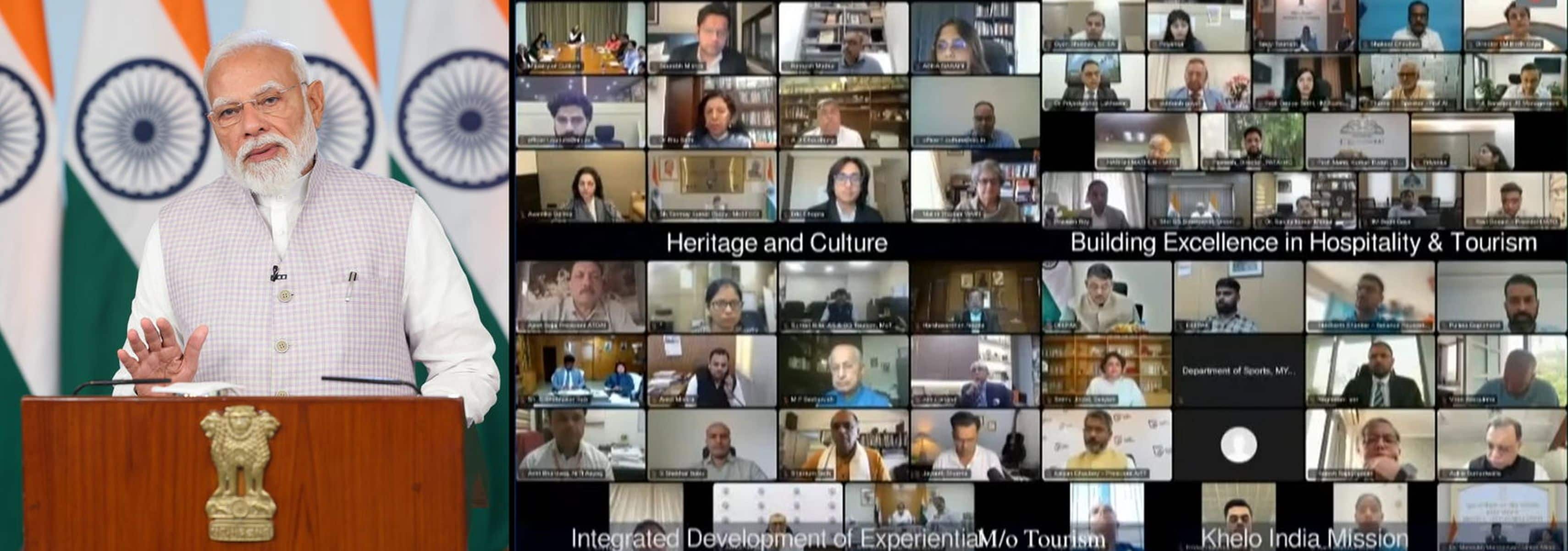
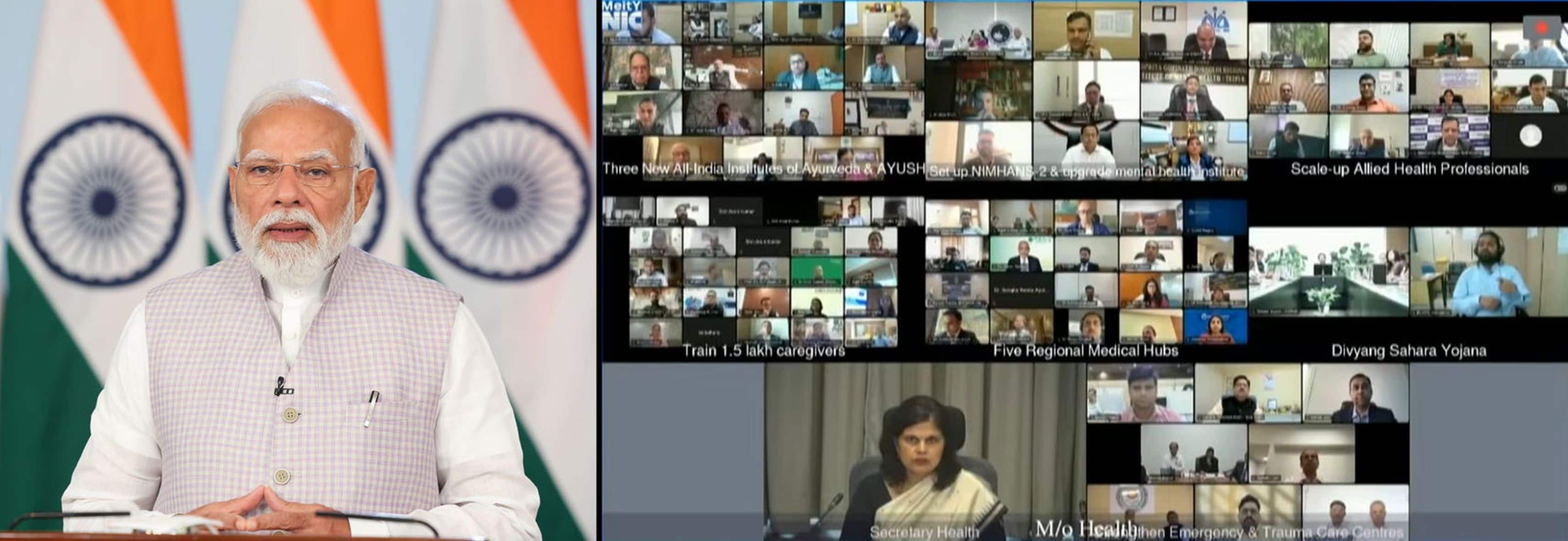
In this series of post-budget webinars, today marks the fourth and most significant one. Fulfilling aspirations of people is not merely a subject of discussion-it is the core objective of this budget and the firm resolve of this government. Education, Skill, Health, Tourism, Sports, and Culture are fundamental sectors that serve as the major means of fulfilling these aspirations. Therefore, in this webinar, we are deliberating on these crucial dimensions. For the implementation of budget announcements, the thoughts and suggestions of all experts, policymakers, scholars, entrepreneurs, and my young companions present here are extremely important. I warmly welcome and greet you all in this fourth session of the budget webinar.

Friends,

India today is working on a vast vision for preventive and holistic health. In recent years, the country’s health infrastructure has been strengthened, with hundreds of new medical colleges opening across districts. Through the Ayushman Bharat scheme and wellness centers, healthcare services have expanded to villages nationwide. Our yoga and Ayurveda are gaining popularity across the world. You will certainly discuss various aspects of this, but I would like to highlight one important subject-the care economy. In the coming decade, the number of senior citizens in the country will rise rapidly. Moreover, even today, many countries across the world face a huge demand for caregivers. Therefore, in the health sector, new skill-based employment opportunities are emerging for millions of youth. I urge the health sector experts present in this webinar to suggest new training models and partnerships so that the training ecosystem in the country can be further strengthened.

Friends,

Closely related to this is the subject of telemedicine. Today, a large number of people in remote areas are benefiting from it, and trust in it is steadily growing. However, I believe there is still a great need to increase awareness and ease of access in this area.

Friends,

Over the past decade, a major transformation has taken place in the mindset of the country. Today, beyond the boundaries of villages, towns, and cities, every young Indian wants to do something new, driven by the spirit to achieve. This new mindset of the new generation is the nation’s greatest strength, its most valuable capital for a bright future. To capitalize on this, we must continuously modernize and upgrade our education system. The new education policy has laid the necessary foundation for this. Now, it is essential that our curriculum remains updated according to market needs! We must accelerate the process of linking our education system with the real-world economy. We need to place greater focus on subjects like AI and automation, digital economy, and design-driven manufacturing.

Friends,

The country is consistently working to connect education with employment and enterprise. New models like university townships reflect this approach. Today, India is promoting the A.V.G.C. sector-Animation, Visual Effects, Gaming, and Comics. India is moving towards an innovation-driven economy. Many academicians and academic institutions are connected to this webinar today. I urge you to deliberate on developing your campuses as centers of industry collaboration and research-driven learning. This will provide students with real-world exposure and strengthen the skill ecosystem.

Friends,

A very important subject is STEM-Science, Technology, Engineering, and Mathematics. It is a matter of great pride that the number of daughters showing interest in STEM subjects is steadily increasing in our country. As we prepare for futuristic technologies, it is crucial that no daughter is held back due to lack of opportunities. In this webinar, you must discuss this direction. We need to place greater emphasis on increasing women’s participation. We must build a research ecosystem where young researchers have full opportunities to experiment and work on new ideas.

Friends,

Youth power becomes national power only when it is healthy, disciplined, and full of self-confidence. That is why, in recent years, sports have been seen as an important stream of national development. Initiatives like Khelo India have infused new energy into the sports ecosystem of the country. Sports infrastructure is being strengthened across the nation. In this webinar, you must deliberate on some key questions: How can talent be identified more accurately even from small towns and villages? How can structured financial support for thousands of athletes be improved? And thirdly, how can our sports bodies be made more professional? In the coming years, the Commonwealth Games will be held in India, and the country is striving to host the Olympics. In such a scenario, we must identify young athletes at an early age and nurture them, only then will India be able to raise its flag high in international competitions.

Friends,

Tourism and culture play a major role in creating new employment opportunities. When tourism grows in a place, the branding of that location or city also increases. This accelerates the overall development of that city. India has no shortage of historical sites. But for a long time, tourism remained confined to a few select destinations. Now, we are focusing on developing tourist destinations across every corner of the country.

Friends,

In this webinar, you must discuss a holistic approach to strengthening India’s tourism ecosystem. Your suggestions on trained guides, hospitality skills, digital connectivity, community participation, cleanliness, tourism, and related subjects will be very important.

Friends,

When institutions, industry, and academia work together, the pace of transformation accelerates. I am confident that this series of post-budget webinars will provide concrete direction for the future. Such efforts will further strengthen the foundation of a developed India. And friends, it is a very pleasant experience that due to the tradition of webinars, after the budget and especially during implementation, I have been told that this year, lakhs of people connected to these subjects-experts, beneficiaries, and those involved in the system-have actively participated in the webinars. Our officials have informed me that excellent and practical suggestions are coming in. This means not only solutions to problems but also new energy and new momentum to move forward with confidence. I say this is a very delightful experience of the webinars. All those who participated in these webinars are worthy of appreciation and gratitude. Once again, I extend my best wishes and heartfelt thanks to all of you.

Namaskar!