Co-operative, not Coercive Federalism for Strong Republic

Published By : Admin | January 25, 2012 | 09:30 IST

Dear Friends,

26th January 1950 was a very special day in the life of our nation. It was the day we gifted ourselves one of the most elaborate Constitutions in the world. Under the stewardship of Dr. Babasaheb Ambedkar we enshrined in the Constitution our ideals, values and aspirations. This year we also mark the 60th anniversary of the first General Elections in independent India. Right from the beginning we showed the world that we were not only a vibrant democracy but also one that diligently followed the principle of Universal Adult Franchise. It took Britain centuries after the signing of the Magna Carta and a series of Reform Acts to embrace twin principles on ‘one man one vote’ and ‘one vote for all’. USA conferred voting rights to women in the early 20th century and to African Americans as late as 1964! Due to the foresight of our forefathers in the Constituent Assembly our democracy was considerably evolved and totally equitable from the very beginning.

Co-operative, not Coercive Federalism for Strong Republic

In their great wisdom, the makers of our Constitution envisioned a federal structure of Government in which the states would be treated as equal stakeholders of India’s development. It is not without reason that the phrase ‘Federal in Structure, Unitary in Spirit’ is used to describe the Indian state.A vast and diverse country such as ours cannot survive without a vibrant and functional federal structure. Sitting in New Delhi, the Centre may not always be able to do justice to the potential and needs of various states across India. By virtue of being closer to the people, State Governments can respond much better in understanding and fulfilling the expectations of the people through good governance.

It is, however, a matter of great concern that the federal structure of our Republic has come under increasing strain, contrary to the spirit of our Constitution, merely to suit the whims and fancies of the rulers inDelhi. What we are witnessing today is the systematic disruption of our country’s federal structure both in letter and spirit. A Republic such as ours cannot be run in the form of a family run corporation - it will simply lead to chaos and destruction.

The systematic onslaught on the federal structure has taken various forms. It is most unfortunate that the Centre has shown tremendous weakness in areas where it must show maximum courage. The country is suffering due to the menace of Naxalism and terrorism but the Centre has been delaying key initiatives that would be beneficial. The Gujarat Assembly thrice passed the GUJCOC bill but the Centre has kept it waiting for four years now. This despite the fact that law and order is a matter clearly in the State List. What better to expect from a Government that thrives on the evil of votebank politics?

Paradoxically, the rulers in New Delhi have repeatedly flexed their muscles in areas where they should ideally be friendly and co-operative with the states. In order to do so, they have not sparred any Constitutional office. There are many instances of non-UPA states being targeted through the office of the Governor. Several other bodies are also being misused by the Centre to weaken the states ruled by the Opposition in order to score political brownie points. Chief Ministers are not consulted on crucial appointments. Rather, appointments are being thrust down violating the spirit of the laws of the land.

Prime Minster Indira Gandhi appointed the Sarkaria Commission which called for a mechanism of consultation between the states and the Centre on matters pertaining to the Concurrent List. But even decades after these reports were submitted their recommendations have not seen the light of the day. The Communal Violence Bill was conceived by the NAC without consulting the states. It does not matter to those in power that such bills will destroy the peaceful fabric of India. These issues can be dealt better if the states are consulted and allowed to handle it themselves.

There is even larger destruction of the federal structure in fiscal areas. In the name of ‘public good’ or ‘people’s rights’, more and more funds are making their way to New Delhi. The Finance Commission allocated substantially lesser resources to the states keeping a lion’s share of funds with the Centre. The Centre has become adept at passing populist schemes but there is no financial support given to the states for their execution. Adequate central funds are not an obligation from New Delhi but the right of every state to pursue development.

Today our economy is weak and the country is reeling under the ill effects of rampant hunger and price rise but the Centre has even played politics in this. To uncover stored food grains, raids were launched across the country but most of them were in non-UPA states even though UPA rules some of India’s largest states and those that witnessed highest farmer suicides in recent times!

These concerns I am sharing today are not only as a Chief Minister but also as a common citizen of India. Why is it that Chief Ministers cutting across party lines are expressing serious apprehensions on these repeated attacks on India’s federal structure? It is high time the Centre realizes that giving to the states what rightfully belongs to them will not weaken the Centre. The states must co-ordinate with the Union Government and not remain subservient to it. Co-operative and not coercive federalism must be the norm in our country.

Friends, I take this opportunity to extend my good wishes on the occasion of Republic Day. On this day, let us all resolve to shape a real federal India, which will embody the real spirit of ‘Unity in Diversity’. Let us all work towards realizing Gandhiji’s dream of Surajya with the mantra of ‘Sabka Saath, Sabka Vikas’. This is the most fitting tribute to the makers of our Constitution.

Explore More
Today, the entire country and entire world is filled with the spirit of Bhagwan Shri Ram: PM Modi at Dhwajarohan Utsav in Ayodhya

Popular Speeches

Today, the entire country and entire world is filled with the spirit of Bhagwan Shri Ram: PM Modi at Dhwajarohan Utsav in Ayodhya
World Bank Projects India's Growth At 7.2% Due To

Media Coverage

World Bank Projects India's Growth At 7.2% Due To "Resilient Activity"
NM on the go

Nm on the go

Always be the first to hear from the PM. Get the App Now!
...
Somnath Swabhiman Parv – A 1000 Years of Unbroken Faith (1026-2026)
January 05, 2026

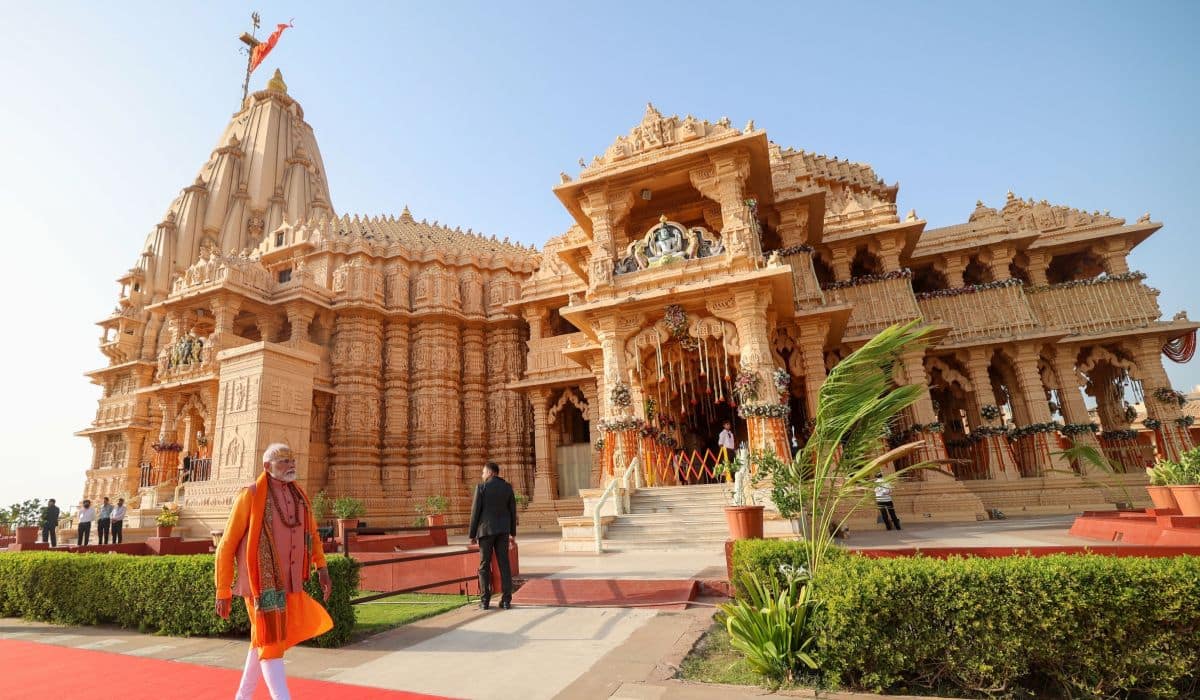
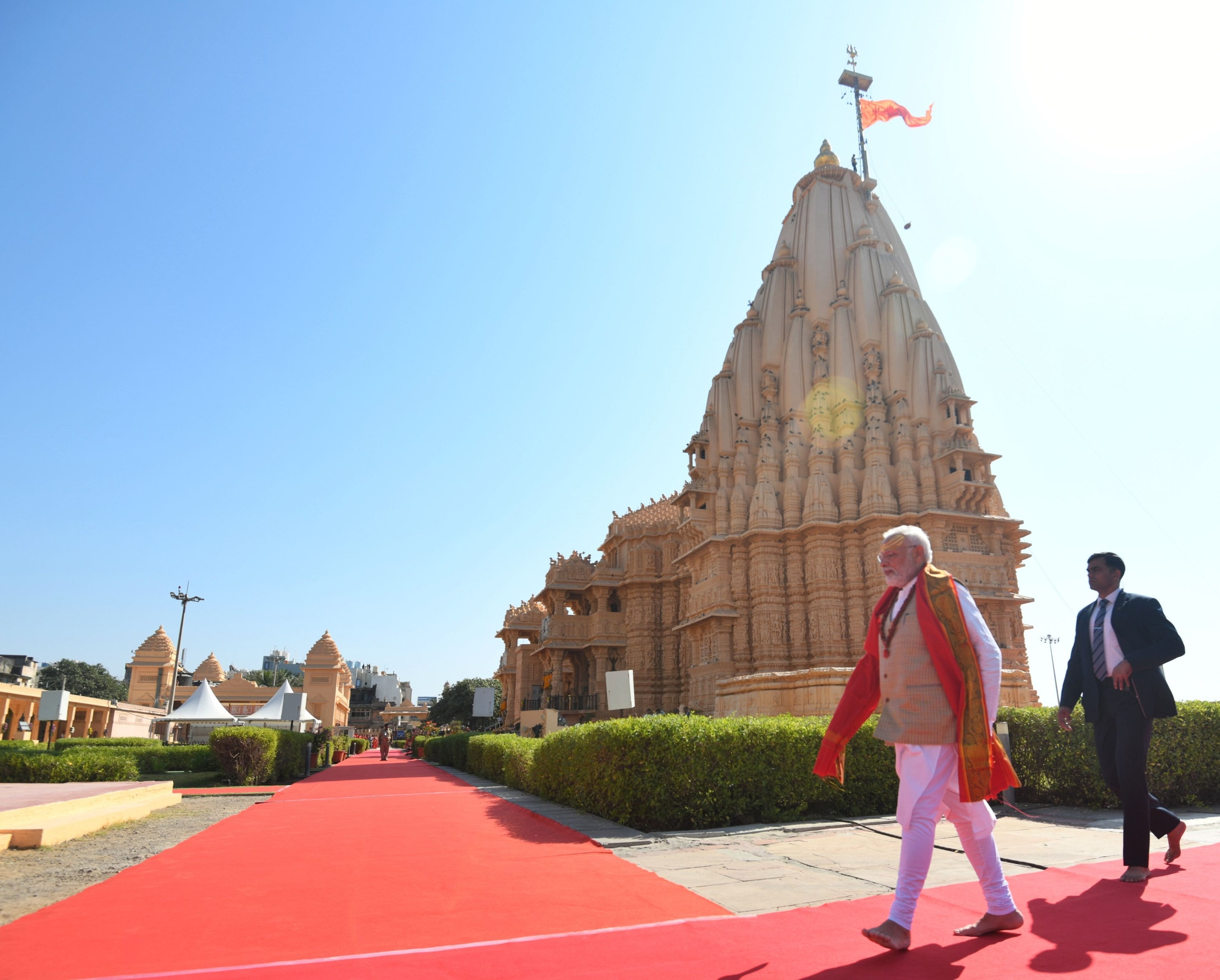
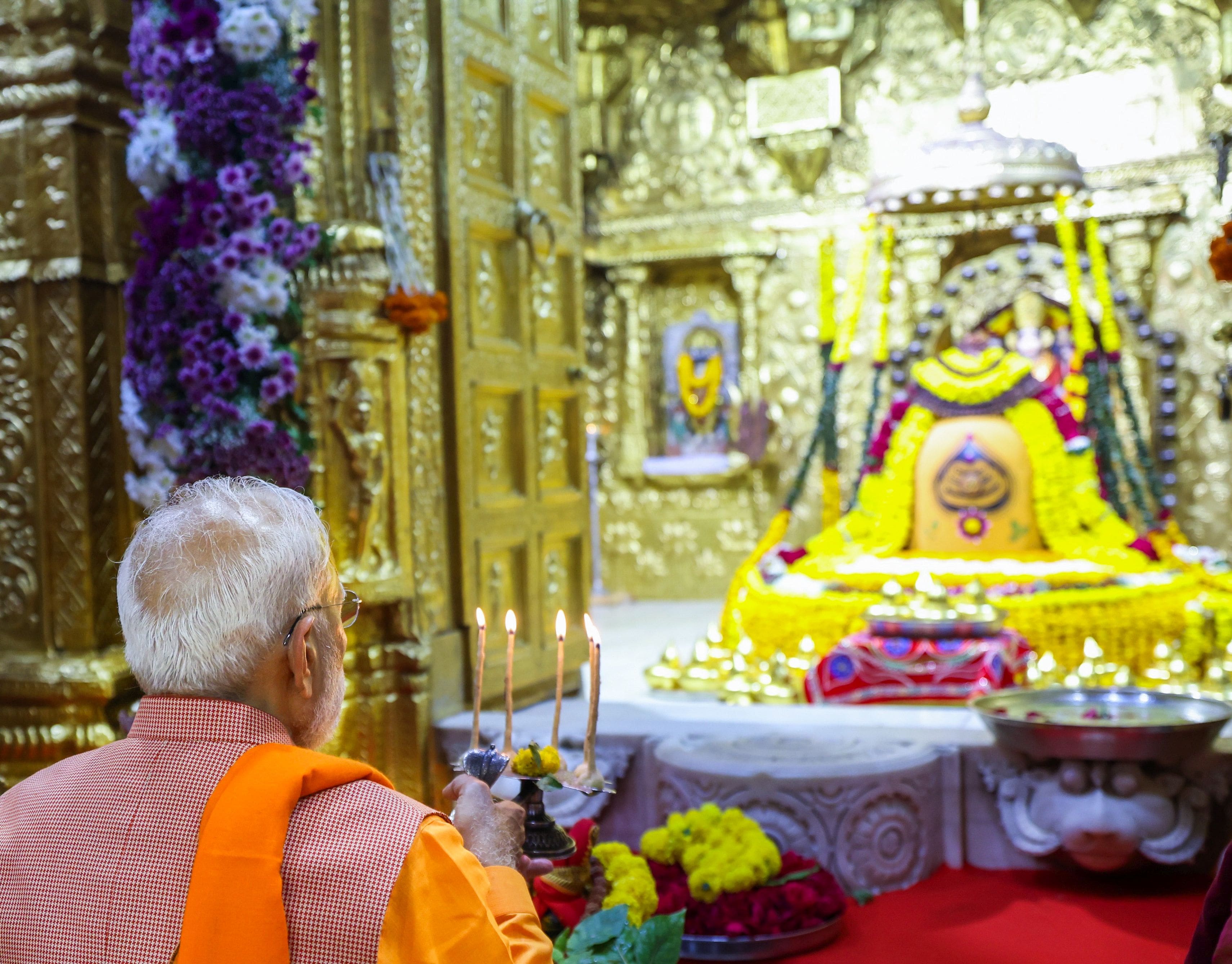
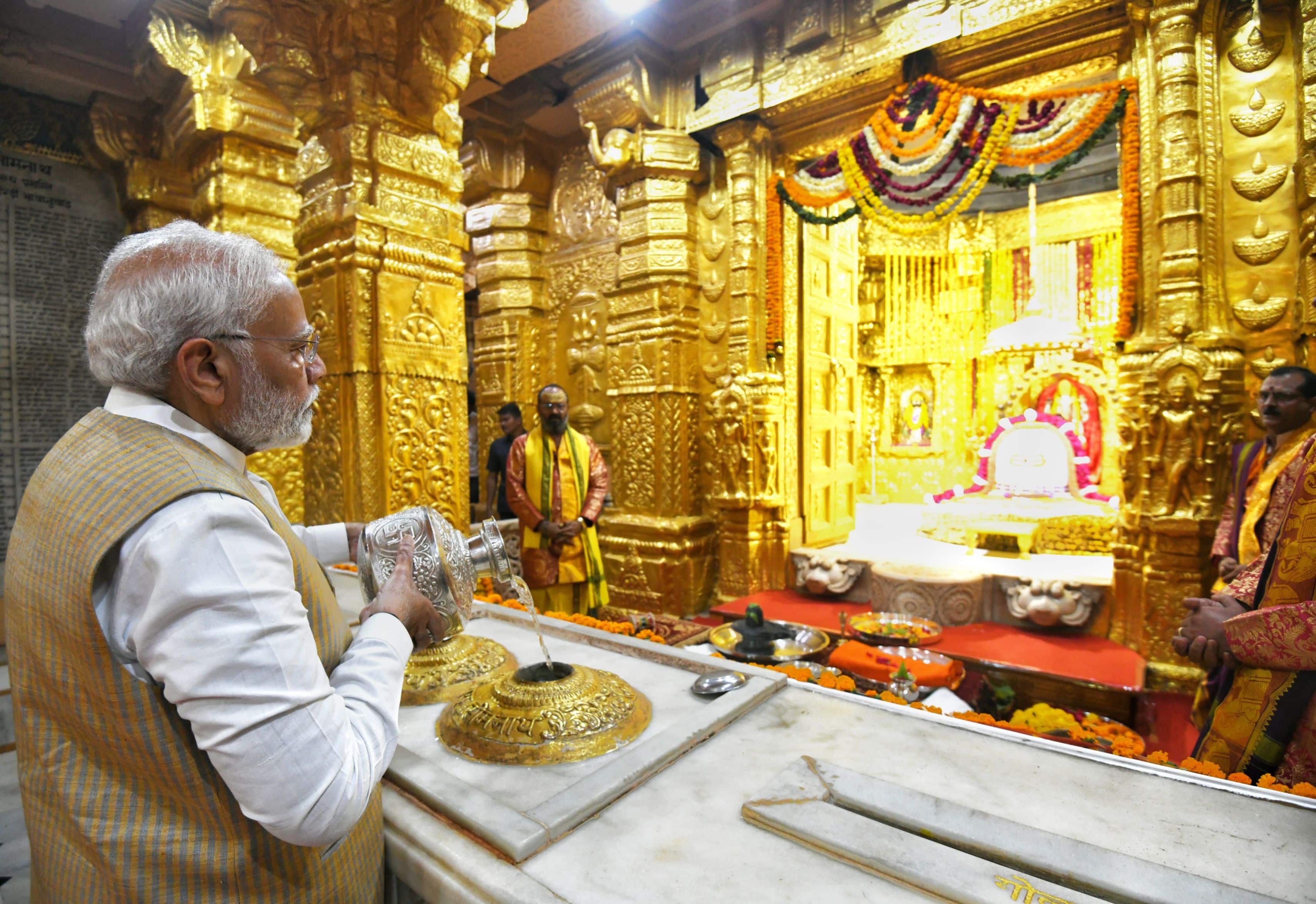
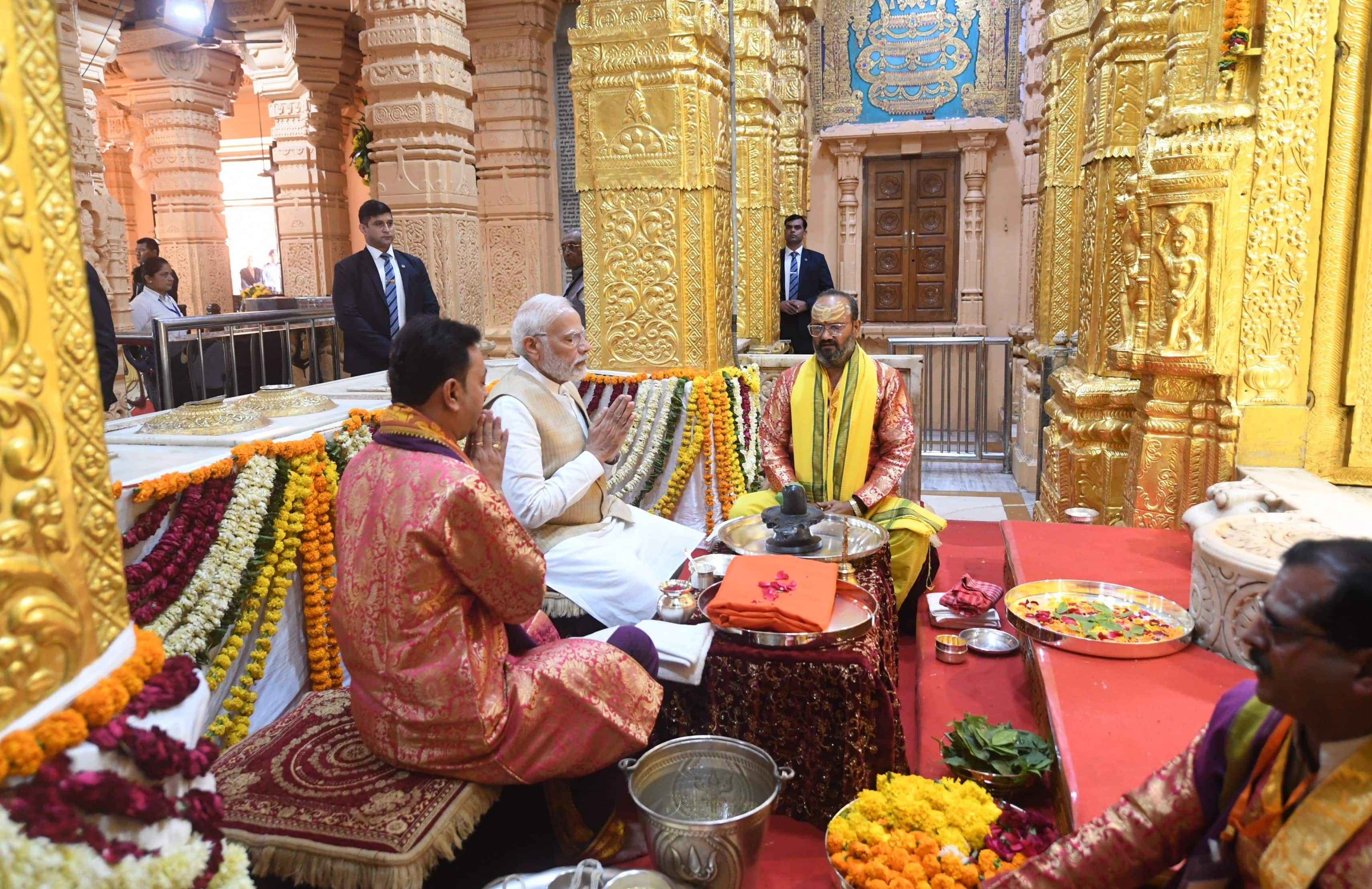
Somnath…hearing this word instils a sense of pride in our hearts and minds. It is the eternal proclamation of India’s soul. This majestic Temple is situated on the Western coast of India in Gujarat, at a place called Prabhas Patan. The Dwadasha Jyotirling Stotram mentions the 12 Jyotirlings across India. The Stotram begins with “सौराष्ट्रे सोमनाथं च..”, symbolising the civilisational and spiritual importance of Somnath as the first Jyotirling.

It is also said:

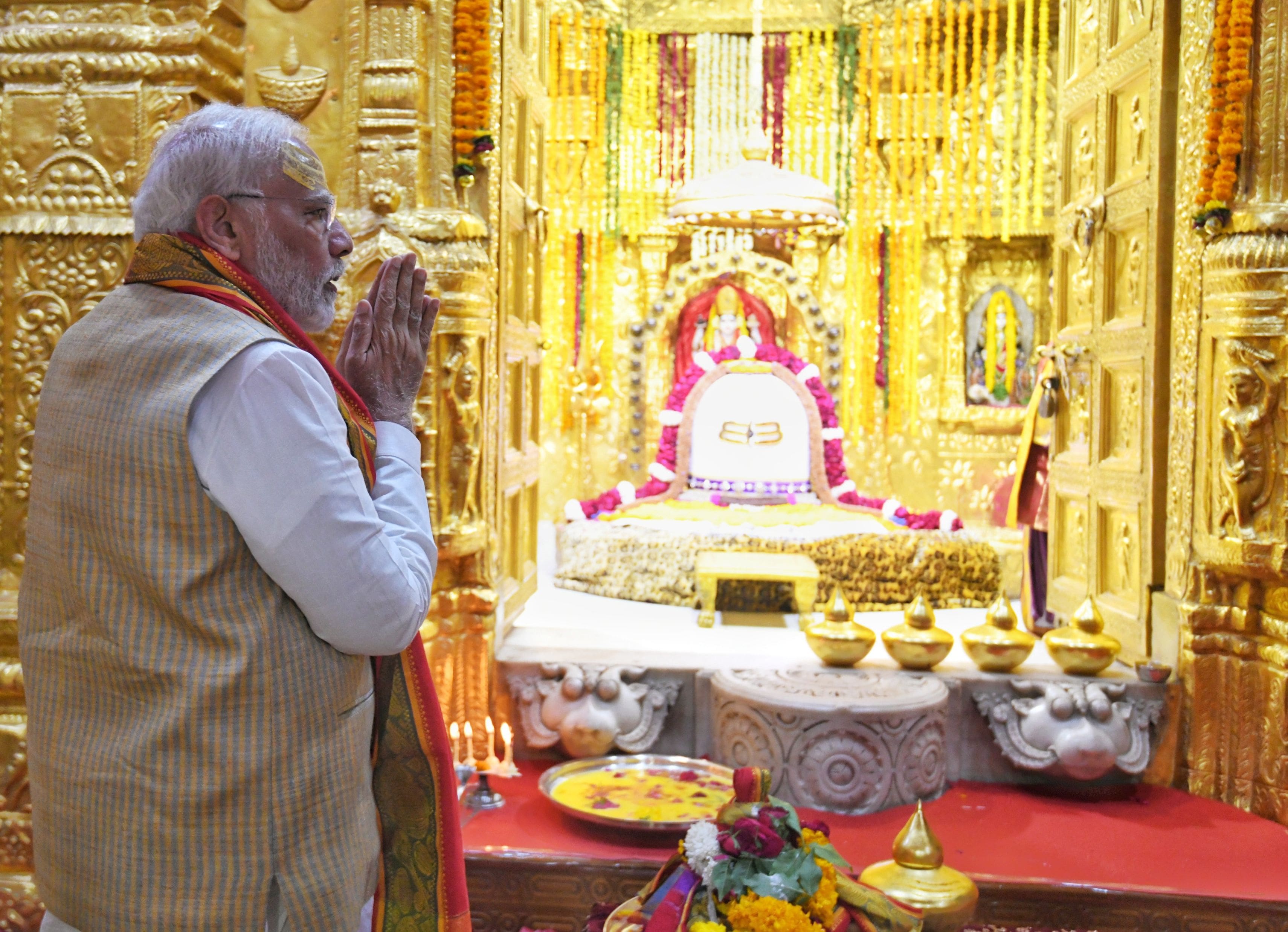
सोमलिङ्गं नरो दृष्ट्वा सर्वपापैः प्रमुच्यते।
लभते फलं मनोवाञ्छितं मृतः स्वर्गं समाश्रयेत्॥

It means: Just the sight of Somnath Shivling ensures that a person is freed of sins, achieves their righteous desires and attains heaven after death.

Tragically, this very Somnath, which drew the reverence and prayers of millions, was attacked by foreign invaders, whose agenda was demolition, not devotion.

The year 2026 is significant for the Somnath Temple. It has been 1,000 years since the first attack on this great shrine. It was in January of 1026 that Mahmud of Ghazni attacked this Temple, seeking to destroy a great symbol of faith and civilisation, through a violent and barbaric invasion.

Yet, one thousand years later, the Temple stands as glorious as ever because of numerous efforts to restore Somnath to its grandeur. One such milestone completes 75 years in 2026. It was during a ceremony on May 11th 1951, in the presence of the then President of India, Dr. Rajendra Prasad, that the restored Temple opened its doors to devotees.

The first invasion of Somnath a thousand years ago in 1026, the cruelty that was unleashed upon the people of the town and the devastation that was inflicted upon the shrine have been documented in great detail in various historical accounts. When you read them, the heart trembles. Each line carries the weight of grief, cruelty and a sorrow that refuses to fade with time.

Imagine the impact it had on Bharat and the morale of the people. After all, Somnath had great spiritual significance. It was also on the coast, giving strength to a society with great economic prowess, whose sea traders and seafarers carried tales of its grandeur far and wide.

Yet, I am proud to state unequivocally that the story of Somnath, a thousand years after the first attack, is not defined by destruction. It is defined by the unbreakable courage of crores of children of Bharat Mata.

The medieval barbarism that began a thousand years ago in 1026 went on to ‘inspire’ others to repeatedly attack Somnath. It was the start of an attempt to enslave our people and culture. But, each time the Temple was attacked, we also had great men and women who stood up to defend it and even made the ultimate sacrifice. And every single time, generation after generation, the people of our great civilisation picked themselves up, rebuilt and rejuvenated the Temple. It is our privilege to have been nurtured by the same soil that has nurtured greats like Ahilyabai Holkar, who made a noble attempt to ensure devotees can pray at Somnath.

In the 1890s, Swami Vivekananda visited Somnath and that experience moved him. He expressed his feelings during a lecture in Chennai in 1897 when he said,Some of these old temples of Southern India and those like Somnath of Gujarat will teach you volumes of wisdom, will give you a keener insight into the history of the race than any amount of books. Mark how these temples bear the marks of a hundred attacks and a hundred regenerations, continually destroyed and continually springing up out of the ruins, rejuvenated and strong as ever! That is the national mind, that is the national life-current. Follow it and it leads to glory. Give it up and you die; death will be the only result, annihilation, the only effect, the moment you step beyond that life current.”

The sacred duty of rebuilding the Somnath Temple after independence came to the able hands of Sardar Vallabhbhai Patel. A visit during Diwali time in 1947 moved him so much that he announced that the Temple will be rebuilt there. Finally, on May 11th 1951, a grand Temple in Somnath opened its doors to devotees and Dr. Rajendra Prasad was present there. The great Sardar Sahib was not alive to see this historic day, but the fulfilment of his dream stood tall before the nation. The then Prime Minister, Pandit Jawaharlal Nehru, was not too enthused with this development. He did not want the Honourable President as well as Ministers to associate with this special event. He said that this event created a bad impression of India. But Dr. Rajendra Prasad stood firm and the rest is history. No mention of Somnath is complete without recalling the efforts of KM Munshi, who supported Sardar Patel very effectively. His works on Somnath, including the book, ‘Somanatha: The Shrine Eternal’, are extremely informative and educative.

Indeed, as the title of Munshi Ji’s book conveys, we are a civilisation that carries a sense of conviction about the eternity of spirit and of ideas. We firmly believe that that which is eternal is indestructible, as outlined in the famous Gita verse “नैनं छिन्दन्ति शस्त्राणि…”. There can be no better example of our civilisation’s indomitable spirit than Somnath, which stands gloriously, overcoming odds and struggles.

It is this same spirit that is visible in our nation, one of the brightest spots of global growth, having overcome centuries of invasions and colonial loot. It is our value systems and the determination of our people that have made India the centre of global attention today. The world is seeing India with hope and optimism. They want to invest in our innovative youngsters. Our art, culture, music and several festivals are going global. Yoga and Ayurveda are making a worldwide impact, boosting healthy living. Solutions to some of the most pressing global challenges are coming from India.

Since time immemorial, Somnath has brought together people from different walks of life. Centuries ago, Kalikal Sarvagna Hemchandracharya, a respected Jain monk, came to Somnath. It is said that after praying there, he recited a verse, “भवबीजाङ्कुरजनना रागाद्याः क्षयमुपगता यस्य।”. It means - Salutations to That One in whom the seeds of worldly becoming are destroyed, in whom passion and all afflictions have withered away.” Today, Somnath holds the same ability to awaken something profound within the mind and soul.

A thousand years after the first attack in 1026, the sea at Somnath still roars with the same intensity as it did back then. The waves that wash the shores of Somnath tell a story. No matter what, just like the waves, it kept rising again and again.

The aggressors of the past are now dust in the wind, their names synonymous with destruction. They are footnotes in the annals of history, while Somnath stands bright, radiating far beyond the horizon, reminding us of the eternal spirit that remained undiminished by the attack of 1026. Somnath is a song of hope that tells us that while hate and fanaticism may have the power to destroy for a moment, faith and conviction in the power of goodness have the power to create for eternity.

If the Somnath Temple, which was attacked a thousand years ago and faced continuous attacks thereon, could rise again and again, then we can surely restore our great nation to the glory it embodied a thousand years ago before the invasions. With the blessings of Shree Somnath Mahadev, we move forward with a renewed resolve to build a Viksit Bharat, where civilisational wisdom guides us to work for the welfare of the whole world.

Jai Somnath!