12 Years of Agricultural Growth: Augmenting Farmers’ Income

Published By : Admin | May 24, 2026 | 15:01 IST

India's agriculture sector employs a significant portion of the population and forms the backbone of the rural economy and food security. Agriculture is considered the primary sector as it provides livelihood support to about 42.3 percent of the population and has a share of 18.2 percent in the country’s GDP at current prices. Despite its greater composition, the interests of our Annadatas were compromised for many decades. Due to the absence of formal credit and adequate market access, their incomes were also compromised.


From Stagnation to Surge: A Decade of Remarkable Income Growth
A positive shift is witnessed due to targeted measures of the current government under the leadership of Prime Minister Narendra Modi. A recent report by NITI Aayog revealed that India’s agricultural income did not experience any negative growth from 2015–16 to 2024–25. In addition, during 2014–15 to 2023–24, the income of agricultural producers grew at 10.11 percent annually, higher than that of manufacturing and total economy. The income of farmers too increased by 126 percent in ten years, while producers’ income rose by 108 percent between 2015–16 and 2022–23, surpassing the doubling target in nominal terms over the decade.

Shielding Annadatas: Risk Reduction for Stable Incomes
This transformation is powered by the multipronged strategy of the current government. The first pillar of this strategy is to reduce risk and shield farmers from uncertainty. For decades, agriculture in India has remained highly vulnerable to erratic monsoons, pests, diseases, hailstorms, floods, and droughts. Reducing these risks has been a priority to prevent income shocks and encourage investment in modern practices. Initiatives such as Pradhan Mantri Fasal Bima Yojana (PMFBY), launched in 2016, provide comprehensive crop insurance. It stabilises farmers' incomes, encourages the adoption of innovative practices, and ensures the flow of credit. Under this initiative, more than 92 crore applications have been insured since inception. In addition, other complementary measures include soil health management via the Soil Health Card (SHC) Scheme. Nearly 26 crore such cards have been distributed, providing farmers with nutrient status and customised fertiliser recommendations. This lowers costs, improves yields, and mitigates the risk of soil degradation.
Additionally, the government also introduced other risk-mitigation tools, including promotion of micro-irrigation under Per Drop More Crop, climate-resilient seed varieties and initiatives like PM-KUSUM for solar pumps, reducing dependence on diesel and enabling income from excess power generation. More than 21 lakh farmers have already benefited through PM-KUSUM.
Similarly, Namo Drone Didi initiative also empowers women in rural India by equipping them with drones for agricultural rental services, which targets to generate an additional income of at least Rs.1 lakh per year for each participating SHG. These efforts collectively lower production risks, particularly for small and marginal farmers who constitute the majority.
Direct Income Boost
The second pillar is providing direct income support to our farmers. To supplement farm earnings and address immediate cash needs, the government introduced Pradhan Mantri Kisan Samman Nidhi (PM-KISAN). Under this, Rs. 6,000 annually is given to eligible landholding farmer families via DBT, ensuring transparency. It is supporting over 11 crore farmer families and Rs. 4.28 lakh crore disbursed under PM-KISAN since inception. It serves as a predictable income support for agricultural inputs, domestic needs, or allied activities, cushioning against market volatility or crop failures. The scheme aligns with the broader goal of treating farming as a viable enterprise rather than mere subsistence.
Beyond immediate income support, the government is also ensuring farmers' social security through the Pradhan Mantri Kisan Maan-Dhan Yojana (PMKMY). This voluntary and contributory pension scheme, with monthly contributions ranging from Rs. 55 to Rs. 200, will ensure a minimum monthly assured pension of Rs. 3000 upon attaining the age of 60 years. Nearly 25 lakh farmers have been enrolled under PMKMY.
Additional direct benefits flow from diversifying into animal husbandry, fisheries, and beekeeping, promoted through dedicated schemes. As a result, India became the 2nd largest fish producer globally. Similarly, honey and egg production have doubled since 2014.

Assured Returns: MSP, Procurement & Market Reforms

A key pillar for realizing better returns is the Minimum Support Price (MSP) mechanism. The current government has consistently increased MSP for 22 crops to provide financial support to farmers. Notable hikes include significant increases for wheat, paddy, pulses, oilseeds, and millets. For instance, MSP for wheat increased from Rs. 1400 per quintal in 2014-15 to Rs. 2585 per quintal in 2026-27, showcasing an increase of 84.28 percent (approx.).
For the same period, the MSP for Masur (Lentil) increased by more than 127 percent. Similarly, the MSP for paddy rose from Rs. 1360 per quintal in 2014-15 to Rs. 2369 per quintal in 2025-26, marking over 74 per cent increase. Along with price, the procurement volumes have risen substantially. Total procurement increased from 6,987 LMT during 2004–14 to 12,292 LMT in 2014–26, marking nearly 76 percent rise. Higher MSP, combined with expanded procurement, has increased direct income into rural economies and incentivised farmers.
Additionally, market reforms like eNAM have integrated over 1,600 mandis, enabling transparent online trading, better price discovery, and reduced intermediaries. Similarly, formation of Farmer Producer Organizations (FPOs) helps small farmers get better prices and market access and achieve high turnovers.

Unlocking Credit & Sustainability: Formal Finance Powering Farmer Growth

The last but most important pillar is bringing farmers into the formal credit system. Lack of timely, affordable credit has long pushed farmers toward high-interest moneylenders. Since 2014, the government has strengthened formal credit through the Kisan Credit Card (KCC) scheme, revamped and expanded. Currently, over 7 crore KCCs are active nationwide, with outstanding loans of about Rs. 10.2 lakh crore. Additionally, ground-level agriculture credit targets have been scaled up. The Ground Level Credit (GLC) target for agriculture increased from Rs 7.30 lakh crore in 2013-2014 to Rs 28.67 lakh crore in 2024-2025. This has enabled farmers to invest in quality seeds, fertilisers, and machinery while reducing debt traps.
Complementing this, the Modi government also promotes natural farming and organic practices for sustainability, along with post-harvest support, which has further multiplied income flows. Budgetary support for agriculture has increased manifold, as the allocation for the Department of Agriculture & Farmer Welfare has surged from Rs. 27,663 crore in 2013-14 to Rs. 1.40 lakh crore in 2026-27, marking a remarkable 408% increase.
As India marches ahead with the Viksit Bharat vision, a prosperous and empowered farming community will remain central to this aspiration. The multi-pronged strategy adopted by the Modi government has laid a strong, resilient foundation for our Annadatas. The government's continued efforts not only doubled farmers’ incomes but also led them to adopt sustainable practices combined with modern agricultural technology.

Explore More
শ্ৰী ৰাম জনমভূমি মন্দিৰৰ ধ্বজাৰোহণ উৎসৱত প্ৰধানমন্ত্ৰীৰ সম্বোধনৰ অসমীয়া অনুবাদ

Popular Speeches

শ্ৰী ৰাম জনমভূমি মন্দিৰৰ ধ্বজাৰোহণ উৎসৱত প্ৰধানমন্ত্ৰীৰ সম্বোধনৰ অসমীয়া অনুবাদ
Centre launches Bhavya scheme to set up 100 industrial parks across country

Media Coverage

Centre launches Bhavya scheme to set up 100 industrial parks across country
NM on the go

Nm on the go

Always be the first to hear from the PM. Get the App Now!
...
India's Strategic Ascent
May 24, 2026

The global balance of power is no longer centred on the Atlantic world. As economic growth, strategic influence, and geopolitical attention shift toward the Indo-Pacific, India has emerged as one of the principal forces shaping this transition. Since 2014, sustained economic expansion, growing state capacity, technological advancement, and strategic autonomy have enabled India to move from the margins of the global order to a position of increasing influence within it.
A Global power rebalancing has been underway, shifting economic, mi\NKNJYK Y U Y YYY YYYYYYYYYYYHNCXXXK8P.9.; litary, and strategic power from the Atlantic to the Indo-Pacific with the rise of Asian powers (colloquially termed 'Westlessness'). At its centre is the long-term economic growth spearheaded by India. The nation, once ridiculed as a developing country struggling with poverty and insecurity in the twentieth century and among the fragile five economies until 2013, is now the world's most vibrant economy and military power. India's diplomatic rise and tech prowess have fundamentally altered perceptions of global hierarchy. Since 2014, growth, state capacity, and external engagement have aligned, allowing India to reposition itself in the global system, and shift of power from the Atlantic to the Indo-Pacific
For a long time after the Cold War, Westerners explained global power as the United States as the primary power, China as the challenger, Russia as a disruptive force, and the European Union as an economic and regulatory centre. That structure is now obsolete and insufficient. India's rise has introduced a new variable that does not fit into such classifications.
Across sectors such as geopolitics, economic policy, technology, defence preparedness, demographic advantage, and diplomacy, India is being assessed as a country that can influence outcomes. Policymakers in Washington, Brussels, Beijing and Moscow are adjusting to this reality in their own ways.
India is one of the top five to six world economies in nominal terms and the third-largest in purchasing power parity. What distinguishes India today is not only its size but also the pace of its expansion.
Indian economic growth rates have been resilient, remaining in the 6–7% range (despite a pandemic-induced economic crisis, the War in Ukraine, and the conflict in West Asia), even as other major economies have faced slowdowns or stagnation.
This performance is supported by structural changes that have taken shape since 2014. The Modi government has emphasized infrastructure development across roads, ports, and logistics networks. Digital systems have formalized large parts of the Indian economy through tax reform and real-time payments. Domestic demand has remained a key driver, reducing India's excessive dependence on exports. At the same time, initiatives such as "Make in India" have aimed to expand manufacturing capacity.
For developed economies and businesses abroad, while earlier India was perceived as a destination for services or a consumption market, it is now being approached as a long-term economic partner and, in some sectors, as a stabilizing alternative to concentrated supply chains.

 Economic Power, Technology, and India’s Expanding Global Influence

India's technological profile has also changed significantly. The development of large-scale digital public infrastructure, such as Aadhaar for identity and UPI for payments, has created systems that operate at a population scale and are now exported to the rest of the World as India's contribution to the global public good. Beyond this, India continues to maintain strength in software services while expanding into areas such as artificial intelligence, semiconductor design, and space applications. The Indian Space Research Organisation has demonstrated impeccable and cost-effective mission capability, for instance, in Lunar and Mars missions. In pharmaceuticals and biotechnology, India is a major global supplier. It is the largest global supplier of generic medicines, accounting for around 20 per cent of global supply. The Modi Government's development model is one in which public digital systems and private innovation operate together rather than in isolation, and has boosted investor confidence in India. Over the last eleven financial years (2014–25), India has attracted FDI worth USD 748.78 billion.
India's defence profile has also evolved after 2014. It is among the top military spenders globally and maintains large, operationally active armed forces. It possesses nuclear capability, a functioning blue-water navy, and growing indigenous defence production. Additionally, since 2014, there has been an emphasis on reducing import dependence in defence equipment. The induction of domestically built aircraft carriers and submarines is part of the Modi Government's effort. Deterrence and control over vital maritime routes in the Indian Ocean define India's military posture today. India's geographic position places it close to major sea lanes linking Europe, West Asia, Africa and East Asia. It has acquired greater importance as tensions have increased in West Asia, the South China Sea, and the Taiwan Strait. But unlike the traditional power, New Delhi's focus has been on protecting trade flows rather than projecting force beyond immediate strategic interests.
Through groupings such as BRICS, Quad, SCO, and G20, India has taken on the role of a balancing actor. It has avoided formal alliance structures while remaining engaged in cooperative frameworks. For strategic policymakers across the world, who are now more attentive to the Indo-Pacific, India has moved from the margins of strategic thinking to a central position.

Strategic Autonomy and India’s Role in the Indo-Pacific Order

India's foreign policy today has a strong tinge of strategic autonomy. It maintains working relations with multiple power centres, the United States and its partners, Russia, the European Union and countries across the Global South. Even amid disagreements, New Delhi has ensured that channels of engagement remain open for India.
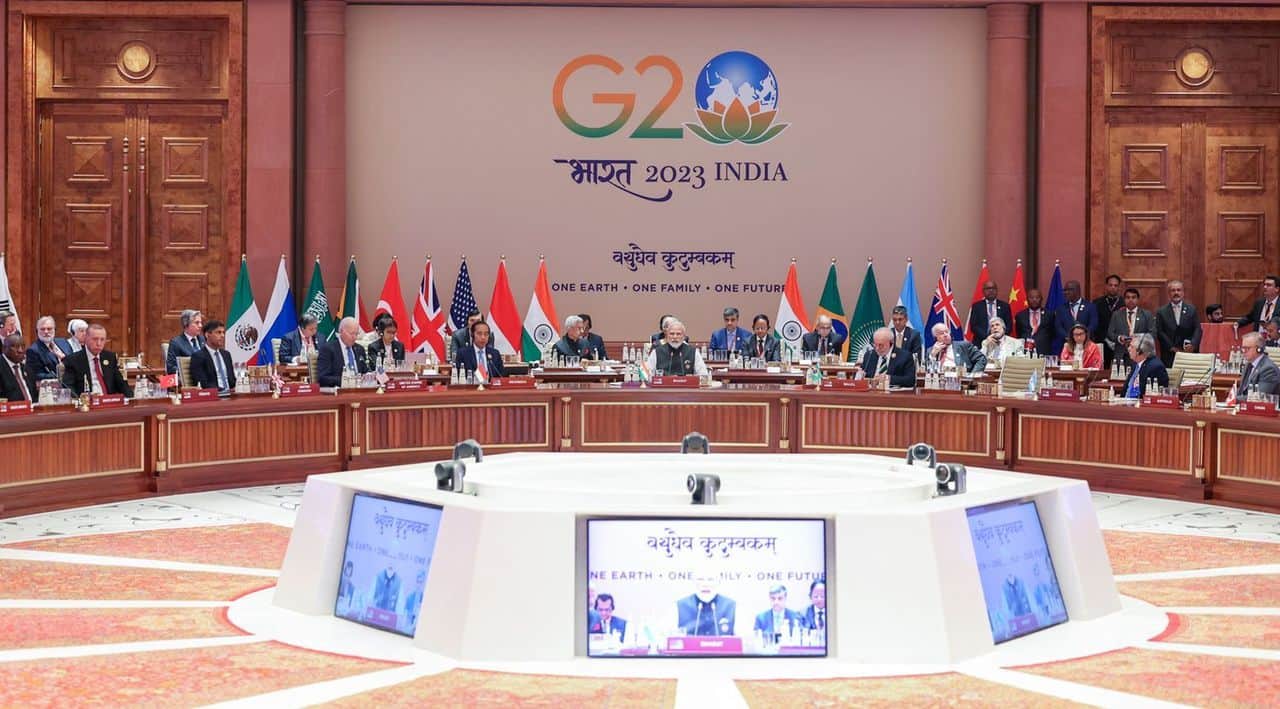
Prime Minister Narendra Modi has demonstrated India's ability to convene diverse countries and achieve workable outcomes during India's presidency of the G20. It also ensured that the concerns of developing countries were included in discussions without disrupting dialogue with advanced economies. This ability to operate across divides has increased India's relevance in multilateral settings.
But India's influence is not limited to state policy. As the world's largest democracy, it carries significant political credibility in many regions. India's cultural exports, that is, cinema, cuisine, and education. and a large diaspora contributes to its global presence. Prime Minister Modi has leveraged the Indian diaspora to strengthen economic and institutional connections in the United States, Europe, the Gulf, and parts of Africa. These networks function alongside formal diplomacy and reinforce it.
India's rise does not follow the trajectory of other countries in the Indo-Pacific. Democratic processes, federal structures and a mix of public and private initiative shape it. It slows decision-making in some areas, but it also builds resilience and adaptability.
Therefore, in a changing position in the global system. India can no longer be described only as an "emerging" economy. In terms of scale, capability and sustained growth, it has moved into a category where it influences how the system functions. Its rise does not displace other major powers, but it alters the balance among them. The shift in global power that began after 2008 has become more defined over the past decade. Since 2014, the Modi government has provided continuity in economic policy, external engagement and state capacity, allowing India to convert potential into influence.